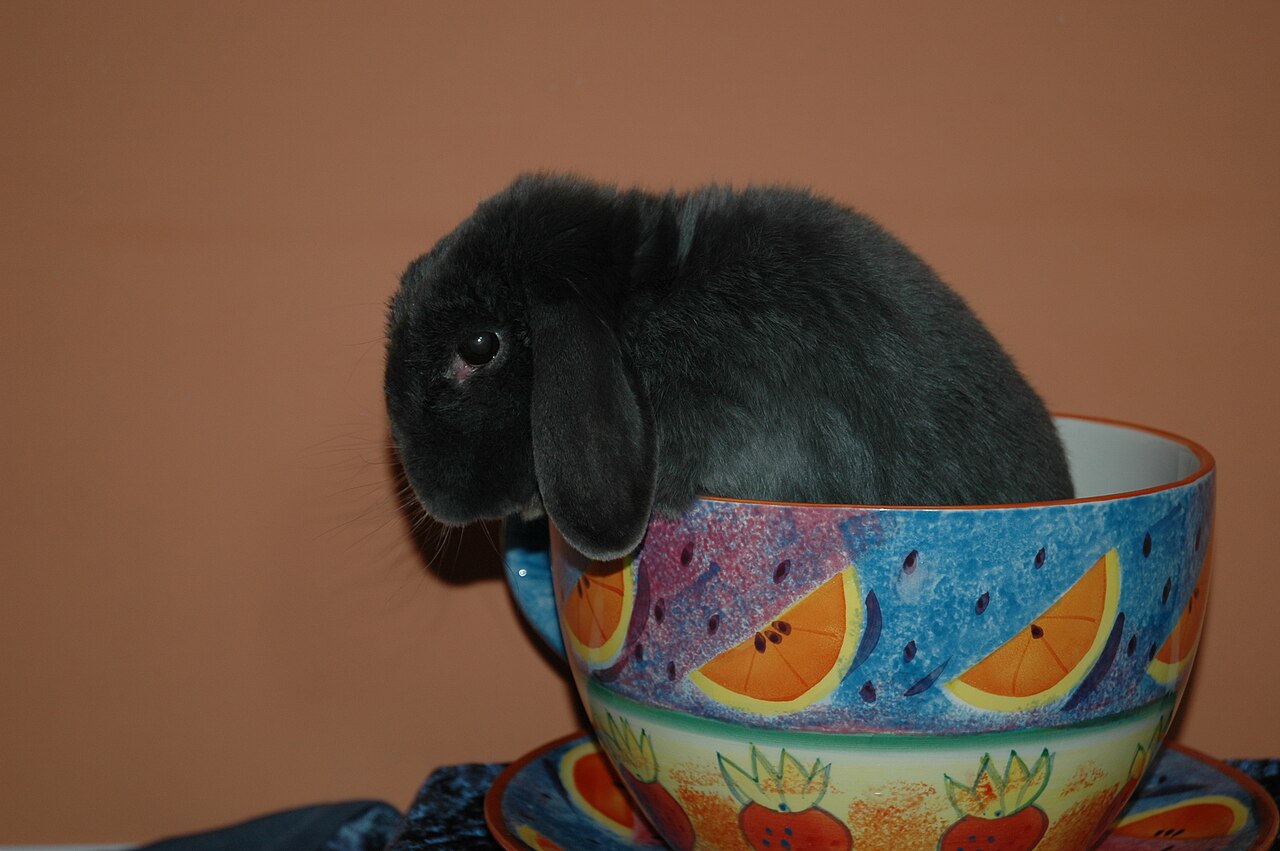
The best rabbit enrichment ideas are not expensive toys — they are small daily chances for your rabbit to do what rabbits are built to do: forage for food, dig, chew, hide and explore. Scatter breakfast through hay instead of serving it in a bowl, add a dig box for half an hour, rotate a tunnel into the play space, and you have transformed an ordinary day. This guide explains what enrichment actually is, offers concrete ideas in each category, and gives you a weekly planner so variety becomes a habit rather than a happy accident.
Our Housing guide covers enrichment built into the enclosure itself — the permanent fixtures and layout. This article is about the other half: the activities and extras you can add anywhere, including during free-roam time outside the enclosure.
What Enrichment Really Means
Enrichment means providing outlets for natural behaviour. A wild rabbit spends much of the day searching for food, grazing, digging at burrow entrances, gnawing bark and roots, darting between cover, and resting somewhere it feels hidden. A pet rabbit has exactly the same instincts, and when none of them can be expressed, the energy goes somewhere else — into chewing furniture, digging carpets, bar-biting, or simply sitting, inactive and withdrawn.
Good enrichment therefore has three qualities. It is behaviour-led: every item or activity answers the question “which natural behaviour does this allow?” It is varied: the same toy every day becomes furniture, so rotation matters more than quantity. And it is safe: everything a rabbit can reach will be chewed and investigated, so checks come before novelty. Keep those three in mind and almost any household item can become enrichment.

Foraging Ideas: Make Food an Activity
Feeding from a bowl takes two minutes. Feeding by foraging can occupy a rabbit happily for an hour, and it is the easiest enrichment of all:
- Scatter feeding. Sprinkle your rabbit’s daily pellets and greens through a pile of hay or across clean flooring in their exercise area instead of using a bowl.
- Hay stations. Offer hay in more than one place — a rack, a stuffed cardboard tube, a paper bag (handles removed) — so your rabbit moves between feeding spots as a grazing rabbit would.
- Hide-and-seek treats. Tuck small pieces of a favourite safe vegetable or herb under hay, inside a toilet-roll tube folded at the ends, or beneath a clean flowerpot your rabbit has to nudge aside. Keep quantities within the normal daily allowance; enrichment is about how food is delivered, not extra food.
- A herb patch. A tray or pot of rabbit-safe herbs, grown from seed or bought as living plants, lets your rabbit graze and nibble at standing food. Only offer plants you are certain are safe and untreated — our guides to what rabbits eat and safe vegetables are the place to check before anything new goes in.
Digging Ideas: A Legal Place to Excavate
Digging is a hard-wired rabbit behaviour, and rabbits who cannot dig in an approved spot will dig in unapproved ones — carpets, sofa corners, bedding. A dig box solves this neatly. Fill a large, sturdy box or tray with a safe digging medium — plain soil from a rabbit-safe source, shredded paper, ball-pit-style plastic balls, or a deep layer of hay — and bury a few morsels of food in it. Expect enthusiastic mess: site the box on a washable mat or in an easy-sweep area. Refresh or replace the contents regularly, and remove the box if your rabbit starts using it as a litter tray. Our guide on why rabbits dig explains the instinct behind the behaviour in more depth.
Chewing Ideas: Rotate the Legal Targets
Chewing is non-negotiable for rabbits — it keeps continuously growing teeth worn — so the trick is to keep attractive, legal chew targets in constant supply and rotate them so they stay interesting. Untreated willow balls and sticks, seagrass mats and woven toys, plain cardboard, and rabbit-safe wooden chews can all be part of the rotation. Keep a small stock, offer two or three at a time, and swap them every few days. Move chews to different places, too: a willow ball discovered in a tunnel is a different experience from the same ball by the food bowl. Discard anything that becomes soiled, splintered or small enough to swallow.
Exploring Ideas: Tunnels, Cities and New Layouts
Rabbits are curious explorers, and novelty itself is enrichment. Collapsible tunnels and cardboard tubes recreate the burrow runs rabbits love to race through. A “cardboard city” — several boxes joined with rabbit-sized doorways cut into the sides — gives hours of investigation, hiding and reshaping (by teeth). Cheap and endlessly rebuildable, it is many owners’ favourite project.
You do not even need new objects: rearranging the free-roam space works. Move the tunnel, rotate which hidey house is out, drape a blanket over a chair to make a new den, or set out a clean, unfamiliar (but safe) object to inspect. A changed layout is a new territory to map, and mapping it is mental exercise. Supervise first explorations of anything new, and remove anything your rabbit attacks in a way that produces loose pieces.
Social Time: You Are Enrichment Too
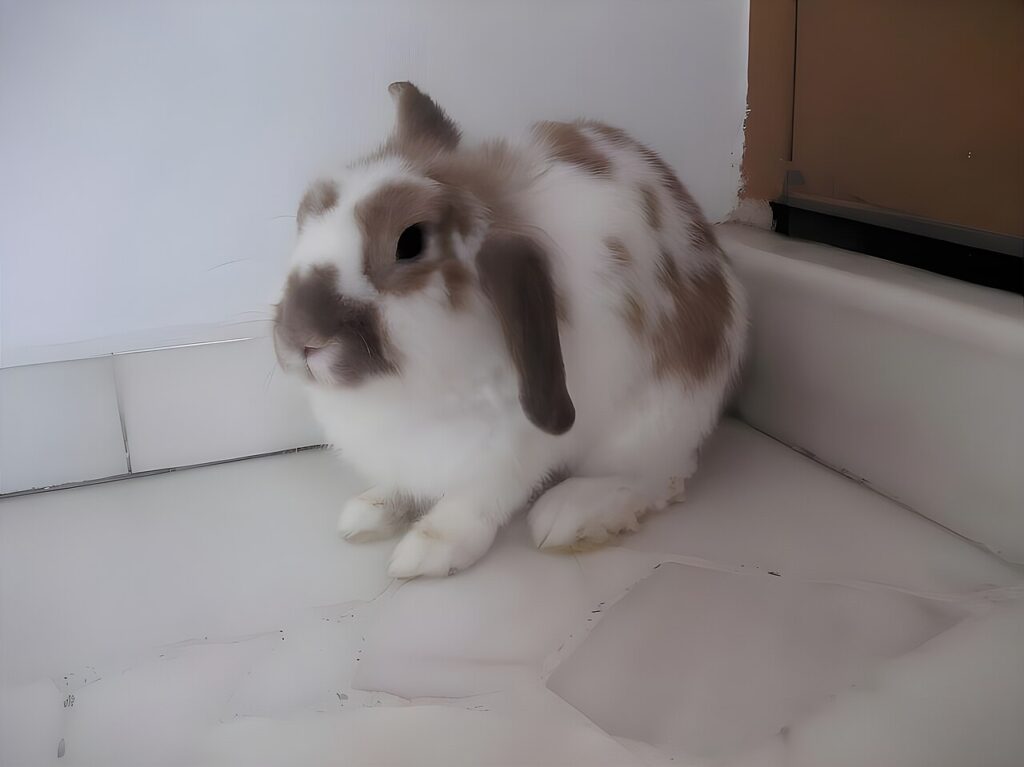
Rabbits are social animals. Time spent near you — floor-level sitting, gentle stroking if your rabbit enjoys it, hand-feeding, or simply sharing a room while you read — is real enrichment, not a substitute for it. A bonded rabbit companion provides company of a kind humans cannot, including mutual grooming and someone to explore with. Interaction should always be on the rabbit’s terms: let them approach, let them leave, and never chase or grab for the sake of a cuddle. Our guide on how to bond with your rabbit covers building that trust step by step.
A Weekly Enrichment Planner
Variety fails when it depends on inspiration. A simple weekly rhythm keeps things fresh with almost no planning effort:
| Day | Theme | Idea to try |
|---|---|---|
| Monday | Foraging | Scatter the pellet ration through hay; hide two treat pieces in tubes |
| Tuesday | Digging | Dig box out for the exercise session, treats buried deep |
| Wednesday | Exploring | Rearrange the play space; add or rebuild a cardboard structure |
| Thursday | Chewing | Swap in two fresh chew items; retire worn ones |
| Friday | Foraging | Herb patch or hay-stuffed paper bag parcels |
| Saturday | Social | Extended floor time with you; hand-feed part of the greens |
| Sunday | Novelty | One new safe item or a rotated favourite returns; review what got used |
Adjust freely — the point is a prompt, not a rule. Notice which themes your rabbit responds to most and weight the week towards them.
Safety Checks for Every New Idea
- No small parts. Remove anything detachable that could be swallowed — plastic eyes, bells, loose buttons.
- Prepare cardboard. Strip off tape, staples, labels and excess glue; avoid waxed or heavily printed card.
- Check for damage daily. Splinters, cracks, frayed fabric and loose threads mean the item comes out.
- Supervise novelties. Watch the first session with anything new to see how your rabbit tackles it.
- Mind strings and loops that could trap a leg or neck; cut loops on fabric items.
- Food stays within the diet. Enrichment uses the normal daily ration delivered differently — it is never a reason to add sugary treats or new foods in quantity. New foods are introduced gradually, as our guide to introducing new foods safely explains.
Adapting Enrichment by Age
Young rabbits are bundles of energy and curiosity: give them more exploring and digging outlets, keep sessions supervised, and expect items to be destroyed faster. Keep food-based games simple and portions small, since young digestive systems need a consistent diet.
Older or less mobile rabbits still need enrichment, but bring it to them: foraging at ground level in easy reach, low or no climbing, shorter tunnels, softer chew options, and plenty of comfortable hiding and resting spots. An elderly rabbit who can no longer race through a cardboard city may still thoroughly enjoy scatter feeding in their own area. Watch for frustration and scale difficulty down, not out.
Is It Working? Reading the Signs
Enrichment that is working shows in behaviour. Positive signs include a rabbit who moves around their space investigating, forages eagerly, plays with bursts of energy, and settles calmly to rest afterwards — activity with relaxed rest between. Our guide to rabbit body language will help you read those signals properly.
Signs more stimulation is still needed include bar chewing, destructive digging or chewing aimed at the home rather than toys, restlessness, over-grooming, or long periods sitting hunched and uninterested. Change the offering — a different category often works better than more of the same. And remember that a sudden behaviour change, or a rabbit who stops eating, is not boredom: that is a vet visit, because illness in rabbits frequently looks like a behaviour problem first.
Conclusion
Rabbit enrichment is a daily habit built from natural behaviours: food to forage for, somewhere to dig, things to chew, places to hide and explore, and time with you or a companion. Use the weekly planner to keep variety automatic, lean on cheap DIY options, and check every new item for small parts and damage. Start today with one scatter feed instead of a bowl — the simplest rabbit enrichment idea there is — and build from your rabbit’s response.

Frequently Asked Questions
How much enrichment does a rabbit need each day?
Some of every kind: a chance to forage rather than just eat from a bowl, access to chew items and a hideaway at all times, and at least one rotated activity — a dig box, a new layout, a foraging game — each day. Short, frequent variety beats one big weekend effort.
Do I need to buy expensive toys?
No. Cardboard boxes and tubes, hay-stuffed parcels, scatter feeding and rearranged furniture cover most enrichment needs for free. Bought tunnels and chews are convenient, but rotation and novelty matter far more than price.
What is the simplest enrichment to start with?
Scatter feeding. Sprinkle your rabbit’s normal pellets and greens through hay instead of serving them in a bowl. It costs nothing, takes seconds, and turns a two-minute meal into real foraging work.
How often should I rotate toys and activities?
Small changes daily and bigger changes weekly: swap a couple of chew items every few days, change one feature — a box structure, tunnel position or dig box — each week, and retire anything damaged straight away.
Can enrichment help a rabbit who chews furniture?
Often, yes: destructive chewing frequently means the chewing, digging and foraging needs are not being met elsewhere. Add legal chew targets and foraging games, protect the furniture meanwhile, and see a vet if the behaviour starts suddenly or comes with appetite changes.
Related Guides on RabbitCare
References
- House Rabbit Society (rabbit.org) — guidance on rabbit behaviour, toys and daily enrichment.
- RSPCA — advice on rabbit enrichment, environment and welfare needs.