
If you are asking why do rabbits dig — at the carpet, the sofa, their bedding or your legs — the commonest answer is the simplest: because digging is one of the most deeply wired behaviours a rabbit has. Wild rabbits are burrowing animals who live in dug warrens, and your rabbit’s paws have not forgotten it. Digging becomes a problem mainly when a rabbit has no acceptable place to do it, is bored or under-exercised, or — in unspayed females — is following a nesting urge. The solution is rarely to stop the digging; it is to give it somewhere legal to happen.
This guide explains the instinct behind digging, how to tell normal digging from frustration, what digging at you usually means, and the practical fixes that work: dig boxes, digging zones, exercise, enrichment and rabbit-proofing.
Born to Burrow: The Wild Ancestry of Digging
Domestic rabbits descend from European wild rabbits, a species that literally lives underground. Wild rabbits dig extensive burrow systems called warrens, with multiple entrances, nesting chambers and escape tunnels. Digging is how they make shelter, raise young and stay safe from predators, and the behaviour is carried by females in particular — does do much of the burrow digging and prepare the nest burrows where their litters are born.
Your pet rabbit, however many generations removed from the warren, still has the full behavioural programme: strong front paws, a drive to excavate soft material, and deep satisfaction in the act itself. This is why digging appears in rabbits who have never seen soil. It is not learned and it is not naughty — it is inherited, and a rabbit with nothing to dig is missing an outlet for something fundamental.
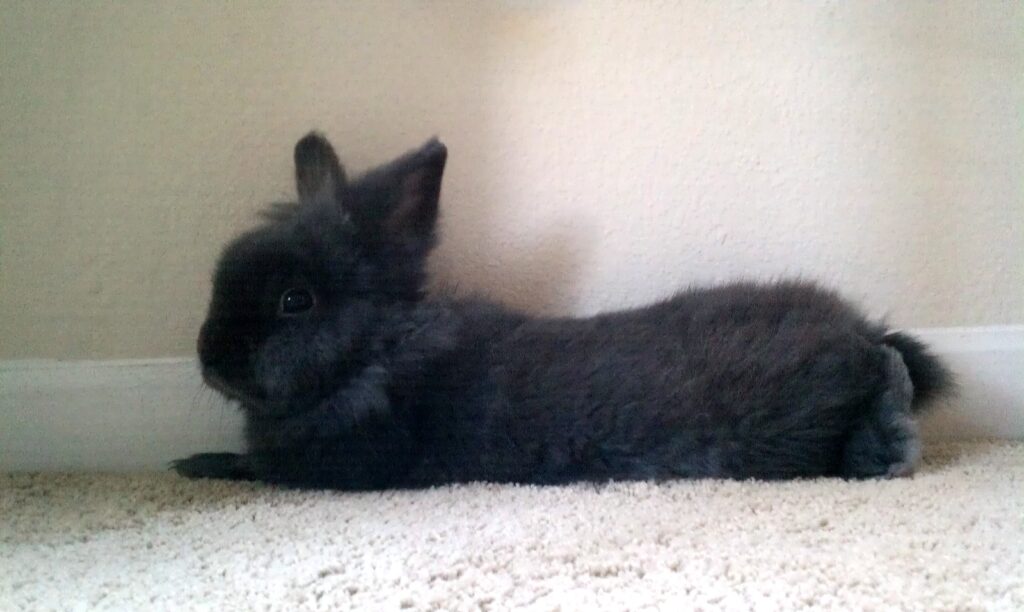
Normal Instinct or a Problem? Reading the Digging
Most digging is normal behaviour in the wrong place. A rabbit contentedly digging in a hay-filled box, then flopping down for a rest, is a rabbit doing exactly what rabbits do. Digging is more likely to be a signal that something is missing when it is intense, repetitive and paired with other frustration behaviours — bar chewing, restlessness, destructive chewing elsewhere, or digging that starts the moment the rabbit is returned to a small or bare space.
Where your rabbit digs also offers clues:
- In bedding, litter or a digging box: ordinary instinct, working as intended.
- At carpet corners, sofa seams or cushions: instinct plus location hunting — the rabbit is seeking a diggable substrate and your furnishings are the closest match.
- At doors, gates or enclosure edges: often “digging to get somewhere” — a wish for more space, exercise or access, rather than digging for its own sake.
- At your clothes, legs or the sofa you are sitting on: see the dedicated section below; it is communication aimed at you.
The Main Reasons Rabbits Dig
Instinct and enjoyment
Some rabbits simply dig because it feels good and it is what their bodies are built for. A rabbit who digs cheerfully at suitable material, in settled bouts, needs no correction at all — just provision.
Boredom and under-stimulation
A rabbit with too little to do will manufacture occupation, and excavation is high on the list. Digging that escalates in barren environments, or in rabbits confined for long hours without exercise, is commonly a boredom signal. The fix is environmental: more space, more exercise, more to do — our guide to rabbit enrichment ideas is a good starting point.
Nesting behaviour in females
Unspayed females may dig and gather material as part of nesting behaviour, driven by hormones. This is most obvious in a phantom (false) pregnancy, where a doe may pull fur from her chest, carry mouthfuls of hay and dig or build a nest intently for a day or two, sometimes becoming defensive of the spot. These episodes are commonly described as hormonal rather than behavioural problems, and spaying usually prevents them. If a female could actually be pregnant, or nesting is frequent or comes with appetite changes, check with your vet rather than assuming.
Seeking comfort or attention
Rabbits sometimes dig at cool floors or shaded earth on warm days, which may help them cool down. And digging at a person, as below, often carries a social message.
Why Does My Rabbit Dig at Me?
Digging at your legs, feet or clothes — often combined with nudging, nipping lightly at fabric or circling — is commonly read as attention-directed behaviour. Owners most often interpret it as one of three messages: “notice me” (pet me, play with me, feed me), “move, please” (you or your foot are where the rabbit wants to be), or simple exploration of interesting, loose, diggable material — a trouser leg, to a digging rabbit, resembles a promising pile of earth. The accompanying body language helps: a relaxed rabbit who then settles beside you probably wanted company; a persistent, pushy digger at mealtimes probably wants dinner. Respond by acknowledging the rabbit, offering a stroke or an activity, and gently moving feet out of the excavation zone rather than scolding.
Does Digging Wear Down a Rabbit’s Nails?
Only slightly, and never rely on it. Digging on soil provides a little natural wear, but indoor digging on carpet, bedding or in a dig box does almost nothing for nail length, and even enthusiastic outdoor diggers still need their nails checked and trimmed. Owners sometimes hope a digging habit cancels nail care; it does not, and overlong nails change how the foot sits and can make digging uncomfortable. Keep to the usual routine — see how to trim rabbit nails and the stress-free approach in trimming nails without stress.

The Solutions That Actually Work
Give them a dig box
A dig box is the single most effective answer to inappropriate digging, because it legalises the behaviour instead of fighting it. Making one takes minutes:
- Choose a sturdy, roomy box or tray — a large cardboard box, a plastic storage box with a low entry cut in, or a litter-tray-style box.
- Fill it generously with diggable material: plain soil from a rabbit-safe source, shredded paper, ball-pit-style balls, or a deep layer of hay and straw.
- Bury a few treats, favourite greens or a chew toy in the fill to draw your rabbit in the first few times.
- Place it where the digging used to happen — beside the sofa corner or carpet spot — so the legal option sits where the urge strikes.
- Expect mess. A mat underneath, and refilling or shaking out the material regularly, keeps it practical.
Our guide to rabbit enclosure enrichment has more on dig boxes as part of a wider enrichment setup.
Create digging-legal zones
Beyond one box, designate areas where digging is welcome: a corner of the run filled with soil, an old blanket pile offered specifically for scrabbling and bunching, or a cardboard castle that may be excavated as well as chewed. Rabbits learn locations quickly when the legal spots are consistently more rewarding than the illegal ones.
More exercise, space and rotation
Digging fuelled by boredom fades when the day gets fuller. Check the basics first — enclosure size, hours of exercise outside it, and a rotation of tunnels, chews and foraging games so novelty keeps arriving. A rabbit who has had a proper morning of exploration digs in their box and sleeps; a rabbit let out of a bare cage briefly digs the carpet with stored-up energy.
Protect what matters
While you redirect, protect the targets: cover favourite carpet corners with a rug, mat or the dig box itself, and block access under sofas. Our room-by-room guide on how to rabbit-proof a home covers barriers, cables and flooring in detail.
Consider neutering
For unspayed females whose digging is part of hormonal nesting cycles, spaying commonly reduces or ends the pattern, alongside its broader health benefits. Discuss timing and suitability with your vet — our overview of rabbit spaying and neutering explains what is involved.
Redirect, Never Punish
When you catch your rabbit mid-dig on the carpet, the correct response is boring: calmly lure them to the dig box, drop a treat in it, and increase the legal attractions. Shouting, spraying with water or punishing never teaches a rabbit where digging is allowed — it teaches them that you are frightening, and to dig when you are out of the room. Digging is instinct; you cannot punish it out of an animal, only give it a better address.
When Digging Might Need a Vet
Digging itself is rarely medical, but see a vet if it arrives suddenly alongside other changes — appetite loss, weight change, hiding, aggression or lethargy — if a female might genuinely be pregnant, if phantom pregnancies happen very frequently, or if your rabbit is injuring their feet with frantic digging. Sudden behaviour change is always worth a health check before a behavioural conclusion.
Conclusion
Rabbits dig because they are burrowing animals in their bones; the only real question is where they get to do it. Read intense, frustrated digging as a prompt to enrich — more exercise, more occupation, a dig box where the urge strikes — treat nesting digging in unspayed females as a neutering conversation with your vet, and enjoy digging at your legs for the compliment it usually is. Give the instinct a legal address, and both your rabbit and your carpet can relax.

Frequently Asked Questions
Why does my rabbit dig on my bed or sofa?
Soft furnishings are the indoor material closest to diggable earth, and your bed and sofa also smell strongly of you, which makes them interesting places to work on. Put a dig box or an old blanket pile nearby, cover the favourite corner, and redirect your rabbit to the legal spot each time — most learn the swap within a week or two.
How do I make a dig box my rabbit will actually use?
Fill a sturdy box deeply with hay, shredded paper or rabbit-safe soil, bury treats and toys in it, and place it where your rabbit already tries to dig. Location and reward drive use: a box in a forgotten corner loses to the carpet every time.
Why does my female rabbit dig and pull fur out?
Digging, hay-carrying and fur-pulling together are commonly signs of nesting behaviour, often a phantom pregnancy in an unspayed female. Episodes usually pass in a day or two. Spaying generally prevents them; if she might actually be pregnant, or episodes are frequent or she seems unwell, consult your vet.
Will neutering stop my rabbit digging?
It depends on the cause. Hormonal nesting digging in females commonly fades after spaying, but ordinary instinctive digging is part of being a rabbit and will — and should — continue, just aimed at a dig box rather than your flooring.
Is digging a sign my rabbit is unhappy?
Not on its own. Contented rabbits dig happily at suitable material. Digging suggests a problem only when it is frantic and repetitive and paired with other frustration signs — bar chewing, restlessness, destructive chewing — or a sudden behaviour change, in which case enrich the environment and, if the change is abrupt, see a vet.
Related Guides on RabbitCare
References
- House Rabbit Society (rabbit.org) — guidance on rabbit behaviour, digging and enrichment.
- RSPCA — advice on rabbit environment, enrichment and natural behaviours.