Rabbit enclosure enrichment means giving your rabbit things to do that match their natural behaviours — digging, chewing, foraging, hiding and exploring — rather than leaving them in a bare space with nothing but a food bowl. It does not need to be expensive or complicated: a cardboard box, hay stuffed into a tube, or a tunnel to race through can transform a rabbit’s day. The keys are variety, regular rotation and basic safety checks.
This guide explains why enrichment matters, the main categories to cover, a simple rotation routine, cheap DIY options, and how to keep everything safe.
Why Enrichment Matters
Wild rabbits spend their days grazing, digging, watching for danger and resting in shelter. Pet rabbits have the same instincts, and an enclosure that offers no outlet for them leaves a rabbit frustrated and under-stimulated. Boredom in rabbits often shows up as behaviour problems rather than obvious sadness: chewing the bars or the enclosure itself, digging destructively at corners, over-grooming, or becoming withdrawn and inactive.
Enrichment is not entertainment for its own sake. Chewing keeps teeth worn and satisfies a powerful drive; foraging makes a rabbit work for food the way they are built to; hiding places let a prey animal relax. A well-enriched enclosure also encourages exercise, which supports healthy weight and digestion. Think of enrichment as part of basic care, alongside hay and water — something your rabbit needs every day, not a treat for good behaviour.
The Natural Behaviours to Build Around
Every enrichment item should answer one question: which natural behaviour does this let my rabbit perform? Cover these five and you have a solid foundation.
- Digging. Rabbits are born to dig. Without an approved outlet, the digging instinct lands on carpets, bedding and enclosure corners.
- Chewing. Rabbit teeth grow continuously, and chewing is both necessary and enjoyable for them. Untreated wood, willow, seagrass and cardboard all give that instinct a legal target.
- Foraging. In the wild, finding food takes time and effort. Scattering food forces a rabbit to search, snuffle and move, stretching a meal into an activity.
- Hiding. As prey animals, rabbits relax only when they know shelter is seconds away. Hideaways are rest, safety and enrichment in one.
- Exploring. Rabbits are curious. New layouts, tunnels and objects to investigate keep their environment interesting and encourage movement.
Enrichment Categories, With Examples
Dig boxes
A dig box is simply a sturdy box or tray filled with a safe digging material — plain soil from a rabbit-safe source, shredded paper, or a deep layer of hay. Bury a few treats or favourite greens in it and let your rabbit excavate. Expect mess: put the box on a washable mat, and treat the tidying as the price of a very happy rabbit.
Tunnels
Tunnels mimic burrows and give rabbits somewhere to race through, hide in and pop out of. Fabric tunnels, cardboard tubes and seagrass tunnels all work. Place them along walls and between the hideaway and the rest of the enclosure so your rabbit can move around the space under cover, the way they would choose to.
Castles and hideaways
Cardboard castles, wooden houses and simple boxes with two doorways cut in them give rabbits a base: somewhere to sit on top of (low heights only), hide inside and chew on. Two exits matter, so a rabbit never feels trapped — especially in a pair, where one rabbit blocking the only door can cause tension.
Chew items
Keep a small stock of untreated willow balls and sticks, seagrass mats and toys, apple wood or similar rabbit-safe chew items, and plain cardboard. Rotate them rather than offering everything at once, and replace anything that becomes soiled or worn into small pieces.
Foraging in hay
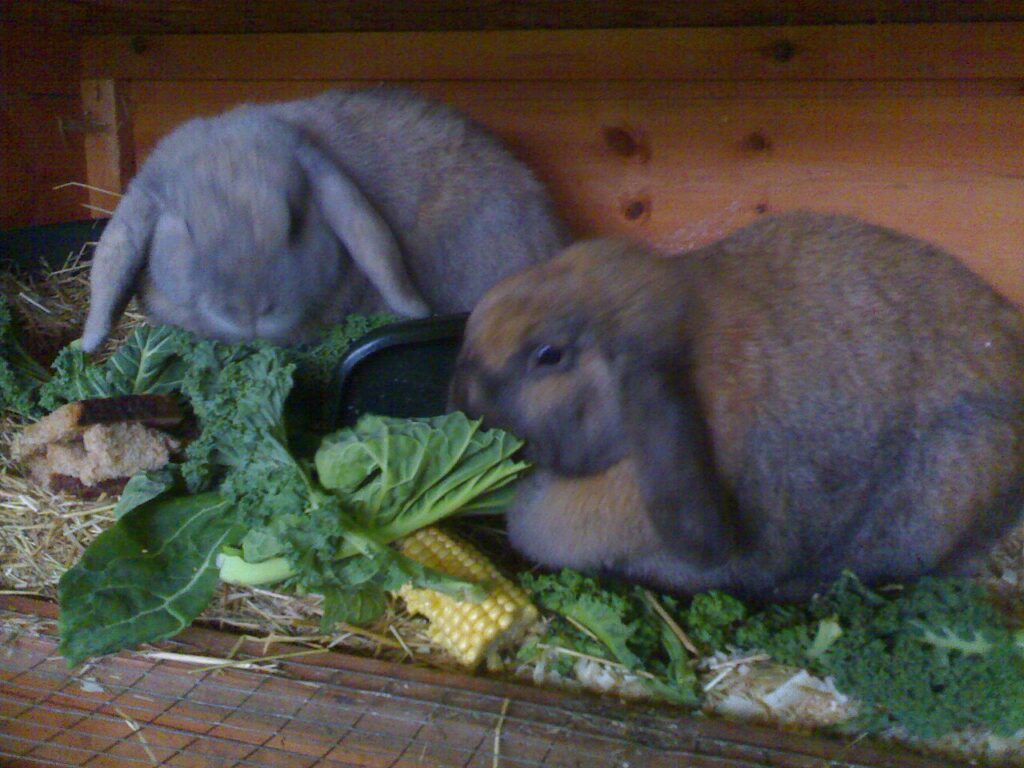
The simplest enrichment of all: scatter your rabbit’s daily greens and a few pellets through a pile of hay instead of serving them in a bowl, or stuff hay and treats into a cardboard tube. Your rabbit has to work through the hay to find the good pieces, which slows eating down, adds activity and mimics grazing far better than a bowl does.
Rotate Everything: A Simple Rotation Schedule
An item that never changes becomes furniture — rabbits investigate it less and less. Rotation keeps familiar items feeling new. You do not need to own much; you need to swap things around. A simple pattern:
| When | What to change |
|---|---|
| Daily | Scatter food in hay or a new spot; move one small item to a different place |
| Every 2–3 days | Swap two or three toys or chews for different ones from your stock |
| Weekly | Change one bigger feature: rebuild the cardboard castle, refill the dig box, rearrange tunnels |
| Monthly | Review everything: discard damaged items, deep-clean, and note what your rabbit actually uses |
Watch what your rabbit chooses. Some rabbits are diggers, some are chewers, some love nothing more than sitting in a box. Rotation tells you their preferences, and you can weight your stock towards the winners.
DIY Enrichment From Cardboard and Tubes
The best rabbit toys are often free. Cardboard boxes become castles and hideaways; toilet-roll and kitchen-roll tubes become treat dispensers when stuffed with hay and a morsel of food; a paper bag (handles removed) filled with hay makes a foraging parcel.
Prepare cardboard properly first, because the extras in packaging are the problem, not the card itself:
- Remove all tape — sticky tape can be chewed and swallowed and offers nothing safe to eat.
- Pull out every staple and avoid boxes held together with exposed metal or heavy glue.
- Peel off labels and excess glue, and choose plain, unprinted card where you can; avoid heavily waxed or glossy coatings.
- Check tubes too: toilet-roll tubes sometimes carry glue strips and fragrance from the bathroom — use plain ones, or kitchen-roll tubes, and remove any glued seams you can.
Expect DIY items to be destroyed. That is the point. A shredded cardboard castle is enrichment that worked, and rebuilding it differently next week is part of the rotation.
Enrichment for Pairs and Groups
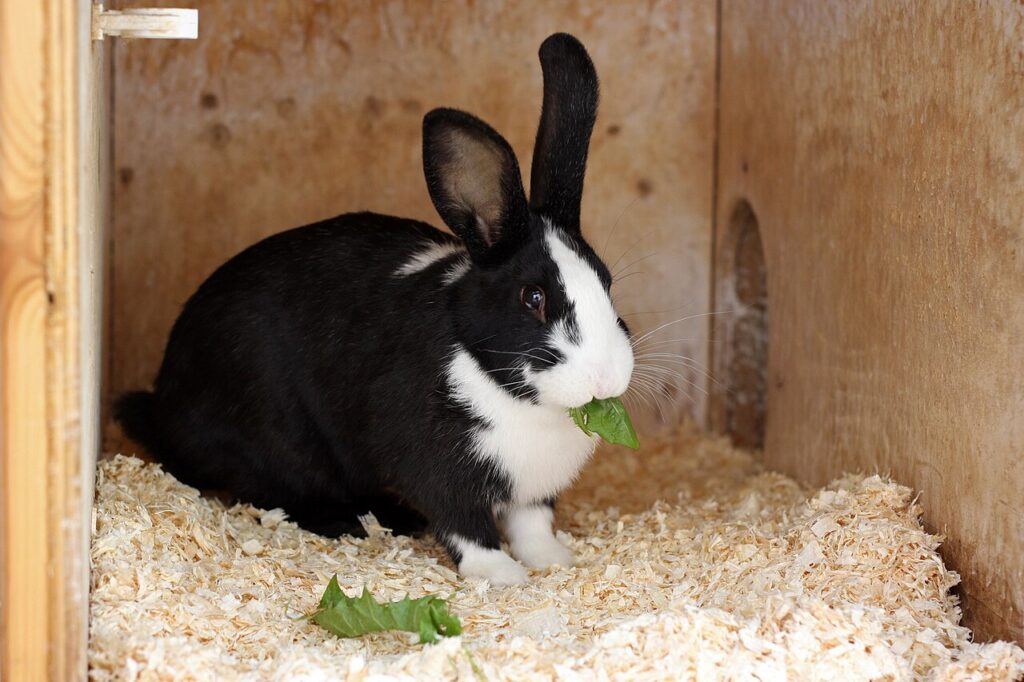
Bonded rabbits enrich each other’s lives most of all, but shared items need a little thought. Provide duplicates of the most popular resources — two hideaways, two tunnels, two foraging spots — so neither rabbit has to compete or guard. Choose hideaways with two exits so a rabbit can always leave without confrontation. Scatter foraging food widely rather than in one pile, so both rabbits can search without crowding. And watch the pair with new items: novelty can trigger guarding in the first minutes, and some rabbits prefer to investigate a new toy solo before sharing it.
Signs of Boredom to Watch For
Enrichment needs go up and down, and behaviour is your feedback. In general terms, a rabbit who may need more stimulation often shows some of the following:
- Bar chewing or cage rattling, especially at predictable times of day.
- Destructive digging or chewing aimed at the enclosure, flooring or corners rather than at toys.
- Over-grooming — themselves or a companion — beyond normal washing.
- Restlessness or, at the other extreme, sitting hunched and uninterested for long periods.
- Attention-seeking destruction the moment you approach, suggesting the day holds too little to do.
Respond by changing the environment, not the rabbit: add a dig box, start scattering food, rebuild something. If behaviour changes suddenly, or your rabbit stops eating or seems unwell, that is not boredom — contact a veterinarian, because illness in rabbits can look like behaviour change.
Safety Checks: Keep Play Safe
Enrichment is only a benefit if it is safe. Build these habits into your routine:
- Rotate and inspect together. Every time you swap an item, check it first: splintered wood, cracked plastic, fraying fabric and loose threads all mean the item comes out.
- Remove damaged items promptly. A toy that was safe when new can become a hazard as it is chewed down. When in doubt, throw it out.
- Avoid small parts that could be swallowed. No loose plastic eyes, bells with detachable clappers, small rubber pieces or buttons. If a part can come off and fit in a rabbit’s mouth, it does not go in the enclosure.
- Mind strings and loops. Frayed fabric tunnels, dangling cords and looped string can trap a leg or a neck; cut loops and discard worn fabric items.
- Prepare cardboard properly, as above: no tape, no staples, minimal glue.
- Check natural chews. Use only untreated items sold or known to be safe for rabbits; never offer painted, varnished or chemically treated wood.
- Supervise novelties. Watch the first session with anything new, especially DIY items, to see how your rabbit attacks it.
Conclusion
Rabbit enclosure enrichment is mostly attitude: cover the natural behaviours — digging, chewing, foraging, hiding, exploring — with simple items, rotate them so they stay interesting, and check everything for damage and small parts before it goes in. Cardboard, tubes and hay will carry you a long way, and your rabbit’s behaviour will tell you what is working. Start with one change today, perhaps scattering dinner through the hay, and build from there.
Frequently Asked Questions
How much enrichment does a rabbit need?
Something for each natural behaviour: a digging outlet, chew items, a hideaway, tunnels or cover to move through, and food to forage for daily. Variety and rotation matter more than quantity — a few items swapped regularly beat a crowded enclosure of ignored toys.
Is cardboard safe for rabbits to chew?
Plain cardboard is widely used for rabbit toys and hideaways, provided you remove all tape, staples, labels and excess glue first, and avoid waxed or glossy card. Expect it to be destroyed and replace it when soiled or falling apart.
How often should I rotate my rabbit’s toys?
A workable rhythm is small changes daily (move an item, scatter food somewhere new), swapping a few toys every two to three days, and changing one bigger feature weekly. Rotation keeps familiar items interesting without constant buying.
What are the signs my rabbit is bored?
Common signs include bar chewing, destructive digging or chewing aimed at the enclosure rather than toys, over-grooming, restlessness, or sitting uninterested for long periods. Change the environment first — but if your rabbit stops eating or seems unwell, contact a vet.
Do bonded rabbits need separate enrichment?
They share well with a little planning: provide two hideaways, tunnels and foraging spots so neither rabbit competes, choose hideaways with two exits, and scatter food widely. Duplicates of favourite items prevent guarding.
Related Guides on RabbitCare
References
- House Rabbit Society (rabbit.org) — guidance on rabbit behaviour, toys and enrichment.
- RSPCA — advice on rabbit environment, enrichment and welfare needs.