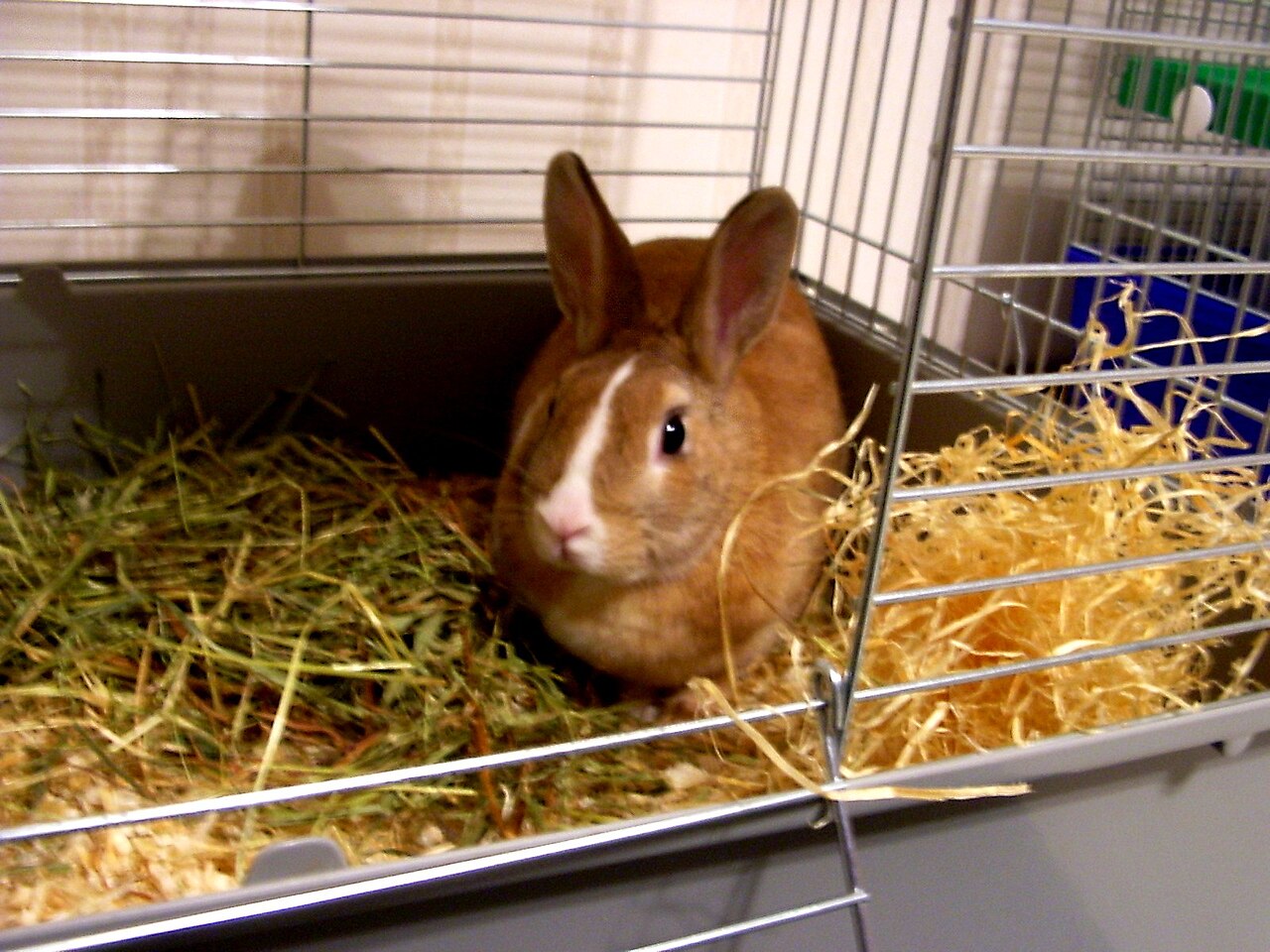
The best indoor rabbit housing gives your rabbit enough room to move, stretch, play and rest, in a safe spot inside your home: most owners do well with a roomy exercise pen, a large purpose-built enclosure, or a rabbit-proofed room with a defined base area. A small cage on its own is rarely enough, because rabbits are active animals who need daily space to exercise, not just somewhere to sleep.
This guide compares the main indoor options honestly, explains what every setup must include, and covers where in the home to put it and how to keep it safe.
Why Indoor Housing Suits Pet Rabbits
Living indoors protects rabbits from bad weather, predators and many of the sudden temperature changes that can trouble them outside. It also means your rabbit lives alongside you, which makes it far easier to spot changes in appetite, droppings or behaviour early — often the first signs that something is wrong. Indoor rabbits tend to become more confident and interactive, simply because they are part of everyday household life.
Indoor living does need thought, though. Your home contains cables, furniture, cleaning products and escape routes that an outdoor hutch does not, and your rabbit still needs the same things any rabbit needs: space, hay, shelter, and somewhere quiet to retreat to. Good housing design solves both sides of that equation.
The Main Indoor Housing Options
Exercise pen (puppy pen or playpen)
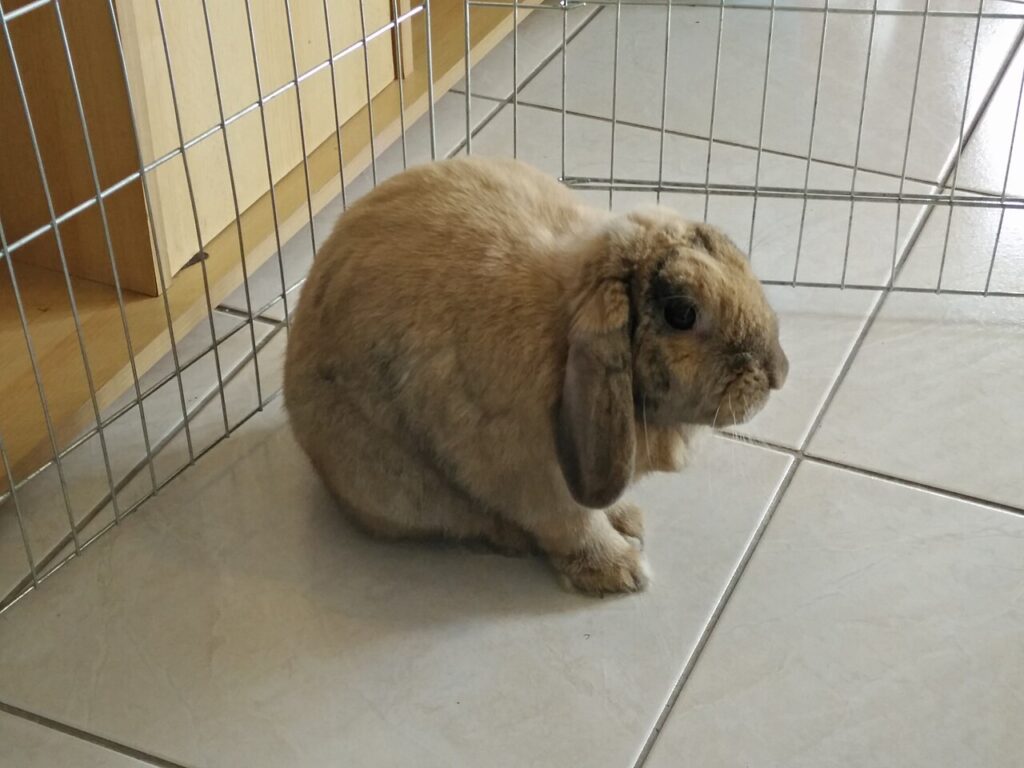
A metal exercise pen is one of the most popular and flexible choices. Pens can be arranged in a square, rectangle or around a corner, expanded with extra panels, and folded away if needed. They give a generous floor area for the price, and the open top makes cleaning and interacting with your rabbit easy. Choose sturdy panels that a rabbit cannot push over or squeeze through, and a height your rabbit cannot jump — some rabbits are surprisingly athletic. A pen works best on a washable floor covering, with the rabbit’s core supplies arranged inside.
Rabbit-proofed room or room section
The most spacious option is giving your rabbit a whole room, or a sectioned-off part of one, with cables and hazards removed or protected. Free-roam and part-roam rabbits get the most exercise and mental stimulation, and many owners find a rabbit with room to roam is calmer and more litter-trained. The trade-offs are preparation and supervision: skirting boards, furniture legs and door gaps all need attention, and the room must genuinely be rabbit-proofed rather than assumed safe.
Large enclosure or indoor hutch-style base
A large, well-made enclosure can work as a home base, particularly if it opens onto a pen or room for exercise. What matters is the usable floor space and height, not how the product is marketed. Multi-level designs can add interest, but ramps must be gentle and levels wide enough to land on safely; floor space at ground level remains the most valuable part, because that is where rabbits hop, stretch and rest.
| Option | Strengths | Watch out for |
|---|---|---|
| Exercise pen | Flexible shape, generous space, easy access for cleaning | Jumping out, pushing panels, floor protection needed |
| Rabbit-proofed room | Maximum space and enrichment, natural exercise | Cables, furniture chewing, doors left open |
| Large enclosure | Defined, secure base; good combined with a pen | Too-small models sold as “large”; limited exercise space alone |
| Small cage alone | Cheap and compact | Not enough room to hop, stretch or exercise — not suitable as sole housing |
Why a Small Cage Alone Is Not Enough
Many cages sold for rabbits are closer to a bedroom than a home. A rabbit confined to a small cage cannot hop properly, stand up fully, or choose between a warm spot and a cool one. Over time, lack of movement contributes to weight gain, weak muscles and boredom-related behaviours such as bar-biting and over-grooming. A cage can still be useful as a retreat or travel base inside a larger setup, but the rabbit’s world needs to be bigger than the cage itself. If your current setup is a cage, attaching an exercise pen is often the simplest, cheapest upgrade you can make.
What Every Indoor Setup Must Include
Whichever housing style you choose, the essentials are the same:
- A constant hay area. Unlimited hay is the foundation of the rabbit diet and should be available day and night, ideally in or beside the litter tray, since rabbits like to graze while they toilet.
- A litter box with rabbit-safe litter and hay, big enough for your rabbit to sit in comfortably and turn around.
- A hideaway. Every rabbit needs at least one enclosed hiding place — a wooden house, a sturdy cardboard box with two exits, or a covered corner — where they can retreat and feel secure.
- Fresh water, in a heavy bowl, a bottle, or both, refreshed daily.
- Chew toys and enrichment: untreated willow, applewood sticks, cardboard and tunnels keep teeth and minds busy and give your rabbit something legal to chew.
- Comfortable flooring with grip — rabbits’ feet slip on smooth surfaces, and fully wire floors are uncomfortable and can injure feet.
- Room to exercise daily, whether that is built into the housing or provided as supervised time in a pen or room.
Choosing the Right Location in Your Home
Where the housing sits matters almost as much as the housing itself. Look for a spot that is:
- Quiet but not isolated — a family room corner is often ideal; rabbits enjoy company but need to escape noise when they choose.
- Draught-free, away from doors that open to the outside and from gaps under windows.
- Away from heat extremes — not beside a radiator, not in direct sun through glass, and not in a room that gets very hot or very cold.
- Away from strong smells and fumes, including kitchens with cooking smoke and rooms where sprays are used often.
- Easy for you to clean and reach, because a setup that is awkward to maintain quietly stops being maintained.
Safety Points for Indoor Rabbits
Indoor hazards are the main risk of house rabbits, and most are preventable:
- Protect every cable. Rabbits chew wires instinctively, and a mains cable can kill. Use cable protectors, block access, or lift cables out of reach — and recheck after moving any furniture.
- Block gaps behind appliances and under furniture where a rabbit could become trapped.
- Remove poisonous houseplants from reach, and store cleaning products, medicines and small objects that could be swallowed well away.
- Mind other pets. Even a friendly dog or cat should never be left alone with a rabbit; supervise all contact.
- Watch doors and feet. Rabbits move quietly and fast — a household routine of checking before closing doors prevents accidents.
- Ventilate without chilling: fresh air is healthy, but never aim a fan or air-conditioning stream directly at the housing.
If your rabbit will roam beyond the pen, a full room-by-room check is worthwhile before the first outing, not after the first chewed cable.
Keeping an Indoor Setup Clean and Comfortable
A daily tidy — removing soiled litter, refreshing hay and water — takes minutes and keeps smells down. A deeper clean of the enclosure and floor covering once a week or so prevents build-up and gives you a chance to check the flooring and hideaways for damage. Wash bowls daily, and replace cardboard toys and boxes as they become soiled or chewed down. Comfort matters too: offer a choice of resting surfaces, such as a fleece or mat in one corner and a cooler surface in another, so your rabbit can choose.
Conclusion
The best indoor rabbit housing is the option that gives your rabbit the most usable space, safely, in a calm part of your home: for most people that means an exercise pen, a generous enclosure with exercise access, or a properly rabbit-proofed room. Include the non-negotiables — unlimited hay, a litter box, a hideaway, fresh water, chew toys and grippy flooring — protect cables and gaps, and choose a quiet, draught-free location. Done well, indoor housing keeps your rabbit safe, active and part of the family. Next step: measure the space you have available and compare it honestly with how your rabbit lives now.
Frequently Asked Questions
Is an exercise pen big enough for a rabbit?
For many rabbits, yes — a pen usually offers far more usable floor space than a cage, and it can be extended with extra panels. Make sure your rabbit also gets daily exercise, whether the pen is large enough to count as that exercise or you add supervised roaming time.
Can a rabbit live in a cage if it comes out every day?
Only if the cage is genuinely large and the daily exercise time is long and reliable. In practice, a pen or enclosure attached to the cage is a better answer, because rabbits are most active at dawn and dusk, which may not match your schedule.
Where is the best room for an indoor rabbit?
A quiet living area where people spend time but where the rabbit can retreat — away from radiators, direct sun, draughts and kitchen fumes. A corner of a family room suits most rabbits well.
Do indoor rabbits need a hideaway if they live in a pen?
Yes. Open space alone can feel exposed to a prey animal. At least one enclosed hiding place where your rabbit can retreat and sleep undisturbed is essential in every setup.
How do I stop my rabbit chewing cables indoors?
Assume every reachable cable will be chewed. Cover cables with hard protectors, block access behind furniture, or move cables out of reach entirely, and provide plenty of legal chew toys so your rabbit has better options.
Related Guides on RabbitCare
- How Big Should a Rabbit Enclosure Be? Space Guidelines
- How to Rabbit-Proof Your Home Room by Room
- How to Set Up a Rabbit Litter Box
References
- House Rabbit Society (rabbit.org) — guidance on indoor housing, exercise pens and rabbit-proofing.
- RSPCA — rabbit welfare guidance on housing, space and environment.