
Learning how to rabbit proof a home means going room by room and removing or blocking anything a rabbit can chew, swallow, climb into or slip through — starting with electrical cables, which are the single most dangerous item in any house. Work through one room at a time, get down to rabbit level to spot what your rabbit actually sees, and set up a safe base zone before you allow free roaming anywhere else.
Rabbits explore the world with their teeth. Chewing is not bad behaviour; it is how a rabbit tests its surroundings and keeps its ever-growing teeth in use. Rabbit-proofing is therefore not about stopping the chewing, but about making sure everything within reach is either safe to chew or impossible to reach.
Start With a Safe Base Zone
Before you proof the whole house, create one completely safe area: your rabbit’s enclosure and the space immediately around it. This base zone is where your rabbit lives, eats and rests, and it is the standard you then apply to every other room. A room is only ready for free-roam time when it matches the base zone’s level of safety — and even in a proofed room, your rabbit should be supervised, never left alone for hours with hazards you may have missed.
Our guide to the best indoor housing for rabbits covers choosing and setting up that base. Once the base is solid, work outward room by room.
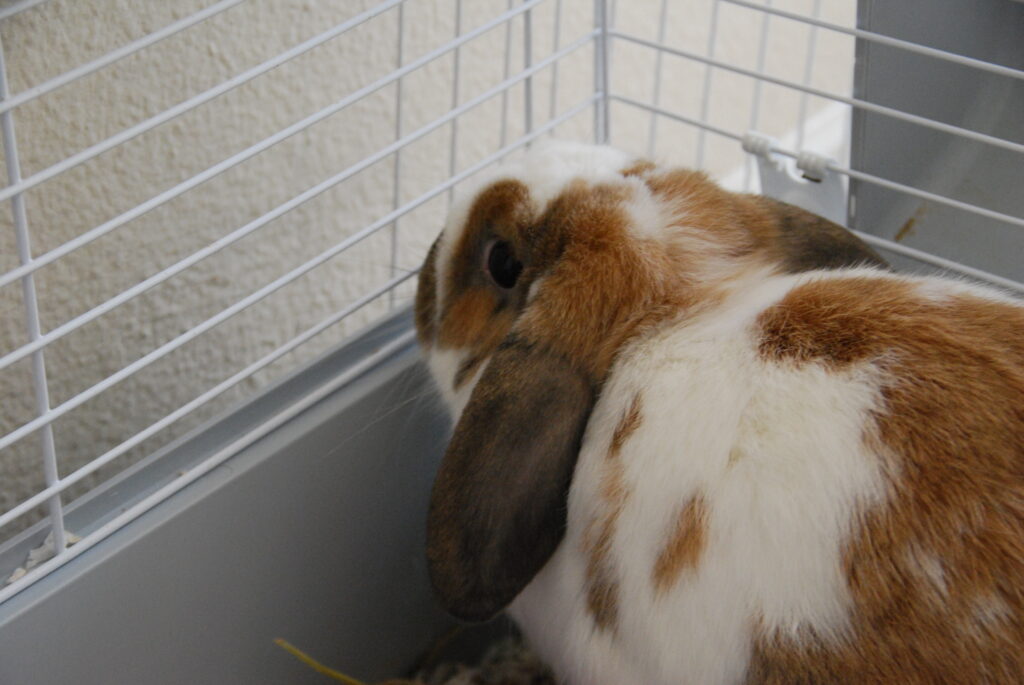
Get Down to Rabbit Level
The most useful rabbit-proofing technique costs nothing: lie on the floor. From rabbit height, a room looks completely different. You will see the cable dangling behind the television, the gap under the sofa, the frayed rug corner, the houseplant leaves hanging at nibbling height and the skirting board edge that sticks out just enough to grip with teeth. Walk — or crawl — each room slowly and list everything you can see at that level before you start moving furniture.
Cables and Wires: The Top Priority
Electrical cables are a genuine danger. A rabbit can bite through a cable in seconds, and a live cable can cause a severe electric shock or worse. Treat every cable as urgent:
- Remove what you can. Unplug and store chargers, lamps and appliances that are not in daily use.
- Cover what remains. Enclose cables in hard plastic cable protectors or split-loom tubing that teeth cannot easily penetrate, and re-check covers regularly for damage.
- Lift cables off the floor. Route them behind heavy furniture, along walls above skirting height, or inside cable trunking fixed to the wall.
- Block access. Use furniture, panels or playpen sections to fence off the area behind televisions, computers and entertainment units, where cables cluster.
- Never rely on a rabbit “not being interested”. A rabbit that ignores a cable for months may chew it today. Covers and barriers, not hope, are the protection.
Skirting Boards, Furniture and Woodwork
Skirting boards, door frames, chair legs and wooden furniture are prime chewing targets — the edges are exactly the right shape for rabbit teeth. Protect them rather than punish the chewing:
- Fit clear plastic corner guards or untreated wooden chew boards over skirting in your rabbit’s favourite spots, so there is a sacrificial surface to gnaw instead.
- Move valued or antique furniture out of free-roam rooms entirely; no guard protects everything.
- Offer plenty of legal alternatives — willow, apple wood and cardboard chew toys — right beside the places your rabbit likes to chew. Redirecting works better than scolding.
- Check painted or varnished woodwork: a rabbit should not be chewing paint or finishes, so block access to flaking or damaged paintwork completely.
Persistent chewing of one spot often means the area needs a better barrier, not a sterner owner. Our article on rabbit dental care explains why the urge to chew is constant and healthy — the job is to aim it at safe targets.
Houseplants: Keep Them Out of Reach
Many common houseplants are not safe for rabbits to eat, and it is not always easy to know which ones. The cautious rule is simple: treat every houseplant as off-limits unless you are certain it is safe. Move plants up onto high shelves or into rooms your rabbit never enters, hang them out of reach, and sweep up fallen leaves, which land exactly at rabbit level. Do not rely on a list of “toxic plants” being complete — if you cannot identify a plant and confirm it is safe, keep it away from your rabbit entirely.
Rugs, Carpets and Flooring
Rabbits dig and chew at carpet edges and rug corners, and swallowing carpet fibres or rubber rug backing can cause a dangerous gut blockage. In free-roam areas, choose low-pile, tightly woven rugs you can afford to lose, or cover prized flooring with washable mats. Lift or tape down loose edges and corners, and remove any rug with a rubber or foam backing your rabbit starts to pull apart. If your rabbit digs at one spot, place a digging box or a heavy mat there instead. For more on surfaces, see our guide to the best flooring for rabbits.

Small Objects, Toys and Clutter
Anything small enough to swallow is a hazard: children’s toys and their detachable parts, hair ties, buttons, coins, rubber bands, batteries and bits of plastic. Batteries are especially dangerous if punctured or swallowed. Before a free-roam session, do a floor sweep of the room: pick up everything small, close storage boxes, and keep children’s play areas and rabbit areas separate unless every item has been checked. Shoes and bags left on the floor will also be chewed and may carry outdoor dirt and cleaning chemicals on them, so store them behind a closed door.
Doors, Gaps and Escape Routes
Rabbits squeeze through surprisingly small gaps and dart through doors the moment they open. Check for gaps under doors, spaces beside radiators and pipes, and openings behind appliances, and block them with panels or boards. Fit baby gates or playpen panels across doorways to rooms that are not proofed, and make a household rule: doors to the outside are opened carefully, with a check for a rabbit at ankle height first. A rabbit that slips outside can be lost or injured quickly, so treat escape-proofing as seriously as chew-proofing.
Room-by-Room Quick Checklist
| Room | Key hazards to check |
|---|---|
| Living room | Television and speaker cables, skirting boards, rug corners, houseplants, remote controls |
| Bedroom | Phone chargers, wardrobe gaps, shoes, small items on the floor, cables behind the bed |
| Kitchen | Cables behind appliances, cleaning products, gaps beside units, food within reach — supervise closely or keep out |
| Bathroom | Cleaning chemicals, medicines, damp flooring — usually best kept closed to rabbits |
| Hallway | Front-door escapes, shoe racks, post and paper on the floor, stair access |
| Children’s rooms | Small toys and parts, craft materials, batteries, dropped snacks — proof thoroughly or keep closed |
Safety Rules That Apply Everywhere
- Supervise free-roam time. Proofing reduces risk; it does not remove it. Never leave a rabbit unsupervised for long periods in any room.
- Keep cleaning products, medicines and chemicals behind closed doors or in closed cupboards — never on the floor, even briefly.
- Re-check rooms regularly. New chargers, moved furniture and dropped objects change the risk. A quick rabbit-level scan before each session takes a minute.
- If your rabbit chews a cable or swallows something it should not, contact a veterinarian promptly — do not wait for symptoms. Our guide to the signs your rabbit is sick explains what to watch for.
Conclusion
Rabbit-proofing is a method, not a one-off job: build a safe base zone first, then go room by room at rabbit level — cover or remove every cable, protect skirting and furniture, lift houseplants and small objects out of reach, sort flooring, and block every gap and door risk. Keep supervising even in proofed rooms, and re-check whenever anything changes. Next step: lie on the floor of the room your rabbit uses most, and list what you see.

Frequently Asked Questions
What is the most dangerous thing for a rabbit in a home?
Electrical cables. A rabbit can bite through a cable almost instantly, risking a severe electric shock. Remove cables where possible, enclose the rest in hard protectors, and block access to cable clusters behind appliances.
How do I stop my rabbit chewing skirting boards?
You cannot stop the urge to chew, but you can protect the boards: fit corner guards or untreated wooden chew boards over favourite spots, and place appealing safe chew toys right beside them so your rabbit chooses the legal option.
Are houseplants dangerous for rabbits?
Many are, and it is hard to be sure about every species. The safe approach is to keep all houseplants out of your rabbit’s reach unless you are certain a plant is safe, and to clear up fallen leaves promptly.
Can I leave my rabbit alone in a rabbit-proofed room?
No. Proofing lowers the risk but cannot eliminate it — rabbits find new things to chew and situations change. Free-roam time should always be supervised, with your rabbit returned to its safe base zone when you cannot watch.
What should I do if my rabbit chews through a cable?
Switch off the power at the socket if it is safe to do so, check your rabbit, and contact a veterinarian promptly — burns in the mouth are not always obvious. Do not wait to see whether symptoms appear.
Related Guides on RabbitCare
References
- House Rabbit Society (rabbit.org) — guidance on indoor living, rabbit-proofing and safe housing.
- RSPCA — rabbit welfare guidance, including creating a safe home environment.