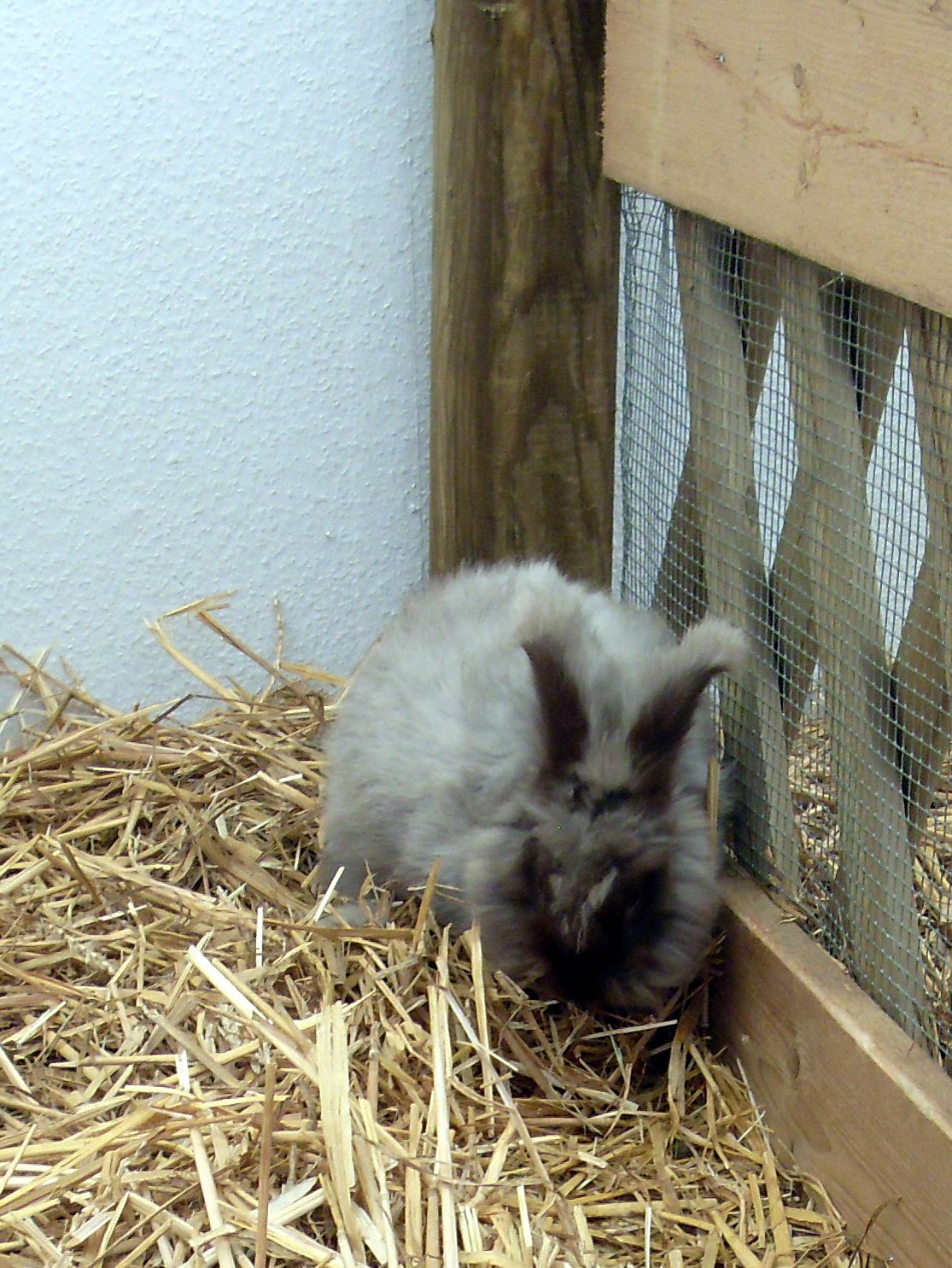
Why do rabbits chew everything? Because they have to: their teeth grow continuously throughout their lives, and chewing is how those teeth stay worn down to a safe length. Exploring the world by mouth, testing textures, and plain boredom add to the drive. You cannot — and should not — stop a rabbit chewing. What you can do is redirect it: give attractive legal targets everywhere your rabbit goes, protect the dangerous and valuable things, and learn which changes in chewing are normal and which mean a vet visit.
This guide explains the reasons behind the chewing, what rabbits target and why, how to redirect the habit safely, and the warning signs that chewing has become a health issue.
Reason One: Teeth That Never Stop Growing
A rabbit’s teeth — the front incisors you can see and the cheek teeth (molars) further back — grow throughout the rabbit’s life. In the wild, hours of grazing tough, fibrous plants wear them down as fast as they grow. In a pet rabbit, that balance has to be maintained deliberately: if chewing and grazing do not wear the teeth, they overgrow, develop sharp points, and make eating painful.
This is why chewing is not a vice to be trained out of a rabbit; it is dental maintenance the rabbit performs on itself. The single most important “chew” is hay: long strands of hay or grass, ground down with a side-to-side jaw action for hours a day, do most of the wearing work. Wooden chews, willow and cardboard supplement that work but never replace it. Our rabbit dental care guide explains how the teeth grow, what overgrowth looks like, and the checks worth doing.
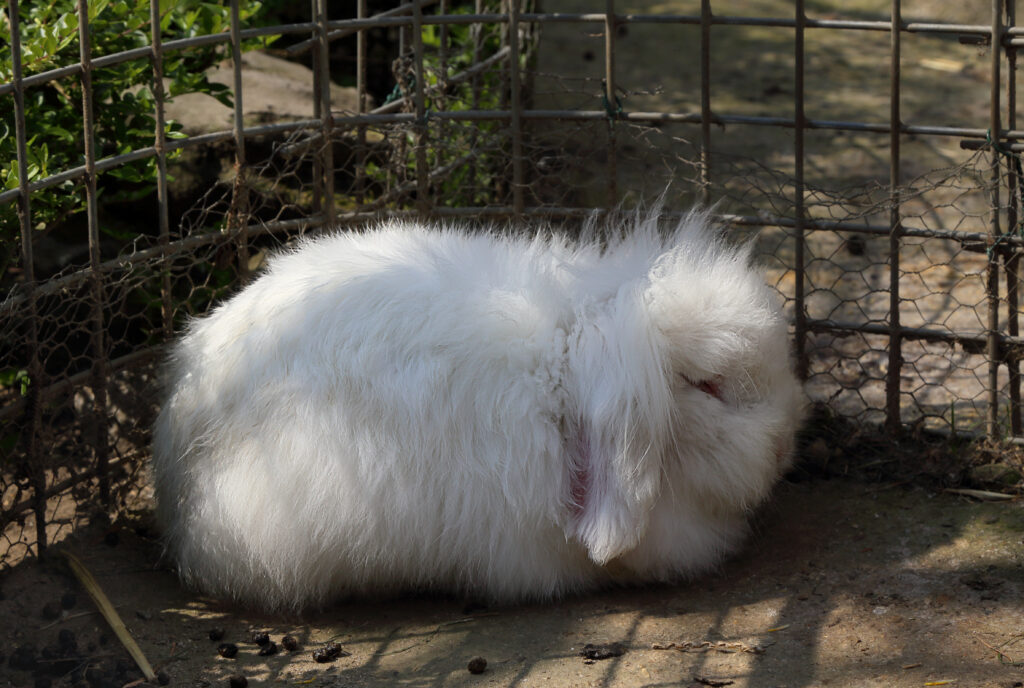
Reason Two: Exploring by Mouth
Rabbits experience much of their world through their mouths. A new object gets sniffed, licked, nibbled and tested — is it food, is it in the way, can it be moved? Wild rabbits clear vegetation and roots from around burrow entrances with their teeth, and pet rabbits apply the same logic to anything blocking a favourite route: if a chair leg, a box or a door edge obstructs a path your rabbit likes, chewing it is, from the rabbit’s point of view, sensible DIY. This is also why chewing often concentrates on particular spots rather than being random — the rabbit is frequently editing the environment, not just passing time.
Reason Three: Boredom and Frustration
A rabbit with too little to do will chew more, and will choose targets you would rather they didn’t. Chewing is self-rewarding — it occupies the mind as well as the jaws — so an under-stimulated rabbit in a bare enclosure or with too little exercise time defaults to it. Bar chewing is the classic frustration version of the same story, covered below. Boredom chewing tends to escalate over days and weeks rather than appearing overnight, and it improves noticeably when enrichment and space improve. Our rabbit enrichment ideas guide is full of ways to give those jaws a better job.
What Rabbits Target — and the One Real Danger
Electrical cables: act first, read later
Cables deserve a section of their own because they are the one chewing target that can kill. A rabbit biting through a live electrical cable risks electrocution and burns, and damaged cables are also a fire risk in your home. Rabbits seem drawn to cables — they resemble roots and vines, and they often cross exactly the routes rabbits travel along skirting boards. Treat every cable in rabbit-reachable space as urgent: cover cables with hard split-loom tubing or cable protectors, tuck them behind furniture or up out of reach, and block access to the backs of appliances. Our rabbit-proofing guide works through a home room by room and should be your first job with any free-roaming rabbit — before relying on redirection.
Everything else
Skirting boards and door frames (wood at rabbit height, often on a chosen route), furniture legs, carpet edges and rugs (digging and chewing combined), wallpaper corners, remote controls and books left at rabbit level, houseplant leaves within reach, and their own enclosure fittings. Some of this is taste and texture — rabbits have preferences, and once a rabbit discovers a particularly satisfying skirting board it will return to it — and some is location: anything on a well-used path is fair game in rabbit logic.

You Can’t Stop It — So Redirect It
Redirecting works on a simple principle: make the legal option easier and more attractive than the illegal one, and make the illegal option hard to reach. In practice:
- Put a chew station everywhere your rabbit goes. A small bundle of willow sticks, a seagrass mat or a cardboard hide in every room or area your rabbit uses — if a legal target is always nearer than your skirting board, it wins most of the time.
- Hay, hay, hay. Generous hay in racks, boxes and litter trays keeps jaws busy on the most beneficial chew of all. A rabbit eating hay is a rabbit not eating your furniture.
- Block and cover. Protect skirting boards in favourite spots with covers or furniture placement, put guards on cables, lift plants and books out of reach, and accept that some rooms or corners may simply need a barrier.
- Rotate the targets. Swap chew items every few days so they stay novel — boredom with the legal option is what sends rabbits back to the illegal ones.
- Interrupt kindly, offer immediately. If you catch your rabbit chewing something forbidden, calmly move them or the item, and instantly present the legal alternative. Never shout at or punish a rabbit — punishment teaches fear of you, not an understanding of furniture.
| Target | Why it happens | The fix |
|---|---|---|
| Electrical cables | Root-like, crossing rabbit routes | Cover with hard tubing, lift out of reach, block access — immediately |
| Skirting boards and door frames | Wood at rabbit height on a favourite path | Covers or barriers plus a chew station right beside the spot |
| Carpet and rugs | Digging and chewing instincts combined | Dig box, cover the patch, offer mats and cardboard to destroy instead |
| Furniture legs | Chewable wood within easy reach | Wrap or block legs; place legal chews at the base |
| Enclosure bars | Frustration, too little space or exercise | More space and out-time, enrichment, chew items inside the enclosure |
| Own enclosure fittings and bowls | Exploration, hunger for fibre, boredom | More hay, rotate toys, check the overall setup and routine |
Chewing the Enclosure: Bars and Fixtures
A rabbit who chews the bars of their enclosure or run is usually telling you something about the setup rather than about their teeth: too little space, too little time out exercising, or too little to do inside. Review the enclosure honestly against welfare-based sizing — our guides to enclosure size and indoor housing will help — increase exercise time, and make sure the enclosure itself contains hay, a hideaway and chew items at all times. Persistent bar chewing damages teeth as well as signalling frustration, so it is worth solving properly rather than ignoring.
Chewing Themselves: Over-Grooming and Barbering
Occasionally chewing turns inward. A rabbit may chew at their own fur, or repeatedly chew a bonded partner’s fur — sometimes called barbering. Occasional mutual grooming is normal in bonded pairs, but persistent chewing that thins the coat or leaves bald patches is commonly read as a sign of boredom, stress or too little fibre in the diet. Increase hay and enrichment first, review space and routine, and see a vet if the skin underneath becomes sore, broken or inflamed, or if one rabbit is clearly being pestered — skin problems and parasites can also cause chewing at the coat and need ruling out.
When Chewing Changes: The Dental Warning Signs
Because chewing is driven by teeth, changes in the pattern are worth attention. See a veterinarian promptly if your rabbit:
- Chews much less than usual, or stops eating hay while still picking at soft foods.
- Drools, has a wet chin, or drops food from the mouth.
- Eats more slowly, leaves favourite foods, or loses weight.
- Develops a wet or messy bottom because eating and grooming have become uncomfortable.
- Suddenly chews far more, or grinds their teeth audibly while at rest — a sign often associated with pain.
Equally, a sudden explosion of destructive chewing in a previously settled rabbit can reflect a change in the home, frustration or discomfort, and deserves investigation rather than irritation. Dental problems in rabbits are common and much easier to treat early — when in doubt, get the mouth checked. Our guides to dental care and signs of pain in rabbits explain what to watch for.
Conclusion
Rabbits chew everything because chewing is survival: continuously growing teeth, a mouth-led way of exploring, and a mind that needs occupation. Work with it, not against it. Protect the cables first — that one is genuinely urgent — then flood every space your rabbit uses with legal targets, keep hay unlimited, rotate the options, and redirect calmly when you need to. And keep an eye on the pattern: a rabbit whose chewing changes suddenly is often a rabbit whose teeth hurt, and that is a job for a vet, not a chew toy.
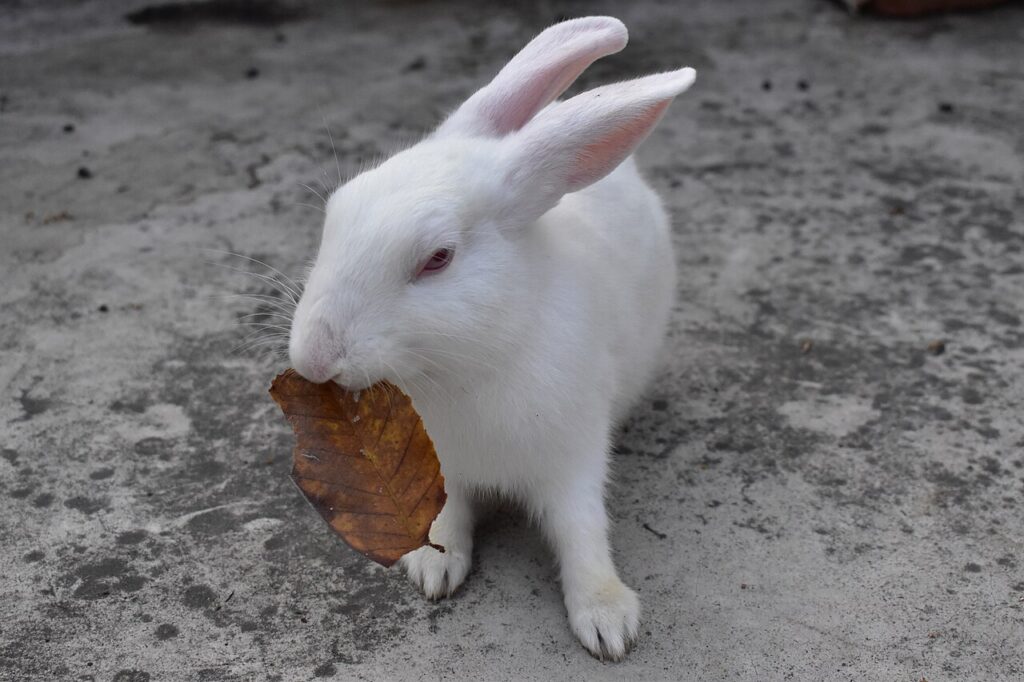
Frequently Asked Questions
Can I train my rabbit to stop chewing?
No, and you should not try — chewing keeps continuously growing teeth at a safe length and is essential to a rabbit’s health. What you can train and arrange is where chewing happens: legal targets everywhere, protected cables and furniture, and calm redirection.
What is the most dangerous thing a rabbit can chew?
Electrical cables. Biting through a live cable can electrocute a rabbit and damaged cables are a fire risk. Cover every reachable cable with hard tubing, lift cables out of reach, and block access behind appliances before letting a rabbit roam.
What should I give my rabbit to chew instead?
Unlimited hay does most of the work. Add untreated willow balls and sticks, seagrass mats and toys, plain prepared cardboard (tape and staples removed) and rabbit-safe wooden chews, rotated every few days and placed wherever your rabbit spends time.
Why does my rabbit chew the bars of the enclosure?
Bar chewing usually signals frustration — too little space, too little exercise time out, or nothing to do inside. Review enclosure size, increase out-time and enrichment, and make sure hay and chew items are always available inside.
When should I worry about my rabbit’s chewing?
If the pattern changes suddenly: chewing much less, dropping food, drooling or a wet chin, eating slowly, losing weight, or audible tooth grinding at rest. Those are dental and pain warning signs that need a vet, not more chew toys.
Related Guides on RabbitCare
References
- House Rabbit Society (rabbit.org) — guidance on rabbit chewing, dental health and rabbit-proofing.
- RSPCA — advice on rabbit behaviour, environment and keeping rabbits safe at home.