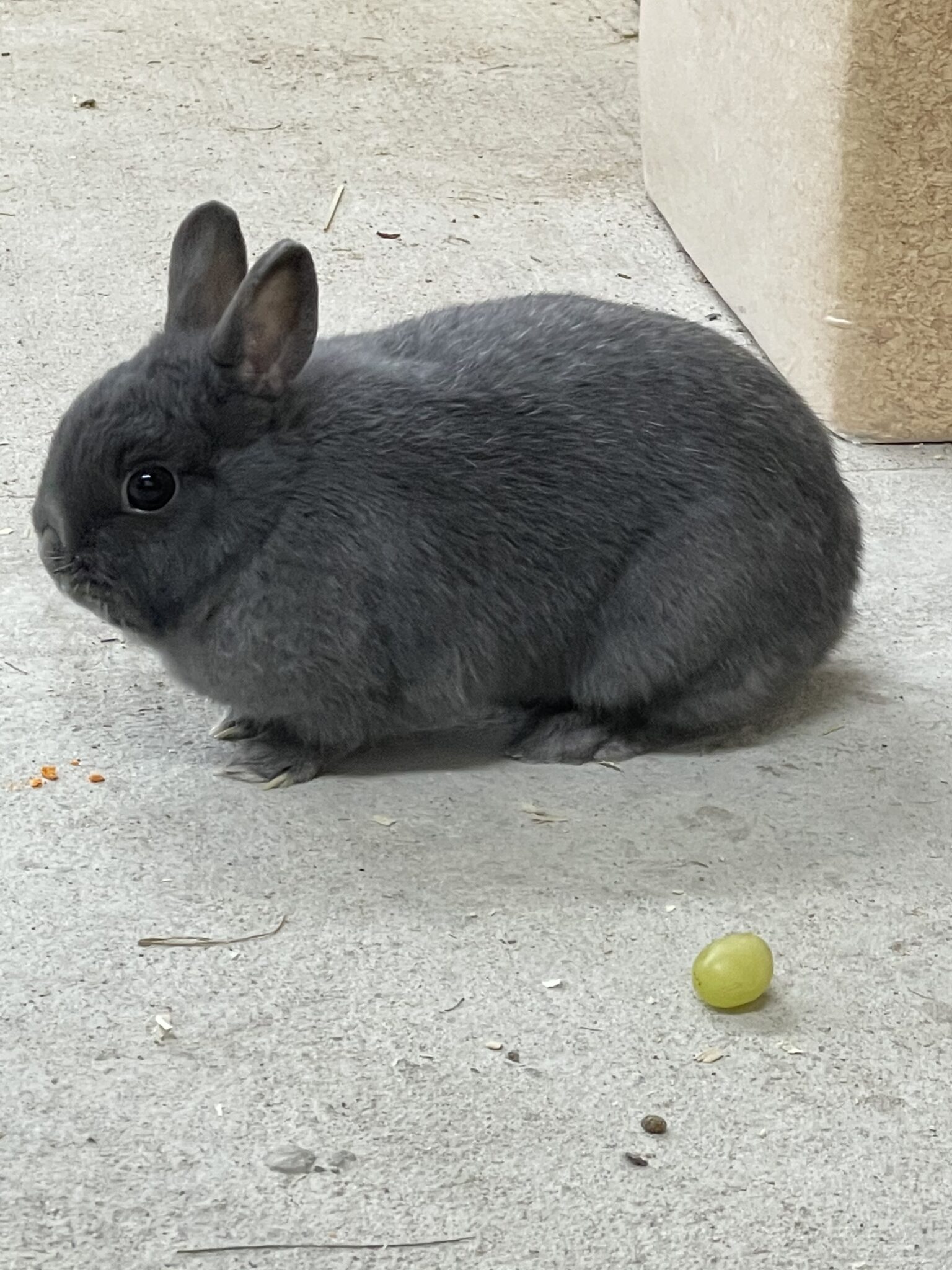
Knowing how to remove rabbit loose fur safely comes down to one rule: only take the fur that is already letting go. During a moult, loose undercoat can be lifted away with gentle brushing, hand-plucking of tufts that come free on their own, damp-hand stroking or a soft rubber mitt — always in the direction the coat grows, in short, calm sessions. Fur that resists is still attached, and it stays. This guide explains how to tell the difference, how each method works, and the things never to do, such as pulling or shaving.
Why Removing Loose Fur Matters
Rabbits cannot help swallowing fur. They groom themselves constantly, and every loose hair licked up is a hair swallowed. Rabbits cannot vomit, so swallowed fur must travel the whole way through the digestive system. Plenty of hay helps keep things moving, but reducing the amount of loose fur available to swallow makes the job easier.
There are everyday reasons too. Loose fur drifts into bedding, hay racks and water bowls, and turns a clean enclosure grubby fast during a heavy moult. Removing it as it loosens also keeps your rabbit more comfortable: a coat full of dead undercoat can feel itchy and heavy. A few minutes of gentle help means less fur ingested, less fur around the home, and a rabbit who feels better in their own coat.
Loose Undercoat or Attached Coat? How to Tell
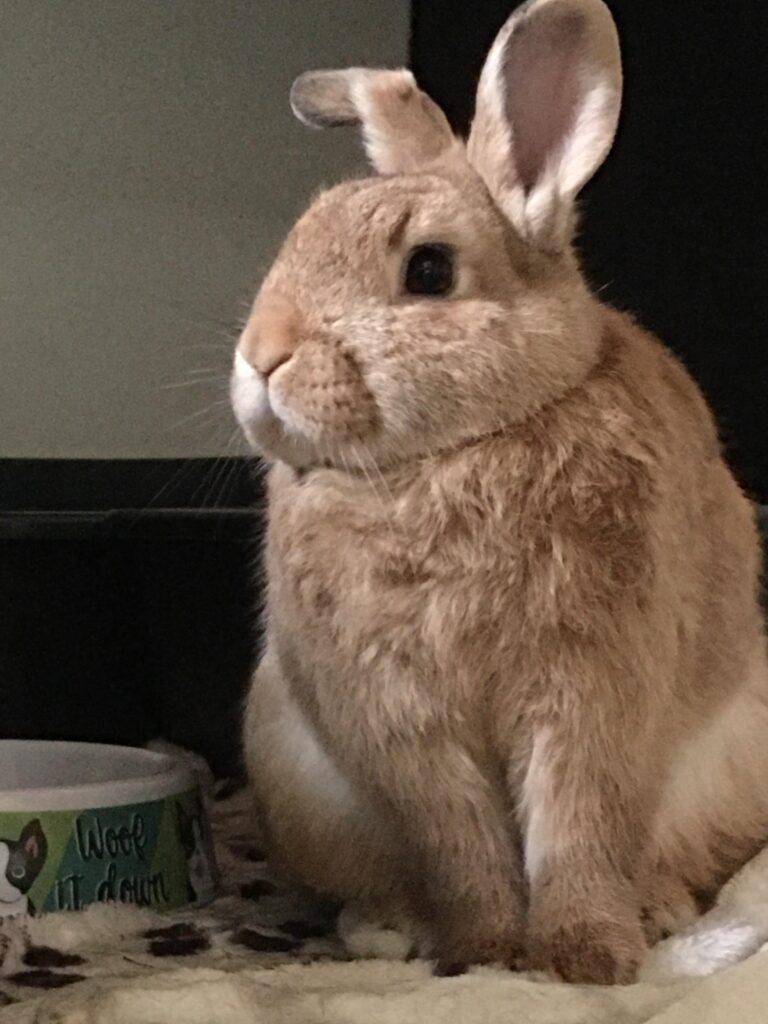
Everything in this guide depends on one skill: recognising fur that is ready to come away. Loose undercoat has a distinctive look and feel once you know it:
- It sits on top. Loose fur often looks slightly raised, dull or wispy compared with the sleeker attached coat beneath.
- It moves freely. A gentle stroke lifts it or shifts it; you can often see individual hairs drift when your rabbit hops or shakes.
- It gathers at moult lines. Shedding usually travels across the body in a visible pattern, and fur at the edge of that pattern is the loosest of all.
- It comes away with no resistance. If a tuft releases into your fingers with the lightest touch, it was ready. If you have to tug, it was not.
Attached coat, by contrast, lies flat and glossy and stays put when you test it gently. Leave it alone: the boundary moves day by day during a moult, so work only where the coat is clearly giving up its fur, and leave the rest for another session.
Before You Start: Setting Up a Calm Session
Rabbits accept fur removal far better when it feels like ordinary gentle handling rather than a procedure. Choose a time when your rabbit is relaxed, work at floor level or on a low, stable surface with a towel for grip, and keep everything unhurried. Have your brush or mitt ready, a bin within reach, and a small treat for afterwards. If your rabbit moves away or struggles, stop — there will be another chance tomorrow, and trust matters more than finishing in one sitting.
Method 1: Gentle Brushing
Brushing is the workhorse method, and the right brush makes all the difference — our guide to the best brush for rabbits explains the types that suit different coats. Whatever you use, the technique is the same:
- Start where the moult is most advanced, where fur is visibly loose.
- Stroke the brush in the direction of growth, from head towards tail, never backwards against the coat.
- Use light, short strokes. Let the brush gather the fur; never press down to scrape at the skin.
- Clear the brush frequently so it keeps lifting fur instead of dragging it.
- Work around sensitive areas — tummy, inner legs, around the tail — with extra care.
Long-haired rabbits need slower, smaller strokes so the brush does not snag. Either way, if the brush starts pulling or your rabbit flinches, that area’s fur is not loose enough yet.
Method 2: Hand-Plucking Loose Tufts — “Harvesting”
During a heavy moult, you will see tufts of undercoat poking up through the topcoat, especially along the back and sides. These can be harvested by hand: pinch the tip of a tuft lightly between finger and thumb and ease it away. It should feel like picking lint off a jumper — the fur releases completely, with no pull on the skin.
The discipline is in what “lightly” means: never grip, twist or tug. Test each tuft with almost no force; if it does not come, it is not a tuft yet — move on. Many rabbits tolerate harvesting better than brushing because no tool is involved, and it is precise: you take only what has already let go, which is exactly the point.
Method 3: Damp-Hand Stroking
The simplest method of all needs nothing but your hands and a little water. Dampen your palms — damp, not wet — and stroke your rabbit slowly in the direction of growth. Loose hairs stick to your skin, and a few minutes of stroking collects a surprising amount of fur. Wipe your hands as they load up, re-dampen, and continue.
This suits rabbits who dislike tools, and doubles as gentle contact many rabbits enjoy anyway. It will not shift deep undercoat the way brushing can, but for daily maintenance during a moult it is quick, calm and free. Keep your hands only lightly damp, so your rabbit never ends up with a wet coat.
Method 4: A Rubber Grooming Mitt
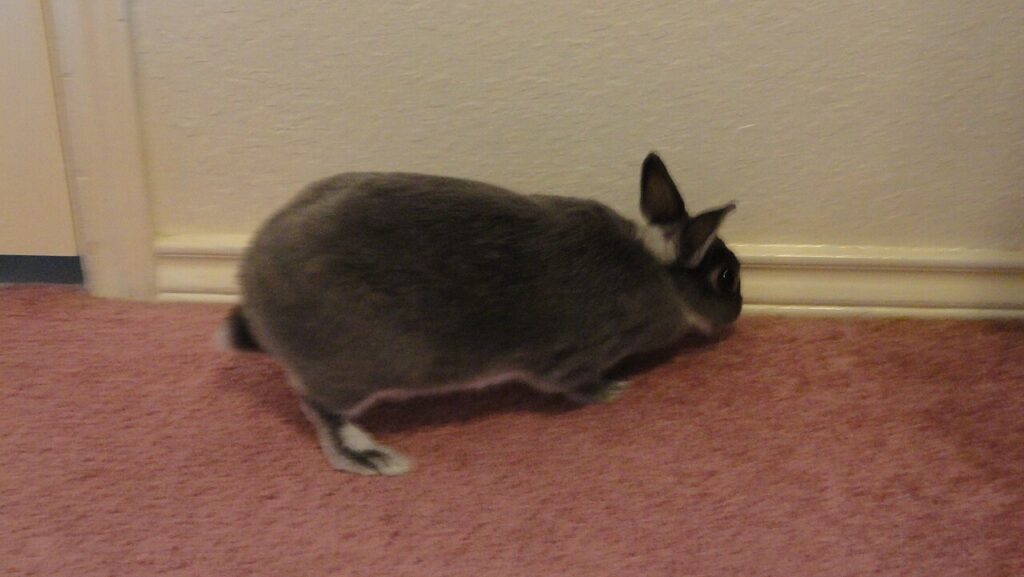
A soft rubber grooming mitt works on the same principle as damp-hand stroking, with extra grip: the rubber surface catches loose hairs as you stroke, and because the mitt is your hand, you can feel exactly how much pressure you are using. Use the same rules — direction of growth, light pressure, short sessions. Mitts suit rabbits who accept stroking but shy away from brushes, and the collected fur peels off in a sheet.
Following the Moult Pattern
Rabbit moults rarely happen evenly. The shed often starts on the head or back and travels in bands, leaving a visible “tide line” between old coat and new. Work where the pattern has already passed: behind the line, fur is loose and waiting; ahead of it, the coat is still attached and should be left alone. Let the moult set the map, follow it a little each day, and the new coat will soon come through everywhere.
Keeping Sessions Short and Calm
Little and often beats one long grooming marathon. Five to ten relaxed minutes a day during a heavy moult removes more fur, in total, than a single forced session — because your rabbit stays cooperative instead of learning to dread the brush. Pair sessions with things your rabbit likes: a favourite herb to nibble, calm stroking between passes, a treat at the end. End while things are still going well, and if your rabbit walks off, let them — chasing a rabbit around the room with a brush teaches exactly the wrong lesson.
What Never to Do: Pulling and Shaving
- Never pull attached fur. If it resists, it belongs to your rabbit. Pulling hurts, damages trust, and can tear delicate skin.
- Never shave a rabbit at home. Rabbit skin is exceptionally thin and loose, and it nicks and tears frighteningly easily under clippers; shaving is also deeply stressful for most rabbits and removes insulation they need. Where clipping is genuinely necessary — for a severe mat or a medical reason — it belongs to a veterinarian or an experienced professional groomer, not a home attempt.
- Never work through a mat by pulling. Loose fur is one thing; a tangled mat is another problem entirely, with its own gentle approach.
- Never bathe loose fur out. Water is not a grooming shortcut for rabbits, and full baths are unsafe for them.
Helping Bonded Partners
Bonded rabbits groom each other — which means during a moult, each rabbit swallows the other’s loose fur as well as their own, so your removal sessions matter twice over. Give both rabbits the same attention, and support their digestion with unlimited hay: extra hay during heavy moults is the simplest safety net there is, because fibre carries swallowed fur safely through the gut. Offer hay in more places than usual, so eating it is always the easiest thing to do.
Disposing of the Fur You Collect
Bag collected fur and bin it with household waste, or compost it — rabbit fur is natural fibre and breaks down. Some owners leave a little clean fur out for nesting birds in spring. What not to do is leave collected fur lying in the enclosure, where it becomes contamination your rabbit can swallow all over again.
Watch Appetite During a Heavy Moult
Most rabbits sail through shedding with nothing more than a scruffy few weeks. But heavy moults are the time to watch eating and droppings more closely, because a rabbit swallowing more fur needs their gut to keep moving. If your rabbit stops eating, produces far fewer or much smaller droppings, or seems quiet and uncomfortable, do not assume it is “just the moult” — appetite loss in rabbits always deserves prompt veterinary advice.
Conclusion
Removing loose rabbit fur is not really about technique; it is about judgement. Take only what comes away freely — by brush, by hand, by damp stroking or by mitt — follow the moult’s pattern, work in the direction of growth, and keep sessions short and pleasant. Never pull, never shave, and back up your grooming with unlimited hay, especially for bonded pairs. Do that, and shedding season becomes a few scruffy weeks of small, calm sessions instead of a battle.
Frequently Asked Questions
How often should I remove loose fur during shedding?
A short session most days during a heavy moult works well — five to ten minutes is plenty. Between moults, once or twice a week keeps on top of everyday looseness. Let the coat guide you: if little comes away, keep it brief.
Is it safe to pluck my rabbit’s fur by hand?
Only fur that is already loose. Tufts that release with the lightest pinch are safe to harvest; anything that resists is still attached and must be left alone. If you have to use force, stop.
Can I shave my rabbit to stop the shedding?
No. Rabbit skin is very thin and tears easily under clippers, and shaving is stressful and removes needed insulation. Clipping should only ever be done by a vet or experienced professional for a medical reason or a severe mat — never as a home shortcut for shedding.
My rabbit hates being brushed. What else can I try?
Damp-hand stroking, rubber mitts and hand-harvesting all feel like ordinary stroking, so many brush-shy rabbits accept them happily. Keep sessions brief, work at floor level, and let your rabbit leave when they have had enough.
Can swallowed fur make my rabbit ill?
Swallowed fur passes through best on a hay-rich diet, which is why unlimited hay matters so much during moults. Removing loose fur reduces what gets swallowed, but if your rabbit stops eating or droppings shrink, seek veterinary advice promptly.
Related Guides on RabbitCare
- Rabbit Shedding Season: What to Expect
- Best Brushes for Rabbits
- How Often Should You Brush a Rabbit?
References
- House Rabbit Society (rabbit.org) — guidance on rabbit grooming, moulting and coat care.
- RSPCA — advice on rabbit grooming, handling and everyday welfare.