
So, how often should a rabbit visit the veterinarian? As a general guide, rabbit vet checkup frequency for a healthy adult is at least one wellness visit a year. Young rabbits, older rabbits and those with ongoing conditions usually need to be seen more often, as their rabbit vet advises. Think of the annual rabbit health check as a minimum rather than a target to stretch: it is a chance to catch small problems early, keep vaccinations and dental checks up to date, and build a relationship with a practice that knows your rabbit before an emergency. If your rabbit ever seems unwell, do not wait for the next routine appointment — book promptly, because rabbits can deteriorate quickly.
Every rabbit is an individual, so treat the guidance below as a starting point to confirm with your own vet, not a fixed rule.
The Short Answer: Checkup Frequency by Life Stage
How often your rabbit needs a routine visit depends mostly on age and health. These are the patterns many rabbit-savvy practices work to, but your own vet’s advice always comes first.
| Life stage | General guidance | Why |
|---|---|---|
| Young rabbits | An early visit after coming home, then as advised during their first year | To confirm health, discuss diet and neutering, and plan vaccination and parasite prevention if appropriate |
| Healthy adults | At least one annual rabbit health check | Teeth, weight and condition can change gradually and are easy to miss at home |
| Senior rabbits | More often — many vets suggest around twice a year | Older rabbits are more prone to dental and other age-related problems that benefit from early detection |
| Rabbits with ongoing conditions | As often as the treating vet recommends | Conditions such as dental disease need planned monitoring, not a wait-and-see approach |
If you adopt a rabbit of unknown history, or bring home a new rabbit at any age, an early checkup is worthwhile whatever the calendar says. It gives the vet a baseline for weight and condition, and gives you a chance to ask questions while all is calm.

What Happens at a Rabbit Wellness Exam?
A rabbit wellness exam is a gentle, hands-on once-over rather than anything dramatic. Practices vary, but a routine visit typically covers most of the following:
- Weight and body condition. Your rabbit is weighed and the vet feels for body condition, since gradual gain or loss can signal diet or health issues.
- Teeth check. The vet examines the front teeth directly and uses an instrument to view the back teeth, which you cannot see properly at home. Rabbit teeth grow continuously, so this is one of the most valuable parts of the visit.
- Eyes, ears, coat and skin. The vet checks for discharge, redness, parasites, lumps, sore patches and the condition of the coat and feet.
- Heart and lungs. Listening with a stethoscope helps pick up unusual sounds that might need further investigation.
- Tummy feel. A gentle feel of the abdomen can reveal discomfort or anything abnormal.
- Nails and bottom. The vet may check nail length and that the rear end is clean and healthy.
- A conversation. Expect questions about hay, greens, pellets, water, housing, exercise, droppings and behaviour. Small details you mention — eating less hay, being quieter than usual — can matter.
Nothing you have noticed at home is too small to mention: you see your rabbit every day, and the vet relies on your observations between visits.
Vaccinations and Dental Checks at Routine Visits
Routine appointments are when vaccination status is reviewed. Which vaccines are recommended, and how often boosters are given, varies by country and by the diseases present locally, so there is no single schedule that fits every rabbit. Your vet will advise what applies where you live and keep a record of what your rabbit has had. Our guide to rabbit vaccinations explains in general terms what vaccination involves and the questions worth asking.
Dental checks deserve the same regular attention. Because the cheek teeth sit far back in the mouth, early problems there are almost impossible to spot at home, and a rabbit may keep eating — just less comfortably — while trouble develops. A vet checking the teeth at every wellness exam has a far better chance of catching problems early, when they are simpler to address.
Finding a Rabbit-Experienced Veterinarian
Not every practice sees rabbits often, and rabbit medicine is a specialised area: rabbits are prey animals, they hide illness well, and their digestion, teeth and handling needs differ from dogs and cats. It is worth seeking out a rabbit vet with exotics experience before you need one urgently.
Ways to find one include asking local rabbit rescues who they use, asking other owners for recommendations, and checking whether a practice lists exotics or small mammal work on its website. The House Rabbit Society and the RSPCA (linked below) are also good starting points.
Questions to ask a practice
- Do you see rabbits regularly, and does anyone on the team have extra training or a special interest in exotics or rabbit medicine?
- How do you handle rabbits during exams, and can I stay with my rabbit where possible?
- What should I do out of hours if my rabbit becomes unwell — do you provide emergency cover, or refer to another practice?
- Do you offer routine wellness checks, dental work and neutering for rabbits?
- Can you advise on vaccination and parasite prevention for rabbits in this area?
A good practice will answer these questions happily. Registering your rabbit while they are healthy also means their records, weight history and vaccination status are already on file if something goes wrong.
What to Bring: Records and Questions
A little preparation makes the appointment far more useful. Before you go, gather:
- Health records. Vaccination details, previous vet paperwork, and notes of past illness, surgery or medication, especially if this is a new practice.
- Diet details. What hay, pellets and greens your rabbit eats, roughly how much, plus any recent appetite changes.
- A note of changes. Anything different in droppings, drinking, weight, activity or behaviour, and when it started.
- Your questions. Write them down — it is easy to forget in the consulting room. Feeding, housing, bonding and behaviour questions are all fair game at a wellness visit.
- A sample or photo, if relevant. If droppings or urine look unusual, a fresh sample or a clear photo can help.
Keeping a simple home first aid kit is also sensible; our guide to building a rabbit first aid kit covers what to have on hand. It supports home care between visits, but never replaces an appointment when your rabbit is unwell.
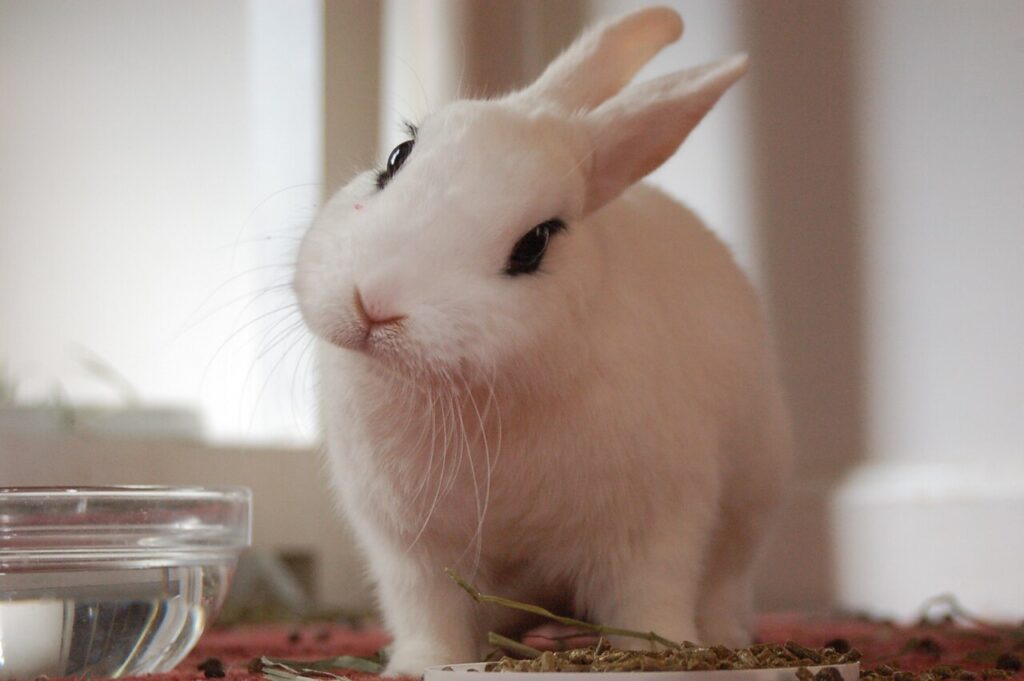
Making the Trip Less Stressful
Most rabbits dislike travel, but a few habits keep it manageable. Use a sturdy, secure carrier lined with familiar-smelling bedding and a little hay, so the trip smells like home. Keep the journey calm and steady, never leave the carrier in a hot car, and cover it with a light cloth if your rabbit seems unsettled. Afterwards, let your rabbit settle back into their usual space with hay and water, and check they are eating and producing droppings as normal.
Safety Notes: When Not to Wait for a Routine Visit
A routine checkup is for a rabbit who seems well. If your rabbit shows signs of illness, that becomes a prompt — often same-day — appointment instead, whatever the calendar says. Contact a rabbit-experienced veterinarian promptly if your rabbit:
- Stops eating, eats noticeably less, or goes off hay
- Produces much smaller droppings, far fewer droppings, or none at all
- Seems hunched, quiet, withdrawn or reluctant to move
- Grinds their teeth, drools, or has a wet chin
- Has a swollen or hard-feeling belly
- Struggles to breathe, has discharge from the eyes or nose, or keeps sneezing
- Has a head tilt, loses balance, or cannot move normally
- Has fly eggs or maggots in the fur, a wound, or bleeding
Rabbits hide illness instinctively and can become seriously unwell in a short time, so a “wait until the annual check” approach is never right for a sick rabbit. Our guides to the signs your rabbit is sick and common rabbit health problems can help you recognise what needs urgent attention. If you are unsure whether something can wait, phone the practice and describe what you are seeing — they would far rather advise you early.
Conclusion
For most rabbits the pattern is simple: at least one wellness visit a year for healthy adults, an early visit for newcomers and youngsters, more frequent checks for seniors and rabbits with ongoing conditions, and an immediate appointment for any sign of illness — all confirmed with your own vet, who knows your rabbit. Register with a rabbit-experienced practice while your rabbit is healthy, keep simple records, and treat each checkup as a team effort. Next step: if your rabbit is not registered anywhere yet, find a rabbit-savvy practice today and book that first health check.
Frequently Asked Questions
How often should a healthy adult rabbit see a vet?
As a general guide, at least once a year for a routine wellness exam, even if your rabbit seems perfectly well. Teeth, weight and condition change gradually, and an annual rabbit health check gives the vet a chance to spot small changes early. Your own vet may suggest a different interval based on your rabbit’s age and history.
Do indoor rabbits need vet checkups too?
Yes. Living indoors reduces some risks, but indoor rabbits still need dental checks, weight monitoring, health screening and a vet who knows them. Which vaccinations are appropriate for an indoor rabbit depends on local disease risk, so ask your practice for advice rather than assuming none are needed.
What does a rabbit wellness exam include?
Typically a weight and body-condition check, an examination of the teeth (including the back teeth with an instrument), a look at the eyes, ears, coat and skin, listening to the heart and lungs, a gentle feel of the tummy, and a discussion of diet, housing and behaviour. Vaccination status and planned care, such as dental monitoring or neutering, are usually reviewed too.
How do I know if a vet is good with rabbits?
Look for a practice that sees rabbits regularly, ideally with team members who have exotics or small mammal training or a declared interest in rabbit medicine. Ask rescues and other owners for recommendations, and ask the practice directly how they handle rabbits, what rabbit services they offer, and what their out-of-hours arrangements are.
My rabbit hates travelling. Should I skip routine visits?
No — the checkup is still worth it, especially for the teeth check you cannot do at home. Make the trip easier with a secure carrier, familiar bedding, some hay, a calm journey and a cover over the carrier if your rabbit seems stressed. Mention the stress to your vet, as they may have handling suggestions and can keep the visit as short and gentle as possible.
Related Guides on RabbitCare
These related guides will link here once they are published:
- Rabbit Vaccinations: What Owners Should Know
- Common Rabbit Health Problems Every Owner Should Know
- Signs Your Rabbit Is Sick: What to Watch For
- Rabbit First Aid Kit: What Every Owner Should Have
References
- House Rabbit Society (rabbit.org) — guidance on finding a rabbit-savvy veterinarian and routine rabbit health care.
- RSPCA — rabbit health and welfare guidance, including regular veterinary checks.