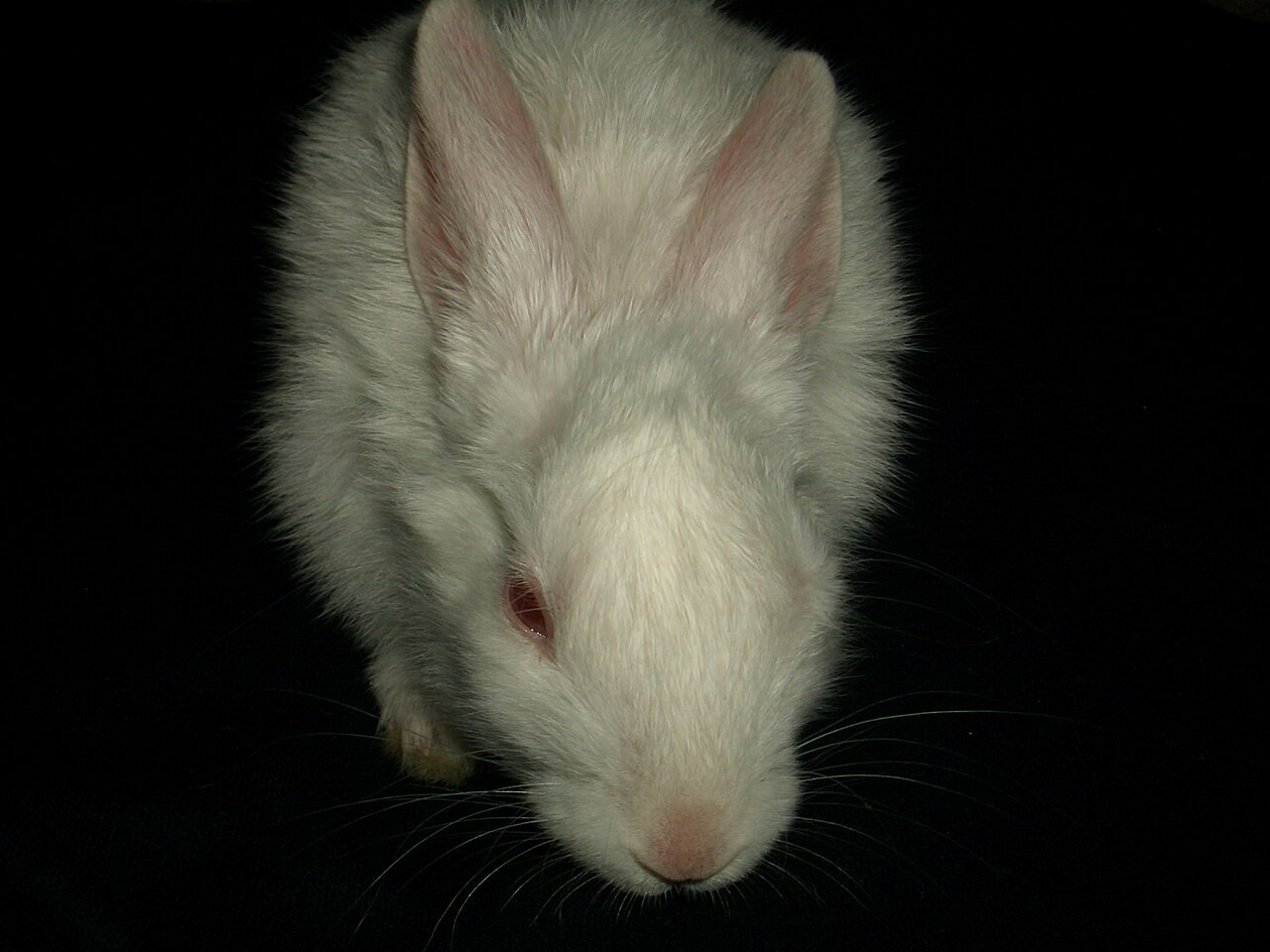
Rabbit eye discharge — tears spilling over, sticky moisture at the corner of the eye, or redness around the eyelids — is a sign worth attention, not a diagnosis in itself. A rabbit watery eye can follow something as simple as a speck of hay dust, but it can also point to a blocked tear duct, dental problems affecting tear drainage, a rabbit eye infection, or a scratch. Because several causes look alike at home, your role is observation and gentle hygiene only: watch both eyes, keep the face clean by wiping around — never in — the eye, and book a rabbit-experienced veterinarian if discharge persists, returns, or comes with any sign of pain or illness.
What Healthy Rabbit Eyes Look Like
Healthy rabbit eyes are bright, clear and fully open, with dry fur around them. Both eyes should look the same: no redness, swelling or cloudiness, and no wet or crusty patch beneath the eye. A resting rabbit may sit with eyes partly closed, but still opens both fully when alert.
Learning your own rabbit’s normal is the best early-warning system you have. A quick look during daily feeding takes seconds, and it means you will notice a change — one eye wetter than the other, new redness, fur matting below an eye — while it is still small.
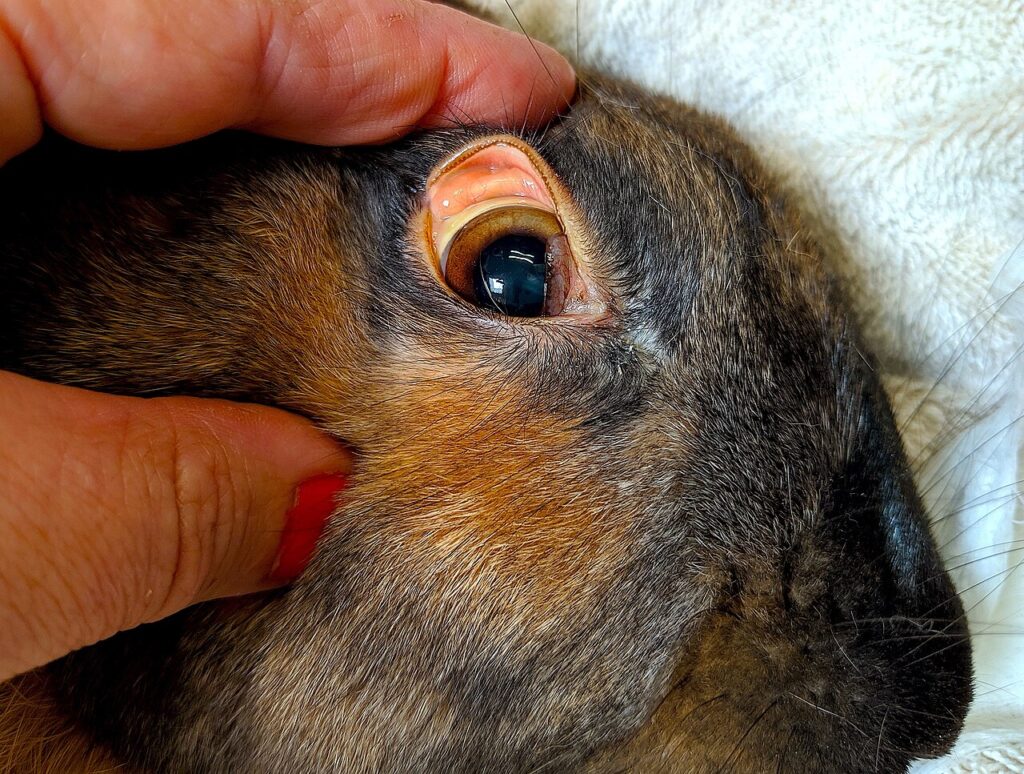
Possible Causes of Watery Eyes and Discharge
Only a veterinary examination can find the cause in an individual rabbit. The possibilities below are described in general terms, so you know what a vet may be checking for — not so you can decide which one your rabbit has.
Irritation from dust, hay or bedding
Rabbits live close to their hay, and fine dust, a hay seed or a strand of bedding can irritate an eye and make it water. A brief episode that settles quickly, with the eye otherwise bright and open, may be simple irritation — but never assume that if signs continue, because other causes can begin the same way.
Blocked or narrowed tear ducts
Tears normally drain away through small ducts from the inner corner of the eye. If a duct is blocked or narrowed, tears spill onto the face instead; skin kept constantly wet can become sore. Tear duct problems are a recognised cause of a persistently watery eye in rabbits, and they need a vet to assess.
Dental problems affecting drainage
The roots of a rabbit’s upper teeth sit very close to the tear drainage pathway, so dental problems — such as overgrown tooth roots — can narrow or block drainage and lead to weeping eyes. This is why a vet examining a rabbit with eye discharge will usually want to look at the teeth as well: an eye problem and a dental problem can be two faces of the same issue.
Infection
A rabbit eye infection — of the eye surface, the eyelids or the tear drainage system — can cause discharge that looks thicker or coloured, along with redness and soreness. Infection can also accompany a blocked duct: the same wet eye can have more than one thing going on.
Injury or a scratch
A poke from a strand of hay, a scratch from a companion, or debris under an eyelid can injure the eye surface. Injury is one of the more urgent possibilities, because a damaged eye can worsen quickly, and a sore eye may be held partly or fully closed. Never assume a closed or squinting eye is “just a scratch”.
Eyelid and other problems
Less commonly, eyelid problems, growths around the eye, or general illness can affect how the eyes look. The pattern to remember is simple: a one-off watery moment that clears is different from discharge that persists, returns, or appears with other signs — only the first is reasonable to simply watch.
Observing at Home: What to Look At and Note
Careful observation helps you decide how quickly to seek help, and gives the veterinary team a head start. Look in good light, without pulling the eyelids apart, and note:
- One eye or both? Note which eye is affected.
- The discharge itself. Is it clear and watery like tears, or thicker? Describe its colour in plain words — clear, white, yellow or green.
- The eye’s appearance. Any redness, swelling, cloudiness, or a white or blue look? Does the eye bulge or differ from the other?
- Open or closed? Is the eye held partly closed, squinting, or being pawed at?
- The surrounding fur and skin. Wet, matted or sore-looking skin under the eye suggests tears have been overflowing for a while.
- Appetite and behaviour. Is your rabbit eating hay as keenly as usual, producing normal droppings, and behaving normally? Eye problems with reduced appetite matter more, not less — see our guide to signs your rabbit is sick.
- Timing. When did you first notice it, and has anything changed — new hay, dusty bedding, a scuffle with a companion?
Write the notes down with dates. “Left eye watery since Tuesday, clear discharge, eating normally” is far more useful to a vet than a vague summary.
Safe Cleaning: Wiping Around the Eye Only
The only cleaning that is safe at home happens on the fur and skin around the eye, to stop discharge drying into a crust and irritating the skin:
- Wash your hands, then soak a soft cloth or cotton pad in clean, lukewarm water and wring it out.
- Holding your rabbit securely and calmly, gently wipe the damp fur below and around the eye, stroking away from the eye.
- Soften crusted discharge by holding the damp cloth against it briefly, rather than picking at it.
- Pat the area dry with a clean, soft cloth.
- Check the skin underneath as you clean — soreness there is worth mentioning to the vet.
Use a fresh cloth or pad for each eye. That is the whole of home eye care: clean surroundings, gentle hands, nothing more.
What Not to Do
- Nothing goes in the eye. No drops, ointments, sprays or washes unless a veterinarian has prescribed them for this rabbit and this problem.
- No human or other-pet products. Eye products for people, dogs or cats are not interchangeable with rabbit treatment.
- No home remedies. Herbal rinses, salt water, milk and oils are not safe substitutes for an examination and can harm the eye.
- Do not probe or pry. Never try to open a closed eye to look inside, remove something you think is stuck, or press around the eye.
- Do not wait out worrying signs. Eyes can deteriorate quickly; observation judges urgency, it does not delay care.
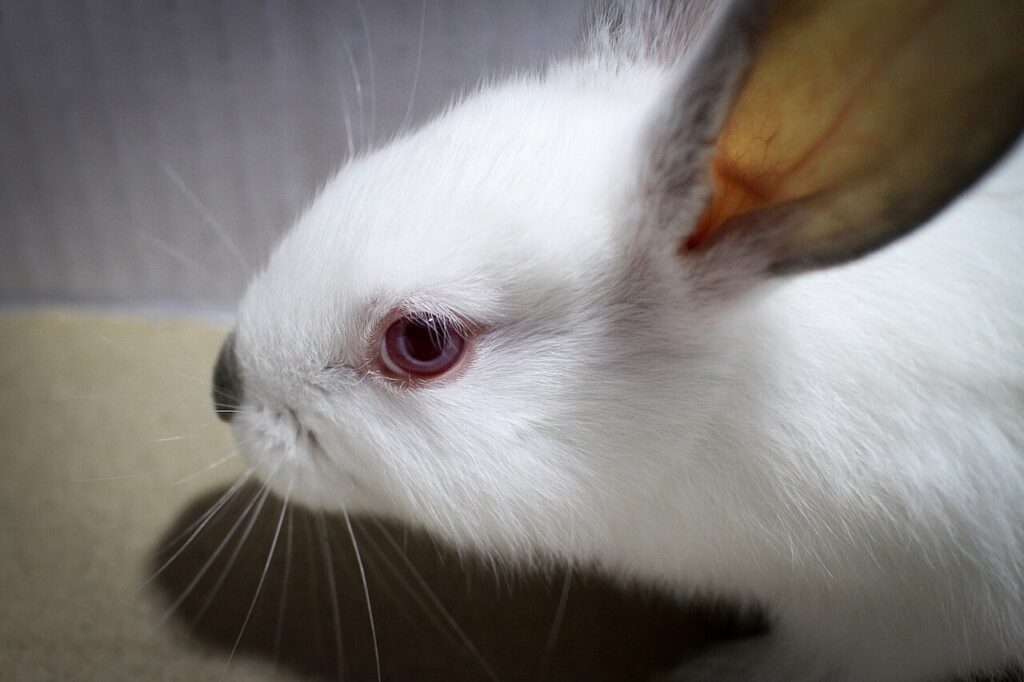
The Dental Connection: Why Vets Check Teeth
Because tooth roots sit so close to the tear ducts, rabbit eye health and dental health are linked — a rabbit whose eye waters on and off for weeks, especially on one side, may have a drainage problem with a dental cause behind it.
You can read more in our guide to rabbit dental care. At home, the useful clues are eating ones: picking at hay, eating slowly, dropping food, or favouring softer foods alongside a watery eye should all be mentioned when you call.
Reducing Everyday Irritation
Most eye problems need a vet rather than a housekeeping fix, but a low-dust environment is kinder to every rabbit’s eyes:
- Choose good-quality hay and shake out loose dust outdoors before serving, where practical.
- Use low-dust bedding and spot-clean damp areas promptly; stale, ammonia-heavy air irritates eyes as well as airways.
- Keep the living area ventilated but out of direct draughts.
See our overview of common rabbit health problems for how eye signs fit into the wider picture. If watering continues despite a clean, low-dust setup, that pattern is itself information: the cause is probably not the hay, and a vet should look.
Safety Notes: When to Contact a Veterinarian
Contact a rabbit-experienced veterinarian promptly — the same day — if you notice any of the following:
- Swelling of the eye or eyelids, or the eye looking larger or bulging
- Cloudiness, or a white or blue appearance to the eye’s surface
- Squinting, a partly or fully closed eye, or pawing at the eye
- Signs of pain: hiding, sitting hunched, tooth grinding, or reluctance to move
- Thick, coloured discharge, or discharge that is getting worse
- Discharge persisting beyond a day or so, or that keeps returning
- Reduced appetite, smaller or fewer droppings, or behaviour change alongside the eye signs
- A visible injury, or something seen on or in the eye
Treat a closed, swollen or cloudy eye as urgent. Do not put anything in the eye before the appointment unless the vet instructs otherwise, so the examination shows the problem as it is. A vet can examine the eye and tear drainage properly, check the teeth, and explain what they find — diagnosis needs that examination, and no article can replace it.
Conclusion
Good rabbit eye health at home is a habit of looking: bright, dry, matching eyes are normal; a wet cheek, redness or discharge is a change to note and act on. Keep the face clean by gently wiping around the eye, never put anything in the eye, and remember the dental link when a watery eye keeps returning. If discharge persists, comes back, or arrives with swelling, cloudiness, squinting or an appetite change, book a rabbit-experienced veterinarian the same day. Next step: compare both eyes in good light at today’s feed — that ten-second check catches problems early.
Frequently Asked Questions
Why is my rabbit’s eye watering?
Possible reasons include irritation from dust or hay, a blocked tear duct, dental problems affecting tear drainage, infection, or a scratch. Because these look alike at home, a watery eye that persists or returns needs a veterinary examination to find the cause.
Can I use eye drops on my rabbit?
Only drops a veterinarian has prescribed for your rabbit’s current problem. Never use human eye drops, products for other pets, or leftover medication — treatment depends on a diagnosis, and the wrong product can do harm.
How do I clean discharge from my rabbit’s eye area?
Gently wipe the fur around the eye with a soft cloth dampened with clean lukewarm water, stroking away from the eye, then pat dry. Nothing goes in the eye itself, and crusted discharge should be softened with the damp cloth, never picked off.
When is a watery eye an emergency?
Treat it as urgent if the eye is swollen, cloudy, white or blue-looking, bulging, held closed or squinted, or if your rabbit shows pain signs or stops eating normally. Discharge persisting beyond a day or so, or that keeps returning, should also be seen promptly.
Can teeth really cause eye problems in rabbits?
Yes — the roots of the upper teeth lie close to the tear drainage pathway, so dental problems can narrow the duct and cause tears to overflow. That is why a vet examining a watery eye will usually check the teeth too.
Related Guides on RabbitCare
- Rabbit Dental Care: Signs of Overgrown Teeth and Prevention
- Common Rabbit Health Problems Every Owner Should Know
- Signs Your Rabbit Is Sick: Symptoms You Should Never Ignore
References
- House Rabbit Society (rabbit.org) — rabbit health and care guidance, including eye problems and the importance of veterinary diagnosis.
- RSPCA — rabbit health and welfare guidance, including signs of illness and seeking veterinary care.