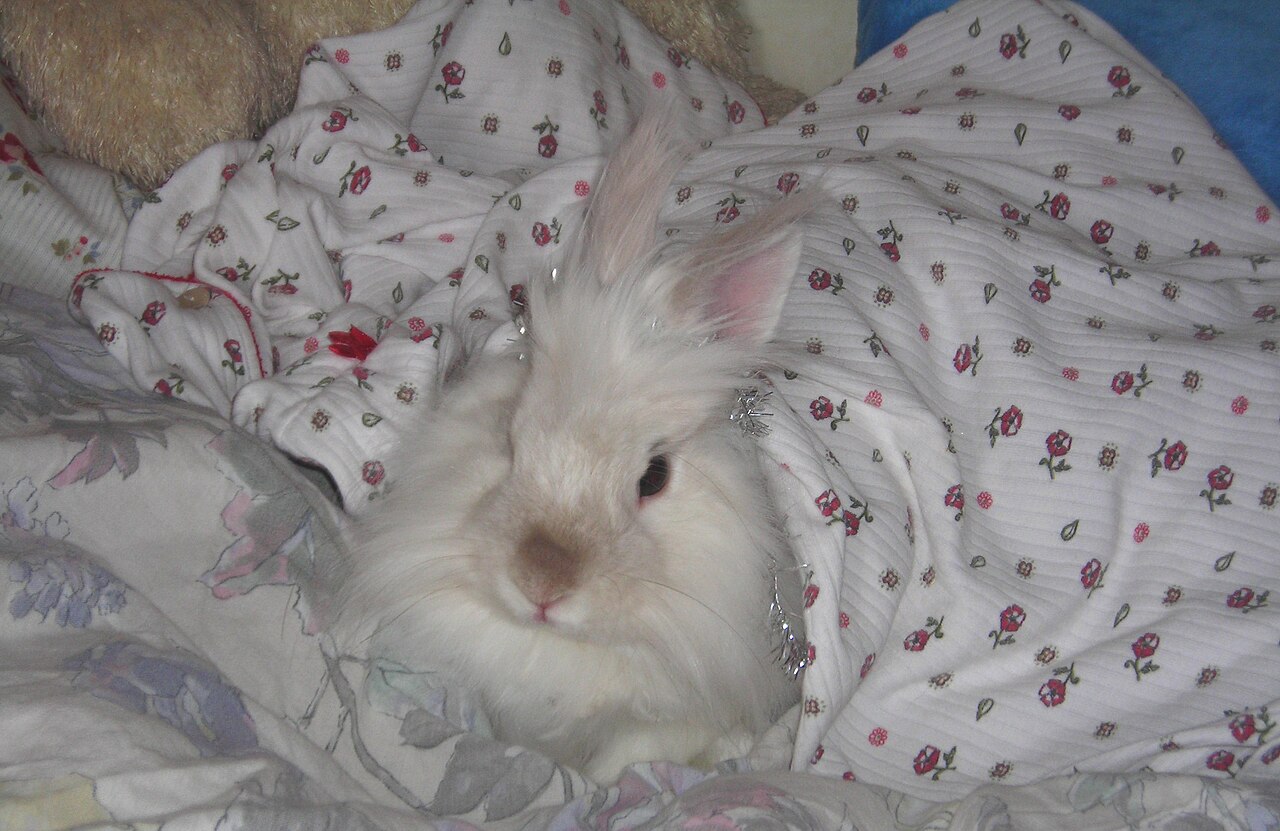
Long haired rabbit grooming is a daily commitment, not a weekly one: angora-type and lionhead-type coats tangle fast, trap hay and bedding, and can mat down to the skin within days if they are left alone. The good news is that the routine itself is gentle and simple — a few minutes of finger-combing and layered brushing each day, a longer session once a week, and prompt attention to the armpits, belly, behind the ears and bottom, where mats form first. Little and often is the whole secret: a coat maintained daily almost never becomes a problem coat.
This guide covers why long coats need daily care, the daily and weekly routine, the layering technique, problem zones, preventing and dealing with mats, and when to call in a rabbit-savvy groomer or vet.
Why Long Coats Need Daily Attention
A short-coated rabbit’s fur largely looks after itself. A long coat does not. The fine, dense wool of angora-type rabbits and the mane and skirt of lionhead-types tangle as the rabbit moves, sleeps and grooms. Loose undercoat works its way into the longer topcoat and felts into mats, especially where there is friction. Long fur also collects hay, bedding and litter, hides the skin from view, and makes problems such as sore patches or parasites harder to spot early.
Left unchecked, mats tighten against the skin, pull with every movement and can tear the rabbit’s very thin skin. Swallowed wool adds to the fur a rabbit’s gut must handle. None of this makes long-haired rabbits a bad choice — but buy the brushes before the rabbit comes home, and treat grooming as part of the daily routine rather than an occasional project.
The Daily and Weekly Routine
| When | Task |
|---|---|
| Daily (5–10 minutes) | Finger-comb the whole coat; check and clear the problem zones; pick out hay and bedding; quick feel for new tangles |
| 2–3 times a week | Layered brush-through of the mane, skirt and flanks with comb and gentle slicker work |
| Weekly | Full groom down to the skin everywhere; bottom and belly check; trim check — skirt, around the bottom and feet |
| During a moult | Daily full attention — long coats shed heavily and loose wool felts fastest while it is coming out |
Keep sessions short and pleasant. Work on a non-slip surface, let your rabbit sit in their preferred position, and end with a favourite green. A rabbit who expects brief daily grooming usually accepts it as part of life. Wrestling matches produce stress and torn coats; routine produces neither.
The Layering Technique: Grooming Down to the Skin
Brushing over the top of a long coat achieves nothing except a tidy surface over tangled depths. The trick is to work in layers, parting the coat so you groom small sections right down to the skin:
- Start with your fingers. Run them through the coat all over, feeling for tangles, debris and mats. Gently tease apart any loose knots with your fingertips before any tool goes near them.
- Part a section of coat with one hand, holding the upper layer up and out of the way.
- Comb the exposed layer with a wide-toothed comb, working from the ends of the hair towards the skin in short strokes, never dragging through resistance.
- Follow with a slicker brush used lightly on that layer to lift out loose undercoat — a few gentle strokes, no pressing down and no repeated raking over the same skin.
- Let the next layer fall and repeat, working methodically over one area at a time until the comb passes freely to the skin everywhere.
If the comb meets a tangle, stop and work it out with fingers first. Forcing a comb through a knot hurts, breaks coat and teaches your rabbit to dread grooming. Generic tools suffice: your fingers, a wide-toothed comb and a soft slicker. Anything marketed with blades or cutting action for “dematting” needs great caution on rabbit skin — see the mats section below.
Problem Zones: Where Mats Form First
Check these areas every single day, because they mat faster than anywhere else:
- Armpits and the insides of the front legs — constant friction, fine hair, and a rabbit who may object to you looking. Be gentle and thorough.
- The belly — drags through bedding and hay; often the most matted area on neglected coats.
- Behind the ears and under the mane — the lionhead mane felts underneath where it meets the shorter coat.
- Around the bottom — long fur here catches droppings and litter and must be kept clean and reasonably short.
- The skirt and flanks — the longest hair, trailing in litter trays and bedding.
- Behind the back legs and around the tail — another friction and soiling zone.
A tangle found today is thirty seconds with your fingers. The same tangle found next week is a mat against the skin.
Preventing Mats — and What to Do When They Form
Prevention is the routine above plus a few habits: keep bedding clean and dry (wet coats felt faster), remove hay from the coat at every daily check, and never let a long coat stay damp. During moults, increase grooming — loose wool left sitting in the coat is tomorrow’s mat.
When a mat does form:
- Try to tease it apart with your fingers, splitting it lengthwise into smaller strands and working from the outer edges.
- Work a wide comb under small sections at the mat’s edge, a little at a time, holding the base of the mat so it does not pull the skin.
- Never pull a mat out, and never tear at it — rabbit skin is extremely thin and tears frighteningly easily.
- If a mat is tight against the skin, extensive, or the skin beneath looks sore, stop. This is a job for a vet or an experienced groomer with proper tools.
Our dedicated guide on rabbit fur mats covers safe removal in detail.
Keeping the Coat Practical: Careful Trimming
Many owners keep long coats manageable with modest trimming — shortening the skirt, the fur around the bottom and the “trousers” so they trail less and stay cleaner. Trimming is cosmetic and practical, never a full clip unless a professional advises it.
If you trim at home:
- Use blunt-ended (round-tipped) scissors only, and work slowly with the coat lifted away from the body.
- Slide a comb between the scissors and the skin as a guard wherever you can, and cut above the comb.
- Trim a little at a time, checking constantly — rabbit skin is thin, loose and folds into the coat, especially around the belly, armpits and bottom.
- Stop and reassure your rabbit if they wriggle; a second pair of hands to hold gently often makes the difference.
If you feel at all unsure, pay a rabbit-savvy groomer to trim, and watch how they do it. A nick in rabbit skin is a vet visit; professional trimming is cheap insurance by comparison.
Hay, Bedding and Life in a Long Coat
Long coats collect the home they live in. Hay strands weave into skirts, bedding clings to bellies, and litter sticks around feet and bottoms. Manage it practically: pick debris out at the daily finger-comb, keep litter areas clean so what sticks is at least clean, and feed hay from a rack or one end of the litter tray rather than scattered everywhere, so less of it ends up worn. Expect to find hay in the coat anyway — with a long-haired rabbit, that is simply daily life, and the daily routine exists partly to evict it.
Shedding in Long Coats
Long-haired rabbits moult like any other rabbit, but the stakes are higher: shed wool does not fall away cleanly — it stays trapped in the coat and felts into mats, and the rabbit swallows more of it while grooming. During a moult, groom daily without fail, lift out loose wool by hand as well as by comb, and make sure unlimited hay and fresh water are always available to keep the gut moving. Our guide to rabbit shedding season explains the moulting cycle and the gut-health signs to watch.
When to Seek a Groomer or a Vet
- A rabbit-savvy groomer: for heavy trims, your first full groom with a newly adopted long-haired rabbit, or a coat that has become more than you can manage. Ask groomers about rabbit experience specifically — rabbit skin and handling differ greatly from dogs.
- A veterinarian: for mats tight to sore or broken skin, any tear or wound, bald patches, flaky or crusty skin, scratching that suggests mites, or a rabbit who has stopped eating. Skin disease and parasites hide under long coats, which is another reason the weekly groom must reach the skin.
Asking for help early is good ownership, not failure. One professional session can reset a coat to a state your daily routine can then maintain easily.
Conclusion
Long haired rabbit grooming succeeds on routine, not heroics: five to ten minutes daily with your fingers and a check of the armpits, belly, mane and bottom; layered combing a few times a week so every stroke reaches the skin; a full groom weekly; and mats teased out the day they appear, never pulled. Keep the skirt and bottom trimmed short enough to stay clean — carefully, with blunt-ended scissors, or by a professional — and step up grooming during moults. Do that, and a glorious coat stays glorious instead of becoming a burden to the rabbit wearing it.

Frequently Asked Questions
How often does a long-haired rabbit need grooming?
Daily. A quick finger-comb and problem-zone check takes five to ten minutes; a fuller layered brush-through two or three times a week, and a complete groom down to the skin weekly. During a moult, give the coat full attention every day.
What tools do I need for a long-haired rabbit?
Just three basics: your fingers, a wide-toothed comb for working through layers, and a soft slicker brush used lightly to lift loose undercoat. Blunt-ended scissors help for careful trimming. Avoid aggressive dematting tools — rabbit skin is very thin.
Why does my long-haired rabbit mat so quickly?
Fine, dense wool tangles with movement and friction, and loose undercoat felts into the longer hair — fastest in the armpits, belly, behind the ears and around the bottom. Daily finger-combing of those zones prevents almost all mats.
Can I shave my long-haired rabbit?
Do not attempt a full clip yourself. Rabbit skin is thin, loose and easily nicked, and clipping is stressful. If a coat genuinely needs clipping — usually for severe matting — a vet or experienced rabbit groomer should do it. Modest scissor-trimming of the skirt and bottom is the safe home option.
How do I stop hay sticking in my rabbit’s coat?
You cannot stop it entirely, but you can reduce it: feed hay from a rack or at one end of the litter tray, pick debris out during the daily finger-comb, and keep litter areas clean. It is a normal part of life with a long coat, not a sign you are doing anything wrong.
Related Guides on RabbitCare
- Rabbit Fur Mats: Safe Removal and Prevention
- How to Groom a Rabbit at Home
- Rabbit Shedding Season: What to Expect and How to Help
References
- House Rabbit Society (rabbit.org) — guidance on grooming long-haired rabbits, coat care and handling.
- RSPCA — advice on rabbit grooming, coat checks and welfare needs.