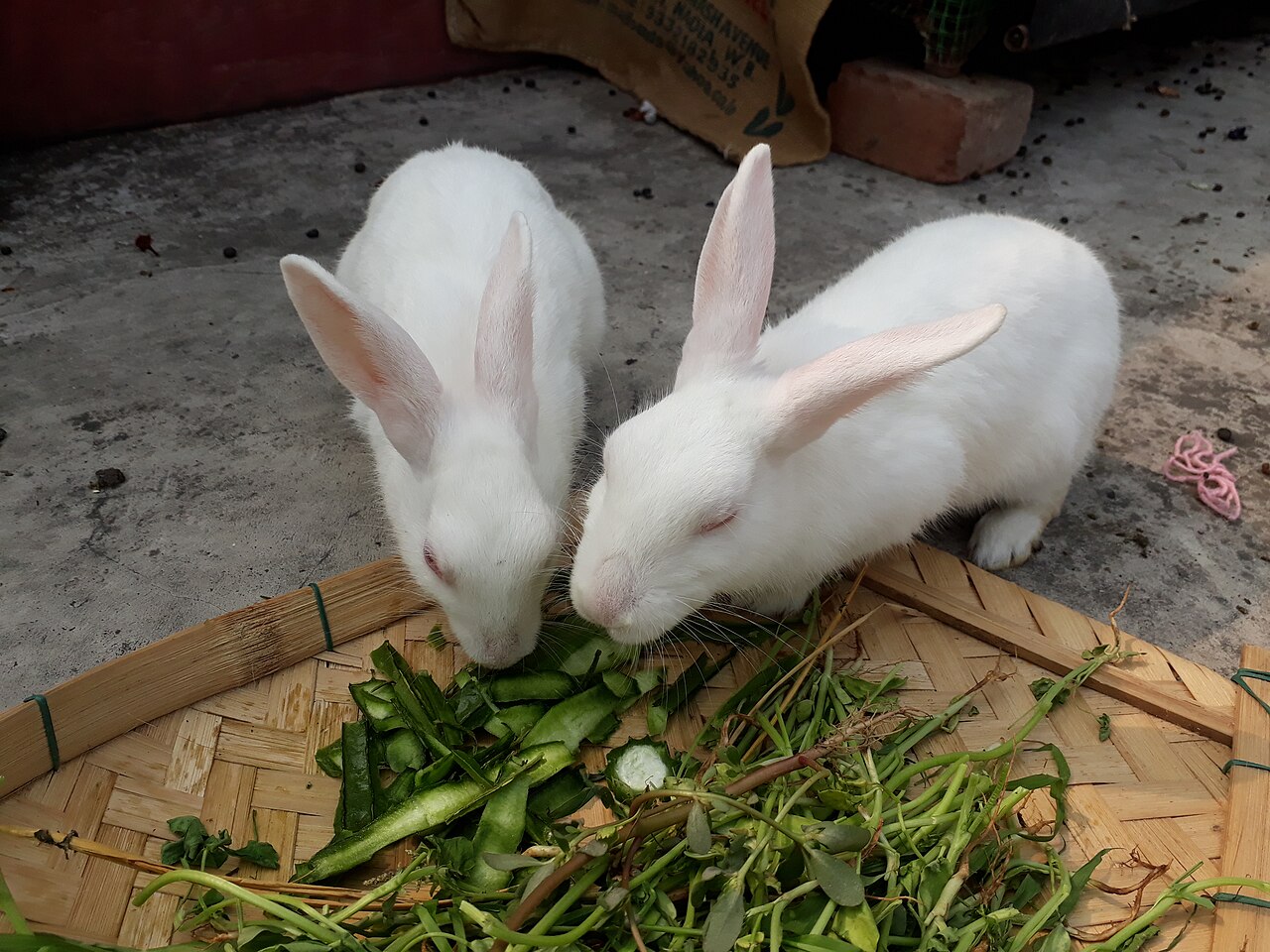
So, can rabbits eat lettuce? Yes — most healthy adult rabbits can eat lettuce, but the type matters. Dark, leafy lettuces such as romaine and green leaf lettuce can be part of the daily mix of greens, while pale iceberg lettuce is a poor choice because it is mostly water and offers very little nutrition or fibre. Whichever type you choose, lettuce should only ever be one part of a varied handful of greens, served alongside unlimited hay — never the whole diet, and never a bowlful on its own.
Lettuce also needs to be introduced gradually, like any new food. Rushed in, or fed in large amounts, even a suitable type can lead to soft droppings.
Where Lettuce Fits in a Rabbit’s Diet
Lettuce is a green, and greens are just one layer of the diet. Hay does most of the work: its long fibre keeps the gut moving and its chewing wears down teeth that grow continuously. On top of that base sits a daily handful of mixed leafy greens, a small measured portion of plain pellets, and constant fresh water, with treats kept rare.
That means no single green — lettuce included — should dominate. A portion built from two or three different plants, rotated across the week, is better than a large amount of one lettuce every day. Think of lettuce as one voice in a small choir, not a solo act.
The Main Lettuce Types, Compared
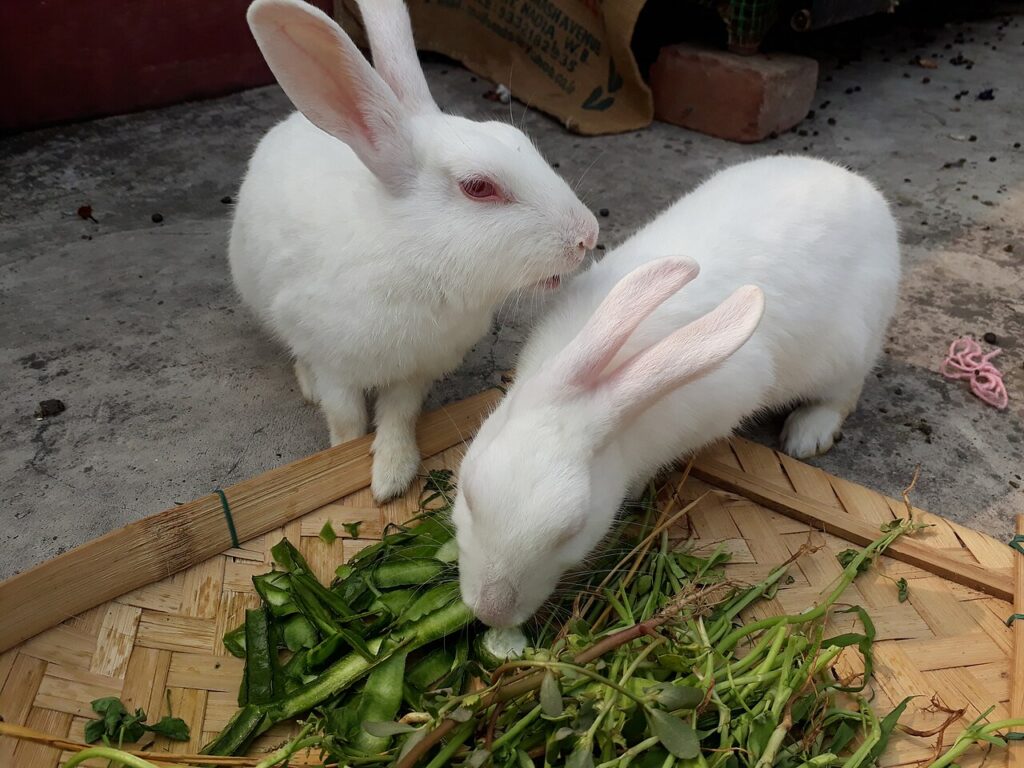
Supermarket lettuces look similar but differ in leaf colour, fibre and water content. As a rough guide, the darker and leafier the lettuce, the more useful it tends to be. Paler, crunchier lettuces carry more water and less of everything else.
| Lettuce type | What it is like | How to use it |
|---|---|---|
| Romaine (cos) | Dark green, sturdy leaves with a thick rib | A reliable everyday green in rotation |
| Green and red leaf lettuce | Soft, loose, dark leaves; red types are similar in character | Everyday green in rotation, mixed with others |
| Butterhead (round lettuce) | Soft, pale-green, cupped leaves | Fine in a mix, but pair it with darker greens |
| Little Gem | Small, compact, crunchy hearts; sweeter than most | Occasional, in small amounts within a mix |
| Iceberg | Very pale, crisp and mostly water, with little fibre | Not a useful staple — choose a darker lettuce instead |
Romaine lettuce for rabbits
Romaine lettuce for rabbits is probably the easiest starting point. Its leaves are dark, firm and fibrous compared with most other lettuces, and many rabbits eat it readily. It washes well, keeps reasonably in the fridge, and mixes easily with herbs and other greens. As with every green, rotate it rather than feeding it alone day after day.
Green leaf and red leaf lettuce
Loose-leaf lettuces — the soft, frilly green and red types — are also suitable everyday rabbit leafy greens. Their leaves are thinner than romaine, so a mixed handful can look bigger than it is; that is fine, provided hay eating does not drop. Red leaf varieties are fed in exactly the same way as green ones.
Butterhead lettuce
Butterhead, sometimes sold simply as round lettuce, has soft, tender, paler leaves. It is not a food to worry about in a mixed portion, but it brings less fibre and nutrition than darker lettuces, so it works best as one part of a mix rather than the main green.
Little Gem lettuce
Little Gem is a small, compact lettuce with crunchy hearts and a sweeter taste. Its texture is closer to iceberg than to a loose leaf. Offer it occasionally, in small amounts within a varied mix, rather than as a regular staple green.
Iceberg lettuce and rabbits
The iceberg lettuce rabbits question comes up constantly, and the practical answer is simple: skip it. Iceberg is not a useful staple because it is mostly water, with very little fibre and little nutritional value compared with darker greens. A bowl of iceberg fills a rabbit up with water instead of the fibre it actually needs, and large amounts of any watery, low-fibre food can contribute to soft droppings.
So iceberg is a wasted serving — the bowl space is far better spent on romaine, leaf lettuce or herbs. If your rabbit has eaten a small piece by accident, there is no need to panic: return to hay and familiar greens, watch appetite and droppings, and seek veterinary advice if symptoms appear and do not settle.
How Much Lettuce, and How Often?
Moderation is the rule. For a healthy adult rabbit, lettuce should make up part of a generous handful of mixed greens each day — say a few leaves of one suitable type, combined with other greens and herbs, scaled to the rabbit’s size. It should not be the only green, and it should never be served in a heap that leaves hay untouched.
Watch the rabbit rather than measuring to the gram. Steady hay eating, a good appetite, normal round droppings and stable weight all suggest the balance is right. If droppings soften after lettuce, reduce it, return to familiar foods, and reintroduce it more slowly — or leave that type out altogether.
Washing and Serving Lettuce Well
Lettuce is often sprayed, handled and transported before it reaches your kitchen, so preparation matters:
- Wash every leaf under clean running water, including bagged lettuce, and check between the leaves of hearts and heads for soil and insects.
- Discard poor leaves. Remove anything yellowed, slimy, mouldy or wilted — spoiled greens should never be fed.
- Shake off excess water. A little dampness is fine, but soaking-wet leaves spoil faster in the bowl.
- Tear or leave whole. Most rabbits manage whole leaves happily; tearing larger leaves can help smaller rabbits.
- Serve plain and raw. No dressing, seasoning or cooking — ever.
- Remove leftovers after a few hours, before they wilt into the bedding, and wash the bowl regularly.
Only feed lettuce bought for human food or grown without pesticides and weedkillers — and wash even home-grown leaves.
Introducing Lettuce Gradually
A rabbit’s digestion adapts slowly, so a new lettuce should arrive like any new food: one type at a time, in a small amount first. Offer a single small leaf of the new type alongside your rabbit’s usual hay, pellets and familiar greens, then wait and watch over the following day.
- Check appetite: is your rabbit still eating hay with enthusiasm?
- Check droppings: are they still round, dry and plentiful?
- If all looks normal, offer a little more of that lettuce over the next few days.
- Wait until one new type is established before introducing another.
- If droppings soften or appetite dips, stop the new lettuce and return to hay and familiar greens.
This approach also tells you which type caused a problem, if one does — information you lose if three new greens arrive on the same day.
A Note on Young and Sensitive Rabbits
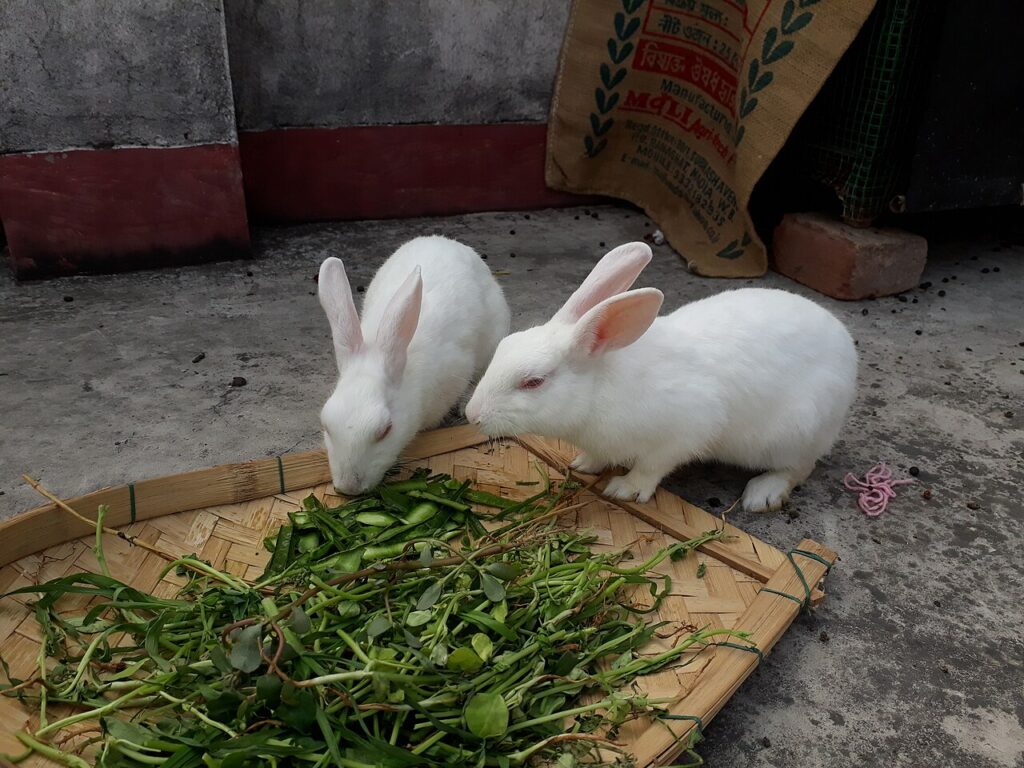
Young rabbits have especially sensitive digestive systems, so their move onto greens should be cautious. Introduce lettuce gradually, one type at a time in small amounts, once a young rabbit is weaned and eating hay well, and prioritise hay throughout. Rabbits prone to soft droppings may also tolerate some greens less well than others. If you are unsure what suits a young, newly rehomed or unwell rabbit, ask a rabbit-experienced veterinarian rather than experimenting.
Common Lettuce Mistakes to Avoid
- Making iceberg the main green. It fills the bowl with water instead of fibre and nutrition.
- Feeding lettuce alone. One green, every day, in quantity — variety is part of the point.
- Starting with a bowlful. New types need a small first leaf, not a full serving.
- Skipping the wash. Soil, grit and surface residues come off under the tap; leave them on and they go into the rabbit.
- Leaving leftovers to spoil. Wilted, warm greens left for hours help nobody.
- Letting greens replace hay. If lettuce is eaten and hay is not, the proportions are wrong.
Safety Notes: When Digestive Symptoms Need a Veterinarian
A single slightly soft dropping after a new food is a signal to pause that food and return to hay and familiar greens, not a reason to panic. But some signs should never be waited out. Contact a rabbit-experienced veterinarian promptly if your rabbit stops eating, produces much smaller droppings or none at all, has persistent watery droppings, seems hunched, quiet or uncomfortable, grinds its teeth, drools, or has a swollen belly. Rabbits can deteriorate quickly when they stop eating, so do not wait days to see whether it passes, and do not try to diagnose or treat the problem yourself, or with medicines made for people or other animals.
Seek advice the same day, too, if symptoms began after a new food and are not settling once that food is withdrawn. Telling the veterinary team exactly what was fed, roughly how much and when helps them advise you properly.
Conclusion
Lettuce can be a perfectly good part of a rabbit’s greens — as long as it is the right lettuce. Choose dark, leafy types such as romaine and leaf lettuce, mix them with other greens and herbs, wash everything, introduce each type gradually, and leave iceberg on the shelf. Next step: look at the lettuce you have at home today and ask whether it earns its place next to the hay.
Frequently Asked Questions
Can rabbits eat lettuce every day?
Suitable dark types can be part of the daily greens, yes — but as part of a varied mix, not as the only green. Rotate romaine, leaf lettuce and other greens and herbs across the week, and keep hay as the food that is truly unlimited.
Which lettuce is best for rabbits?
Romaine is a strong everyday choice because its leaves are dark, sturdy and comparatively fibrous, and green and red leaf lettuces are also useful. The best lettuce, though, is one your rabbit tolerates well, fed in rotation with other greens.
Why is iceberg lettuce not recommended?
Mainly because of what it lacks: iceberg is mostly water, with very little fibre and little nutritional value, so it fills a rabbit up without providing what greens are for. Darker lettuces do the same job far better, so iceberg is simply not a useful staple.
How much lettuce can a rabbit have?
A few leaves of a suitable type as part of a handful of mixed greens each day suits most healthy adults, scaled to the rabbit’s size. If hay eating drops or droppings soften, that is too much — cut back and return to familiar foods.
What should I do if lettuce upsets my rabbit’s stomach?
Stop the lettuce, return to unlimited hay, water and familiar tolerated greens, and monitor appetite and droppings. If your rabbit stops eating, droppings shrink or stop, or symptoms persist or look severe, contact a rabbit-experienced veterinarian promptly.
Related Guides on RabbitCare
Lettuce is just one part of the greens picture. These guides fill in the rest:
- Best Vegetables for Rabbits: Safe Leafy Greens and How to Serve Them
- What Do Rabbits Eat? A Complete Guide to a Healthy Rabbit Diet
- How to Introduce New Foods to Your Rabbit Safely
References
- House Rabbit Society (rabbit.org) — guidance on leafy greens, lettuce types and hay-based rabbit diets.
- RSPCA — rabbit diet and welfare guidance, including suitable greens.