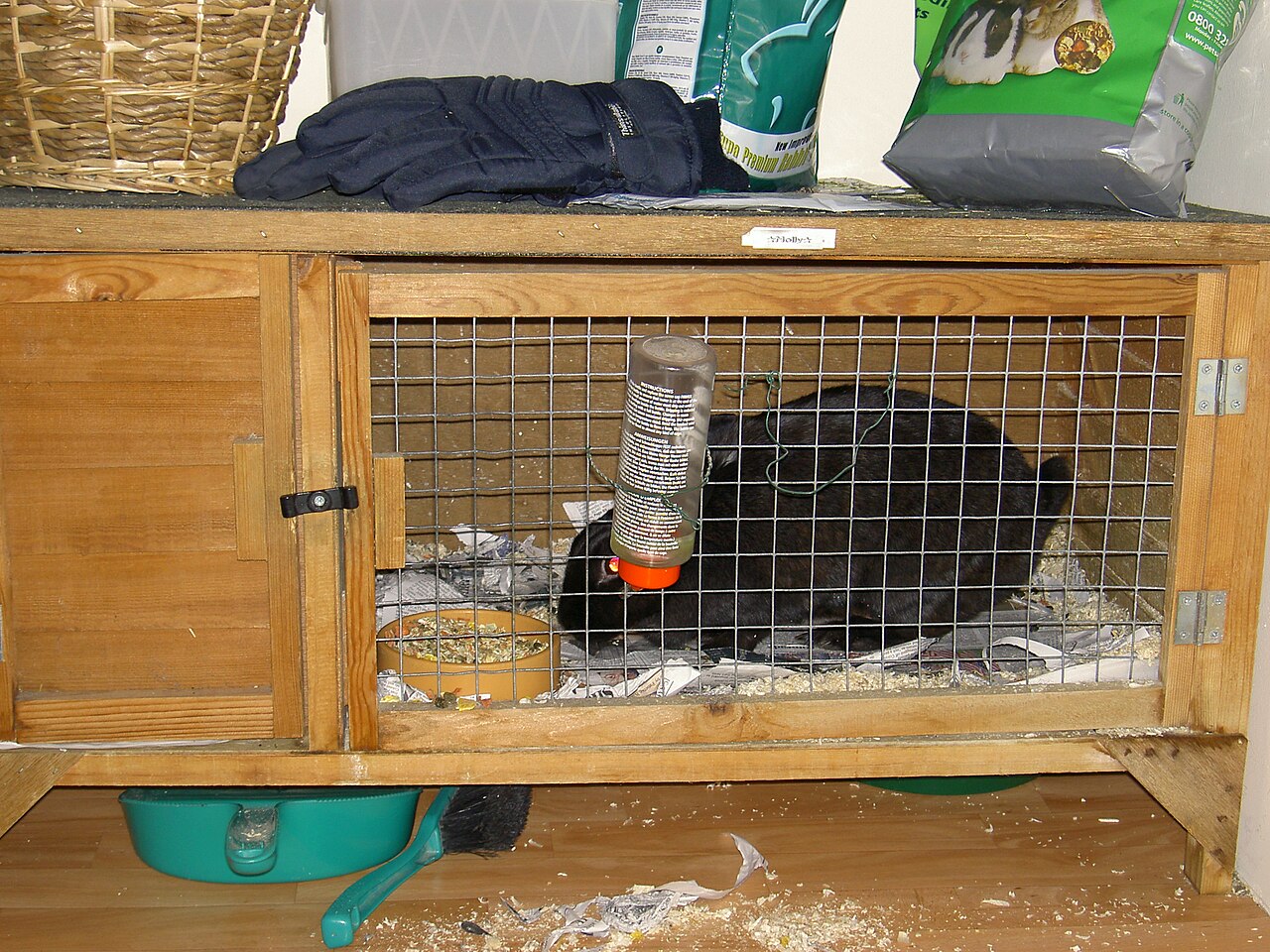
There is no single official number for the ideal rabbit enclosure size, but there is a clear welfare principle: your rabbit’s enclosure should be big enough for them to hop several times in a row, stretch out fully, stand up on their hind legs without touching the top, and move between distinct areas for eating, toileting and resting — with access to a larger exercise space every day. When in doubt, bigger is always better, and most rabbits need more room than first-time owners expect.
This guide explains the principles behind enclosure size, the mistakes that make setups smaller than they look, and how to measure your own space before you buy or build.
Think in Movements, Not Measurements
Measurements on a product listing tell you very little about how a space feels to a rabbit. A better test is to picture the natural movements your rabbit needs to make every day:
- Hopping: rabbits travel by hopping, and a healthy enclosure allows several consecutive hops in at least one direction, not just a turn and a shuffle.
- Stretching fully: rabbits rest completely stretched out, front and back legs extended, so the floor must fit your rabbit’s full stretched length with room to spare.
- Standing upright: rabbits regularly stand on their hind legs to look around; the enclosure height should let your rabbit do this without their ears touching the roof.
- Choosing where to be: a rabbit should be able to eat, toilet and sleep in separate spots, and move away from a draught, a noise or a companion when they wish.
If a setup fails any of these tests, it is too small — whatever the label on the box says.
Floor Space Matters Most
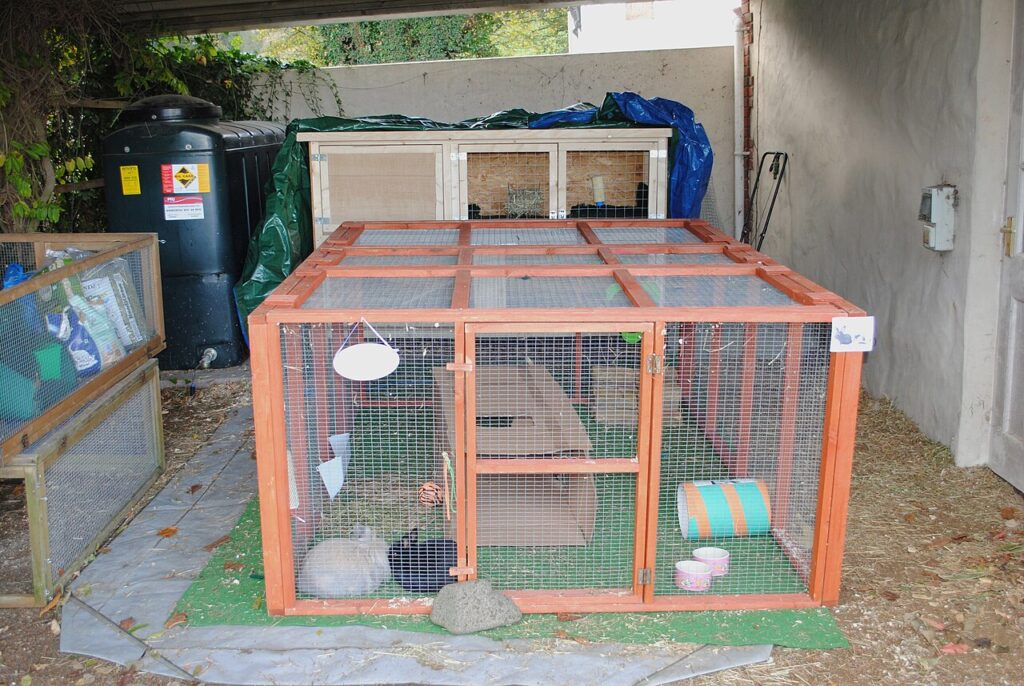
Of all the dimensions, usable ground-level floor space is the one that counts most, because rabbits live their lives at ground level: hopping, grazing, digging at a digging box and flopping down to rest. Length matters more than a square shape, since a long run of floor allows proper hops. When comparing enclosures, look at the internal floor dimensions rather than the external ones, and remember that fittings take space away — a large litter tray, a house and a hay rack all stand on that floor.
Height and Layout Matter Too
Height is the most commonly forgotten dimension. A low enclosure that stops a rabbit standing upright frustrates a basic behaviour and can make handling stressful, because you have to reach down and scoop. Layout matters as well: a long, unobstructed run encourages movement, while a floor broken into small chopped-up sections does not. Gentle ramps to a shelf can add interest for confident rabbits, but steep ramps, narrow landings and high drops create fall risks and should be avoided, especially for older or less mobile rabbits.
Do Not Count Shelf Levels as Floor Space
The most common sizing mistake is adding up every level of a multi-storey hutch or enclosure and treating the total as the rabbit’s space. Rabbits do not use vertical levels the way some other small pets do: a shelf is a bonus lookout, not living space, and the ground floor is where your rabbit actually lives. Judge any enclosure by its ground floor alone, and treat anything above it as enrichment. The same caution applies to measurements that include a run the rabbit can only reach sometimes, or a roof overhang counted in the footprint.
An Attached Exercise Area Changes Everything
An enclosure does not have to do all the work on its own. Attaching an exercise pen, or opening the enclosure onto a rabbit-proofed room for long periods each day, transforms a modest base into a good home. Rabbits are most active in the early morning and evening, so exercise access at those times matters particularly. The safest arrangement is one where exercise does not depend entirely on you being free to supervise: a permanently attached pen means your rabbit can move, graze and play on their own schedule.
Pairs and Larger Breeds Need More
Rabbits are social animals and are usually happiest in a bonded pair, but two rabbits need noticeably more than twice the “minimum” thinking owners often apply: they need room to move around each other, rest apart when they choose, and reach hay, water and the litter tray without competition. In practice that means a bigger floor area, a larger or additional litter tray, and at least two hiding places. Larger breeds need more again — a giant breed’s stretched length and standing height far exceed a small rabbit’s, so every dimension should be scaled to the rabbits who will actually live there, ideally judged against their full adult size rather than their size as youngsters.
Common Sizing Mistakes
- Buying for the baby rabbit in front of you, who will reach adult size within months.
- Trusting the word “large” on packaging instead of checking internal dimensions against the movement tests above.
- Counting shelves, roofs and part-time runs as living space.
- Forgetting the fittings: measuring an empty enclosure, then filling half the floor with a house, tray and bowls.
- Choosing height over length, when ground-level hopping room is what a rabbit uses most.
- Assuming exercise “sometimes” makes up for a small base; rabbits are active daily, including at dawn when you may be asleep.
How to Measure Your Space
Before buying or building, work through these steps:
- Measure the space you actually have — length, width and available height in the spot the enclosure will stand, including door swings and your own access for cleaning.
- Check internal dimensions of anything you buy; external measurements include walls, roofs and frames.
- Map the fittings on paper or with tape on the floor: litter tray, hideaway, hay area, water bowl. Whatever floor remains is your rabbit’s movement space.
- Apply the movement tests: could a rabbit hop several times, stretch fully and stand upright in the space that remains?
- Plan the exercise area at the same time — where will the pen attach, or which room will be rabbit-proofed?
- Leave growing room: if you have a young rabbit, size everything for the adult.
Enrichment Needs Space Too
Space is not only about movement; it is also about occupation. A rabbit in a larger area can be given things that simply do not fit in a small enclosure: a digging box filled with hay or shredded paper, a cardboard castle with more than one doorway, tunnels to run through, and willow or applewood branches to strip and chew. These are not luxuries — chewing, digging and exploring are normal daily behaviours, and a rabbit with room to perform them is far less likely to redirect the same energy into bar-biting, over-grooming or destroying its own housing. When you plan an enclosure, it is worth picturing it furnished and busy rather than empty: if adding a tunnel and a digging box would leave no clear floor to hop across, the space was not big enough to begin with, and enlarging it will improve your rabbit’s days more than any single toy could.
Safety and Comfort at Any Size
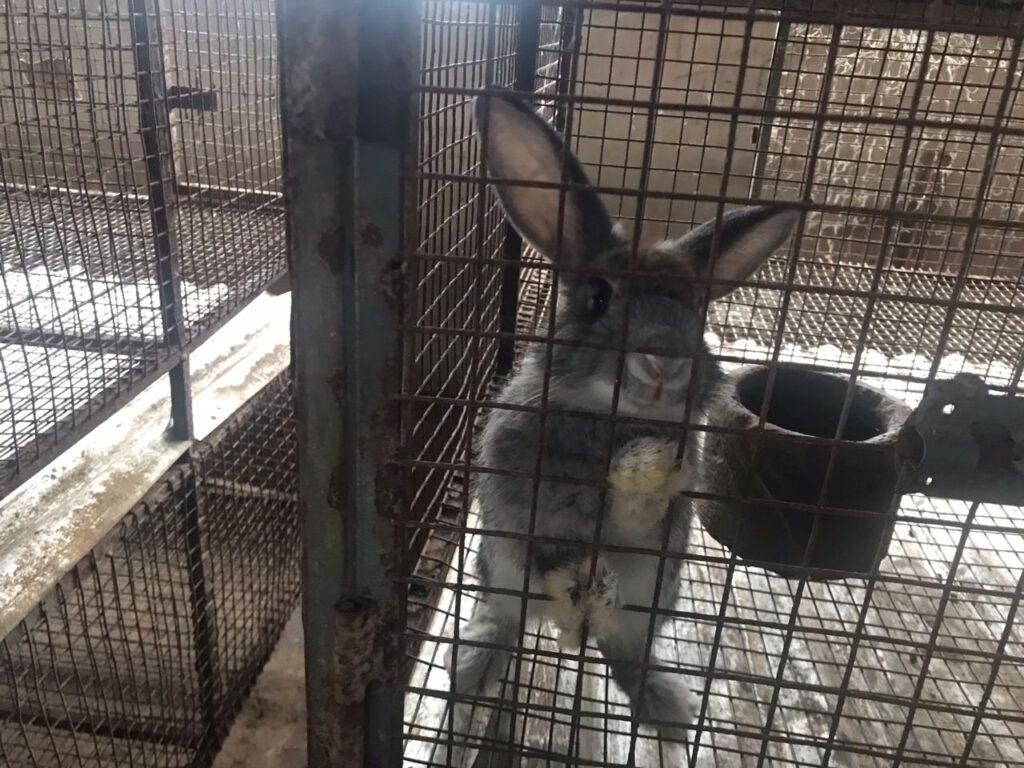
Size is necessary but not sufficient. Whatever you provide should be secure, with no gaps a rabbit can squeeze through or get stuck in, no sharp edges, and a lid or height that keeps the rabbit in and other pets out. Flooring should be solid and grippy rather than bare wire, the space should sit somewhere draught-free and out of direct sun and extremes of temperature, and part of the floor should offer a soft resting surface. A huge but barren, slippery or exposed space is not good housing — space works when it is furnished with hay, shelter, water and things to do.
Conclusion
The right rabbit enclosure size is best judged by what your rabbit can do inside it: hop properly, stretch out in full, stand tall, and choose between places to eat, toilet, hide and rest — with a larger exercise area available every day. Judge by ground-floor space, be sceptical of shelf-counting and marketing labels, allow more for pairs and large breeds, and measure with the fittings included before you commit. Next step: tape out your planned enclosure on the floor and walk through the movement tests honestly.
Frequently Asked Questions
Is there an official minimum enclosure size for rabbits?
Welfare organisations publish guidance rather than a single legal figure in most places, and recommendations are framed around what the rabbit can do: hop, stretch fully, stand upright and exercise daily. Use those movement tests rather than hunting for one magic number.
Can a smaller enclosure be fine if my rabbit free-roams?
It can work better, because the enclosure becomes a base rather than the rabbit’s whole world. Even then, the base should fit a litter tray, hideaway and room to stretch, and roaming time needs to be long and daily, not occasional.
Do shelves and levels count towards the size?
No. Judge an enclosure by its ground floor. A shelf or platform is useful enrichment and a lookout spot, but rabbits live, hop and rest at ground level, so levels do not substitute for floor space.
How much more space do two rabbits need?
Noticeably more floor area than one rabbit, plus a bigger or second litter tray and at least two hideaways, so both rabbits can eat, toilet and rest without competing or crowding each other. When in doubt, go a size up.
What if my current enclosure is too small?
The quickest upgrade is attaching an exercise pen, which usually costs less than replacing the enclosure and immediately adds real hopping room. You can then plan a larger base or a rabbit-proofed room as a longer-term step.
Related Guides on RabbitCare
- Best Indoor Housing for Rabbits: Space, Safety and Comfort
- Indoor vs. Outdoor Rabbits: Which Is Better?
- How to Create a Rabbit-Friendly Room in a Small Home
References
- House Rabbit Society (rabbit.org) — guidance on housing space, exercise and indoor living.
- RSPCA — rabbit welfare guidance on enclosure size and environment.