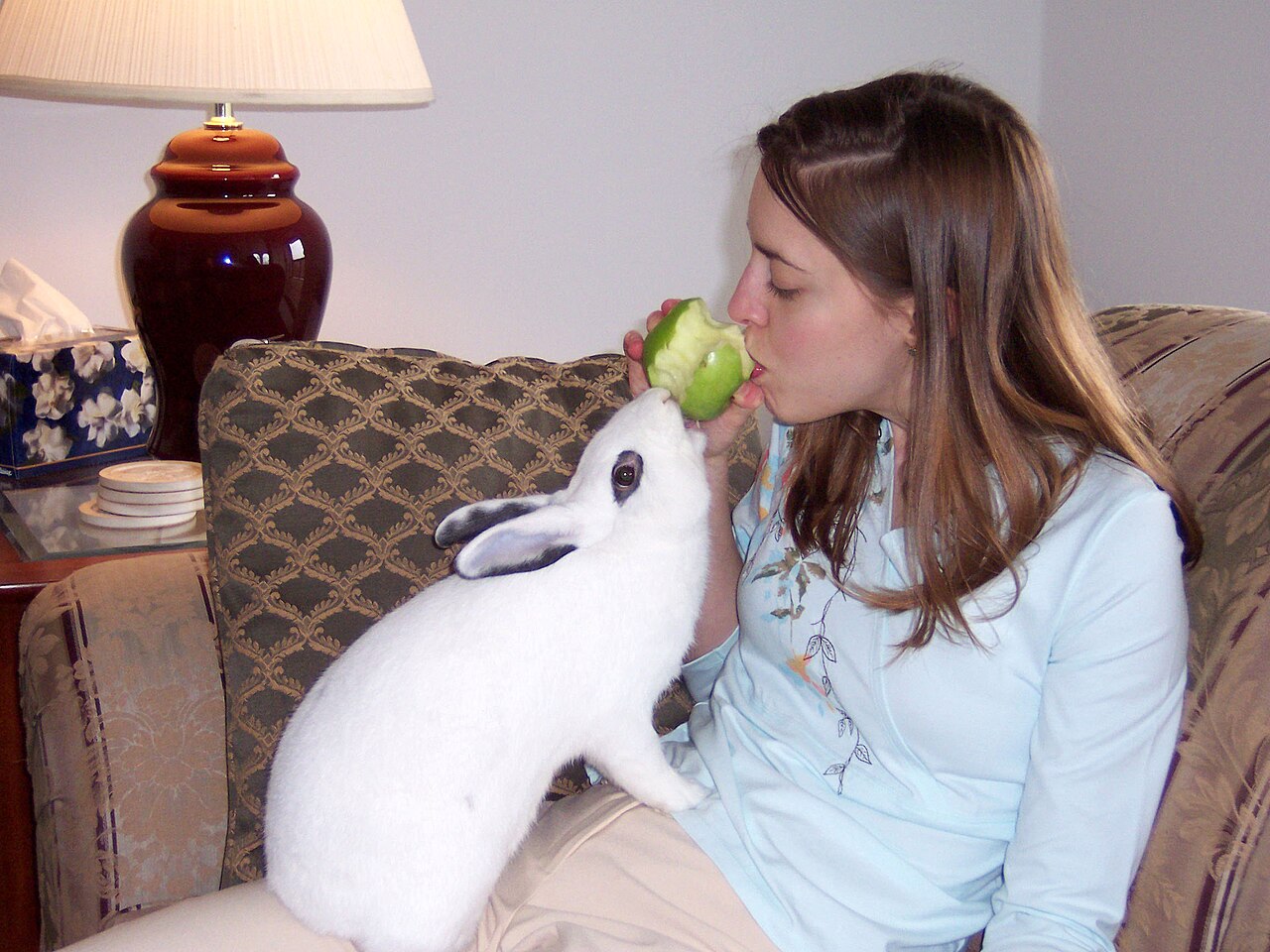
The healthiest treats for rabbits are usually not bought in a treat packet at all. Small pieces of fresh produce — a herb sprig, a leaf, or a tiny piece of fruit or carrot — make the best healthy treats for rabbits, adding flavour and variety without much sugar. Commercial treats are often the opposite: sweetened, starchy, and easy to overfeed. Whatever you choose, a treat should stay tiny and occasional, on top of a diet built on unlimited hay, daily leafy greens, measured pellets, and fresh water.
Treats still have a real job to do: they help with bonding, training, and making unfamiliar handling feel safer. The aim is to choose rewards that do that job without unbalancing the rest of the diet.
What Counts as a Treat?
A treat is anything offered outside the core diet for pleasure, training, or enrichment rather than nutrition. Your rabbit does not need treats to stay healthy; hay, greens, and pellets already cover its needs, so every treat can be judged as a bonus, not a requirement.
Treats should also be the first thing to reduce if weight creeps up, droppings soften, or hay eating falls: a rabbit that fills up on rewards has less appetite for the long fibre it needs most.
How Much Is Too Much? Setting Treat Limits
There is no treat allowance a rabbit must use up. For a healthy adult, think of a teaspoon-to-tablespoon-sized piece of fruit or sweet vegetable on an occasional day, rather than a handful every day. Herbs and leafy pieces are less sugary and can be used more freely, especially when they come out of the day’s normal greens portion.
A useful rule is to count everything: training, bonding, and bedtime extras all come from the same small daily total. If several people feed the rabbit, use a small treat pot measured out in the morning so the total stays visible.
- Keep sweet treats occasional, not a daily routine.
- Take training rewards out of the day’s treat total, not in addition to it.
- Reduce treats first if your rabbit gains weight or eats less hay.
Healthier Rewards: Fresh Produce First
The best rabbit snack ideas are simple: herb sprigs for bonding, small leafy pieces for everyday rewards.
Herbs and leafy greens
For everyday rewards, herbs are hard to beat. A sprig of coriander, parsley, mint, basil, or dill is aromatic, exciting to most rabbits, and far less sugary than fruit. A small leaf of romaine lettuce, spring greens, or carrot tops works the same way — and because these foods already belong in the daily greens, hand-feeding some of them adds bonding value without adding a new food group.
Small pieces of fruit and sweet vegetables
Fruit belongs firmly in the treat category. A small piece of apple with the seeds removed, a berry, or a small slice of banana can be an occasional sweet reward. Carrot and bell pepper are popular and useful for training, but best in small pieces rather than whole portions. Wash produce, remove stones, pips, and seeds, and introduce each new item gradually.
Forage and non-food rewards
Not every reward needs to be eaten quickly. Hay stuffed into a cardboard tube, or herb leaves scatter-fed through the enclosure, turns a small amount of food into a longer foraging activity.
Good Choices and Treats to Avoid at a Glance
| Generally good choices | How to use them | Treats to avoid | Why avoid them |
|---|---|---|---|
| Fresh herbs and leafy greens | Hand-feed sprigs, or use the daily greens portion | Yoghurt drops | Sweetened dairy-style snacks a rabbit does not need |
| Tiny pieces of fruit or carrot | Occasionally, in teaspoon-sized amounts | Seed sticks hung as treats | Often held together with sugary binders; seeds are not a natural main food |
| Pieces of bell pepper or other suitable vegetables | In rotation, introduced gradually | Sugary or coated products, honey treats, sweet biscuits | Added sugar and starch can upset digestion and add weight |
| Hay-based foraging activities | Hide small amounts in tubes or hay piles | Coloured muesli mixes and cereal treats | Encourage selective feeding; low in useful long fibre |
| Plain, unsweetened dried forage | Sprinkle a little through hay | Human snacks: bread, crackers, cake, chocolate | Processed, starchy or toxic; never suitable |
The pattern is easy to remember: the closer a treat is to a fresh plant your rabbit could graze, the better it usually is. The more a product is baked, coated, coloured, or sweetened, the more it should be questioned — and usually left on the shelf.
Commercial Treats: Marketing Is Not Nutrition
Pet-shop treat aisles are designed to appeal to people. Packets show happy rabbits, bright colours, and words such as “natural”, “fruity”, or “honey-baked”, but none of those guarantees a product suits a rabbit’s digestion. Many commercial treats are cereals, seeds, sugar, or molasses pressed into shapes, sometimes coated to look like yoghurt or fruit.
Not every packaged product is unsuitable, though: plain dried forage and hay-based products with a short, recognisable ingredient list are a different category from confectionery-style snacks. The label, not the front picture, tells you which you are holding.
Reading Labels: A Practical Checklist
Safe rabbit treats start with a label you can understand. Turn the packet over before you buy:
- First ingredients. Grass, hay, herbs, or vegetables near the top are a better sign than cereals, seeds, or sugar.
- Added sugars. Watch for sugar, honey, molasses, and syrup used as sweeteners.
- Dairy and egg. Yoghurt, milk, and egg have no place in a herbivore’s treat.
- Seeds and nuts. Treats based on these are energy-dense and unlike a rabbit’s natural diet.
- Flours and starches. Cereal bases usually mean a baked snack, not forage.
- Colourings and coatings. These are for human eyes, not rabbit health.
- A short list you recognise. If you cannot picture most of the ingredients as plants, put the packet back.
Apply the same scepticism to loose and homemade-style treats with no ingredient list.
Using Tiny Rewards for Training
Food rewards work well for training because rabbits learn routines quickly: coming when called, entering a carrier, or allowing a health check. The secret is size. Rabbit training treats should be pea-sized or smaller — a single herb leaf or tiny piece of greens — so a session can include several repetitions without becoming a meal.
- Reward immediately. Offer the piece the moment your rabbit does what you asked, so the link is clear.
- Keep sessions short. A few minutes is plenty. Strong-smelling herbs often motivate as well as sweet fruit, in a fraction of the amount.
- Break treats up. One small piece of fruit cut into tiny fragments gives several rewards for the price of one.
- Never chase or force. If your rabbit moves away, end the session. A reward should build trust, not pressure.
As a behaviour becomes reliable, reward every other time, then only occasionally.
Introducing a New Treat Safely
Even a safe treat is a new food the first time. Offer a very small piece, then watch appetite and droppings over the following day before offering it again. Introduce one new item at a time, so if droppings soften you know which food to pause, and keep hay and water constant while you test it. If a treat disagrees with your rabbit, stop it and return to hay and familiar greens — there are always other rewards.
Treats for Young, Older, and Overweight Rabbits
Young rabbits have sensitive digestion, so treat foods should wait until they are weaned, eating hay well, and old enough for new foods to be introduced cautiously. Herbs and greens come before sweet fruit, and a rabbit-experienced veterinarian can advise on timing.
Older rabbits and those with dental problems may manage soft herb leaves more easily than hard commercial biscuits — hay chewing, not biscuit chewing, does the useful dental work. Overweight rabbits do best when sweet treats are cut right back and rewards shift to herbs, greens from the daily allowance, and play. Never restrict hay; agree any weight plan with a veterinarian.
Common Treat Mistakes to Avoid
- Treating every day out of habit. A routine handful of sweet treats adds up quickly.
- Feeding from your own plate. Human snacks are processed, seasoned, and unsuitable, and some are toxic.
- Trusting the front of the packet. Pictures and claims are not a substitute for the ingredient list.
- Giving a whole treat stick or biscuit at once. Packaged servings are often far larger than a rabbit needs.
- Offering treats instead of investigating appetite changes. A rabbit refusing hay but accepting treats needs attention, not more treats.
Safety Notes: When to Contact a Veterinarian
Treats should never delay care. Contact a rabbit-experienced veterinarian promptly if your rabbit stops eating, produces much smaller droppings or none at all, seems hunched or quiet, grinds its teeth, drools, or develops a swollen belly. If your rabbit eats a product you are unsure about, or a food meant for people or other animals, seek veterinary advice the same day and keep the packaging to show them. Do not try to treat the problem yourself, and never offer human medicines.
Conclusion
Good treats are small, fresh, and deliberate: herb sprigs and leafy pieces for everyday rewards, tiny pieces of fruit or carrot for special moments, and foraging activities when you want a reward to last longer. Read labels, avoid yoghurt drops, seed sticks, and sugary coated products, and let hay stay at the centre of the diet. Next step: check one treat label in your cupboard against the checklist above, and swap the worst offender for fresh herbs.
Frequently Asked Questions
What are the healthiest treats for rabbits?
Fresh herbs and leafy greens, because they are low in sugar and already part of a balanced diet. Tiny pieces of fruit or carrot are fine occasionally, and hay-based foraging activities make a reward last longer.
Can I give my rabbit treats every day?
A tiny herb or greens reward can fit into most days, especially from the daily greens portion. Sweet treats such as fruit, carrot, and commercial snacks are better kept occasional, and the total should stay small.
Why are yoghurt drops and seed sticks a problem?
Yoghurt drops are sweetened, dairy-style snacks a herbivore does not need, and seed sticks are often seeds held together with sugary binders. Both are easy to overfeed and offer little useful fibre.
What can I use as training treats without overfeeding?
Pea-sized pieces: a small herb leaf, a fragment of a favourite green, or one tiny piece of fruit broken into several rewards. Keep sessions short and count everything towards the day’s treat total.
My rabbit only seems interested in sweet treats. What can I do?
Try strong-smelling herbs at floor level during calm bonding time, and reduce sweet treats gradually. If your rabbit is also eating less hay, or its droppings change, contact a veterinarian for advice.
Related Guides on RabbitCare
- What Do Rabbits Eat? A Complete Guide to a Healthy Rabbit Diet
- Can Rabbits Eat Carrots? Facts About Sugar, Portions and Safety
- Can Rabbits Eat Fruit? Safe Choices and Portion Guidelines
- Foods Rabbits Should Never Eat: A Practical Safety List
References
- House Rabbit Society (rabbit.org) — guidance on hay-based diets, treats, and general rabbit care.
- RSPCA — rabbit diet and welfare guidance, including keeping treats small and occasional.