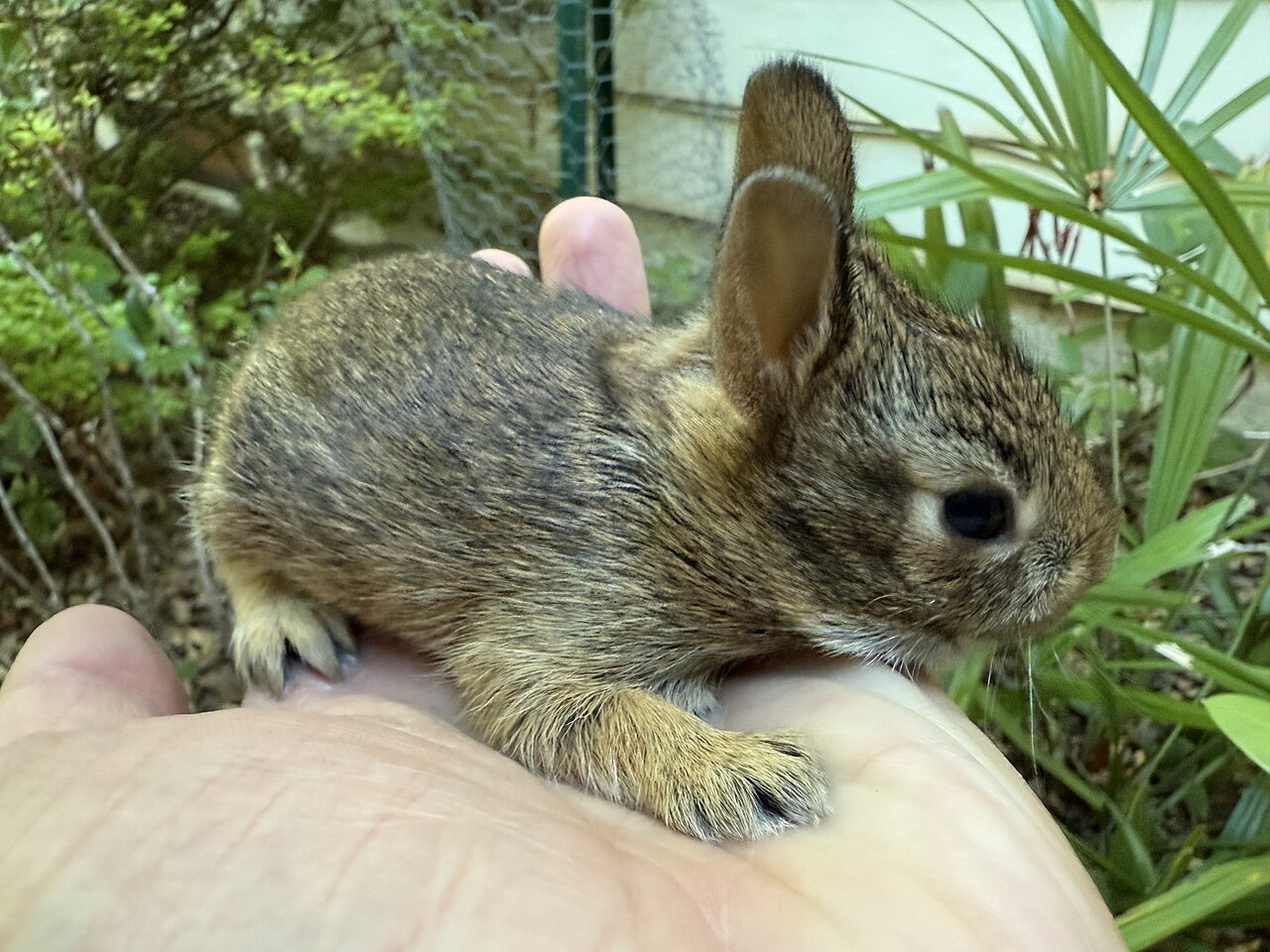
If you keep asking “why does my rabbit nudge me?”, the answer depends on the moment: that firm push of the nose against your hand, ankle or leg is one of a rabbit’s standard tools of communication, and it commonly means one of a few things — “move, please”, “stroke me”, “any food going?”, or simply “what is this?” Rabbits have no hands and no voice worth mentioning, so the nose does the talking. This guide works through the common meanings of nudging, how to tell them apart by context, and how to respond in the way your rabbit is hoping for.
What a Rabbit Nudge Actually Is
A nudge is a push with the nose — sometimes a gentle tap, sometimes a surprisingly determined shove — directed at you, at objects, or at another rabbit. It is distinct from chinning (rubbing the chin on things to scent-mark them) and from head-butting in anger; a nudge is brief, purposeful and usually repeated if the first one does not get results. Think of it as the rabbit equivalent of tapping someone on the arm.
Because the same gesture serves several purposes, context is everything: where you are, what you are doing, what time of day it is, and what your rabbit does immediately afterwards. Read the nudge together with the situation and the meaning usually becomes obvious.
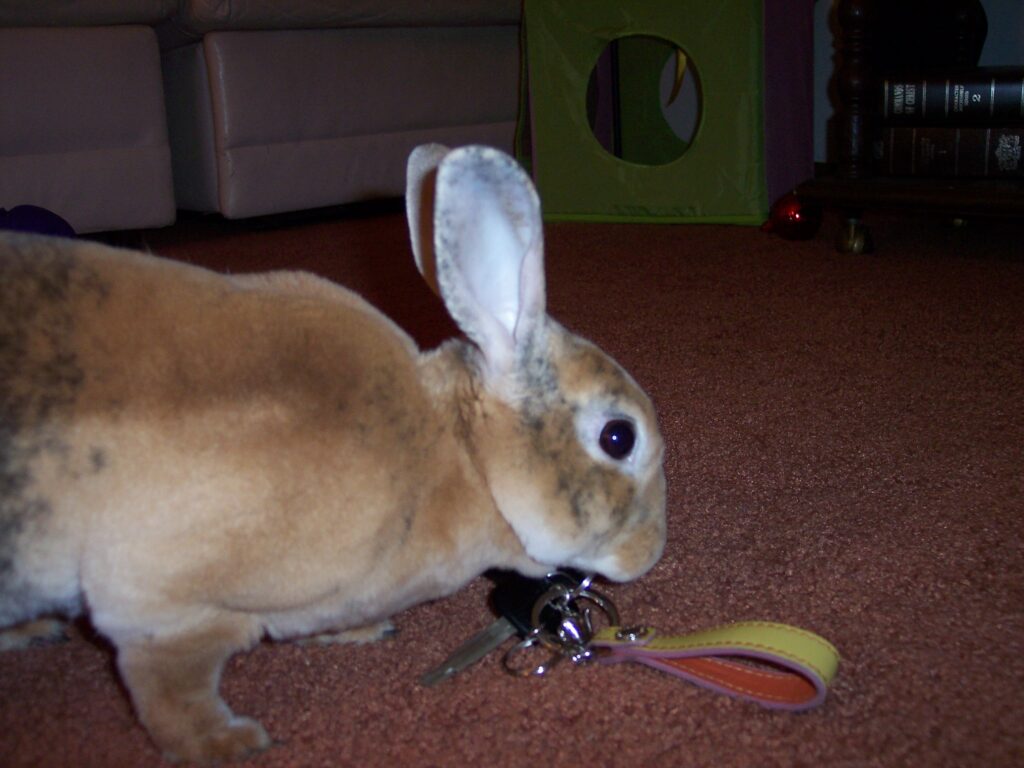
The Common Meanings of a Nudge
“Move, please” — you are in the way
The most literal nudge: your rabbit wants to pass, reach something, or occupy the exact patch of floor your foot is on, and you are an obstacle. This nudge is typically firm, repeated, and aimed at ankles, feet or whatever body part is blocking the route. Rabbits are creatures of fixed habit with favourite paths around their space, and they seem genuinely baffled that you do not simply know yours is blocking theirs. The correct response is to step aside — you have been given fair notice.
Asking for attention or strokes
A rabbit that wants fussing commonly nudges your hand or leg, then stays — often pushing its head down or under your hand, forehead presented, in the classic “groom me” posture. In rabbit society, grooming is requested by the lower-ranking rabbit and given by the higher one, so a rabbit pressing its head under your hand is, politely, putting in an order. If you stroke the forehead and ears and your rabbit settles, flattens slightly and maybe tooth-purrs, you have read the nudge correctly.
Asking for food — a learned request
Rabbits learn fast. If nudging you at certain times has previously produced a treat, a herb or a topped-up food bowl, the nudge becomes a trained order button: nose, push, food appears. Nudges that arrive at feeding times, follow you to the kitchen, or intensify around treat storage are commonly this kind. There is nothing wrong with the request itself — but answer with a leafy herb or a piece of vegetable rather than teaching that persistence yields sugary treats.
Simply investigating you
Some nudges are pure curiosity: your rabbit is exploring you the way it explores everything, by nose. New shoes, a different trouser fabric, the smell of another animal on your hands — all merit a few investigative prods. These nudges are usually light, intermittent, and followed by sniffing, chinning or wandering off once the information has been gathered.
Nudging Objects: The Home Rearrangement Service
Rabbits nudge far more than people. Bowls get pushed to preferred positions, toys are shoved aside or relocated, tunnels are adjusted, and litter trays are occasionally dragged into new arrangements. This is normal rabbit housekeeping: a rabbit has firm opinions about its environment and the physical means to act on them. Persistent nudging of one particular object sometimes signals something practical — an empty water bowl being pushed around is worth checking — but rearrangement itself is standard, healthy behaviour and part of what our guide to rabbit body language would file under a confident, settled rabbit making itself at home.
Nudge, Then Run Off: Play Invitation or Pent-Up Energy?
A nudge followed by your rabbit dashing away, sometimes with a binky or a shake of the head, is commonly read as an invitation to play or follow — or simply as a burst of energy being spent in your direction. Young rabbits do this most. The friendly interpretation is supported if your rabbit circles back for another round, stays nearby, and shows loose, bouncy body language rather than bolting to hide. If instead the rabbit thumps, flattens or hides after nudging, read the whole episode as startlement rather than play and let things calm down.
The Nudge–Nip Sequence: When a Polite Request Escalates
It is worth knowing that an ignored nudge can be followed by a nip. A rabbit asking to be moved past, or demanding attention, that gets no response may escalate its communication: nudge, nudge harder, then a small pinch of the teeth on ankle or clothing to underline the point. This is generally frustration, not aggression — the rabbit did ask politely first. Our guide on why rabbits bite covers the full picture, including the important rule that biting with other behaviour changes should prompt a check for pain. For the nudge–nip specifically, the fix is usually simple: notice the nudge, and answer it — move, stroke, or calmly decline by standing up and walking away, rather than scolding.
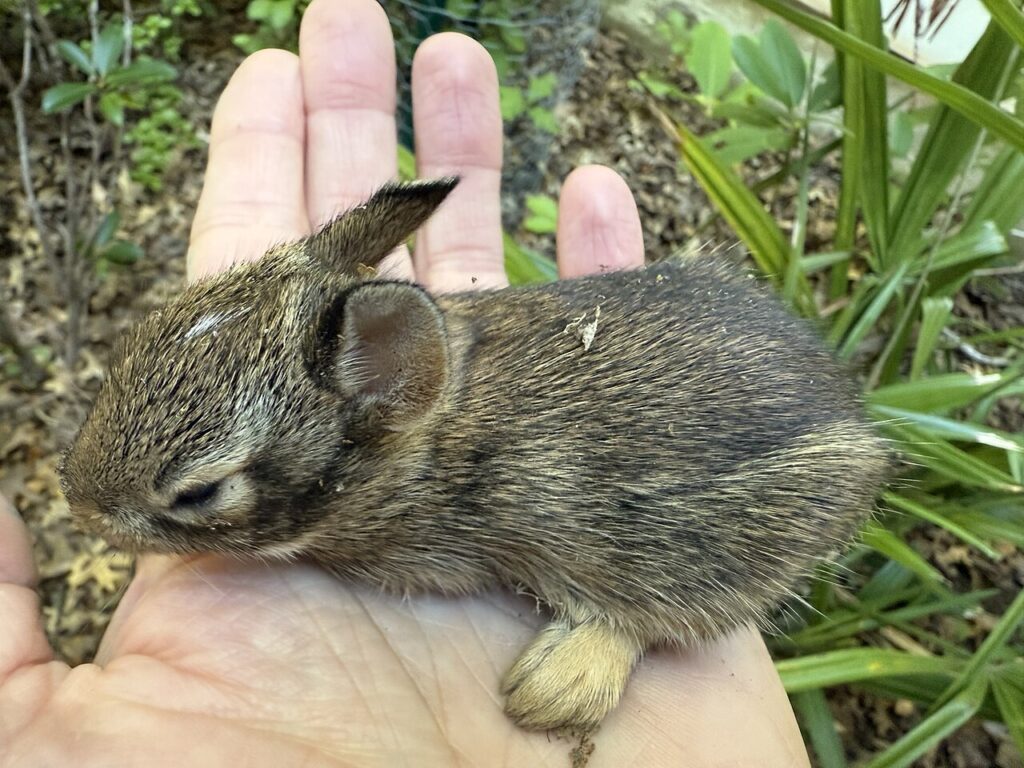
Nudging Other Rabbits
Between rabbits, nudging is part of everyday social traffic. Bonded rabbits nudge each other out of favoured spots, push noses under a partner to request grooming, and prod one another aside from food or a good sunbathing patch. It is commonly part of how hierarchy is negotiated and maintained in small, bloodless ways: who moves, who grooms whom, whose turn it is in the best spot. Occasional displacement nudges in a bonded pair are normal; if nudging between rabbits escalates into chasing, fur-pulling or fighting, that is a bonding problem rather than communication, and the pair need assessment.
How to Respond to a Nudge
- For “move” nudges: step aside. It costs nothing and your rabbit’s confidence in communicating grows.
- For stroke requests: if the head goes down or under your hand, stroke the forehead and cheeks, and stop if your rabbit moves away.
- For food requests: answer at proper feeding times with hay, greens or a small vegetable piece — not on every nudge, or you will be nudged on the hour.
- Never push back or “play-fight” with hard shoves; a rabbit reads force as escalation, not as a joke.
- Do not reward the nip if one follows — calmly move away, and next time respond to the nudge stage instead.
Responding consistently teaches your rabbit that gentle communication works, which makes gentle communication what you get.
When Nudging Is New, Constant or Out of Character
Nudging itself is normal, but a sudden change in any behaviour deserves a context check. Ask: has something changed — a new layout blocking a favourite route, a feeding routine altered, a new pet or person in the home, less exercise time than usual? A rabbit suddenly nudging constantly for food may simply have learned a new payoff, but a rabbit whose whole behaviour has changed — nudging alongside reduced appetite, hiding, tooth-grinding or unusual quietness — may be unwell or in pain, and pain in rabbits is easily expressed as restlessness and attention-seeking before it looks like illness. If nudging arrives as part of a sudden behaviour change, a vet check is the sensible first step, as with any unexplained change.
Conclusion
So, why does your rabbit nudge you? Most likely for one of four ordinary reasons: you are in the way, strokes are being requested, food negotiations have opened, or you are simply interesting. Read the nudge with its context — the head-under-hand press for grooming, the ankle shove on a favourite route, the kitchen follow at dinnertime — and answer the polite version of the request. A rabbit that nudges you is a rabbit that considers you worth communicating with, which, from a prey animal, is no small thing.
Frequently Asked Questions
Why does my rabbit nudge my hand and then put its head down?
That combination is commonly a request for grooming: the nudge gets your attention, and the lowered, pushed-under head is how rabbits ask a companion to groom them. Stroke the forehead and cheeks if your rabbit stays; if it moves away, it has changed its mind, and that is fine too.
Why does my rabbit nudge my feet and ankles?
Usually because you are standing on its route. Rabbits follow fixed paths around their space, and an ankle in the way gets a firm, repeated nudge meaning “move, please”. It can also be attention-seeking if it happens when you are preparing food. Stepping aside answers the commonest case.
Is nudging a sign of dominance?
Between rabbits, nudging does play a part in everyday hierarchy — who moves aside, who grooms whom — but towards humans it is better read as communication than dominance. Your rabbit is making requests, not staging a coup. Answering politely and consistently keeps the exchange friendly.
My rabbit nudges me and then runs away. What does that mean?
It is commonly read as playful — an invitation to follow or join in, or just young energy being spent. If your rabbit circles back with loose, bouncy body language, play is the likely meaning. If it thumps, flattens or hides afterwards, something startled it instead, so let things settle.
Why has my rabbit suddenly started nudging me all the time?
First check for a learned payoff: if nudges have recently started producing treats or attention on demand, you have trained a habit. Check also for changes at home and for other behaviour changes. If the nudging comes with reduced appetite, hiding or any sign your rabbit is unwell, book a vet check — sudden behaviour change in rabbits always deserves that caution.
Related Guides on RabbitCare
References
- House Rabbit Society (rabbit.org) — guidance on rabbit communication, body language and social behaviour.
- RSPCA — advice on understanding rabbit behaviour and responding to your rabbit’s signals.