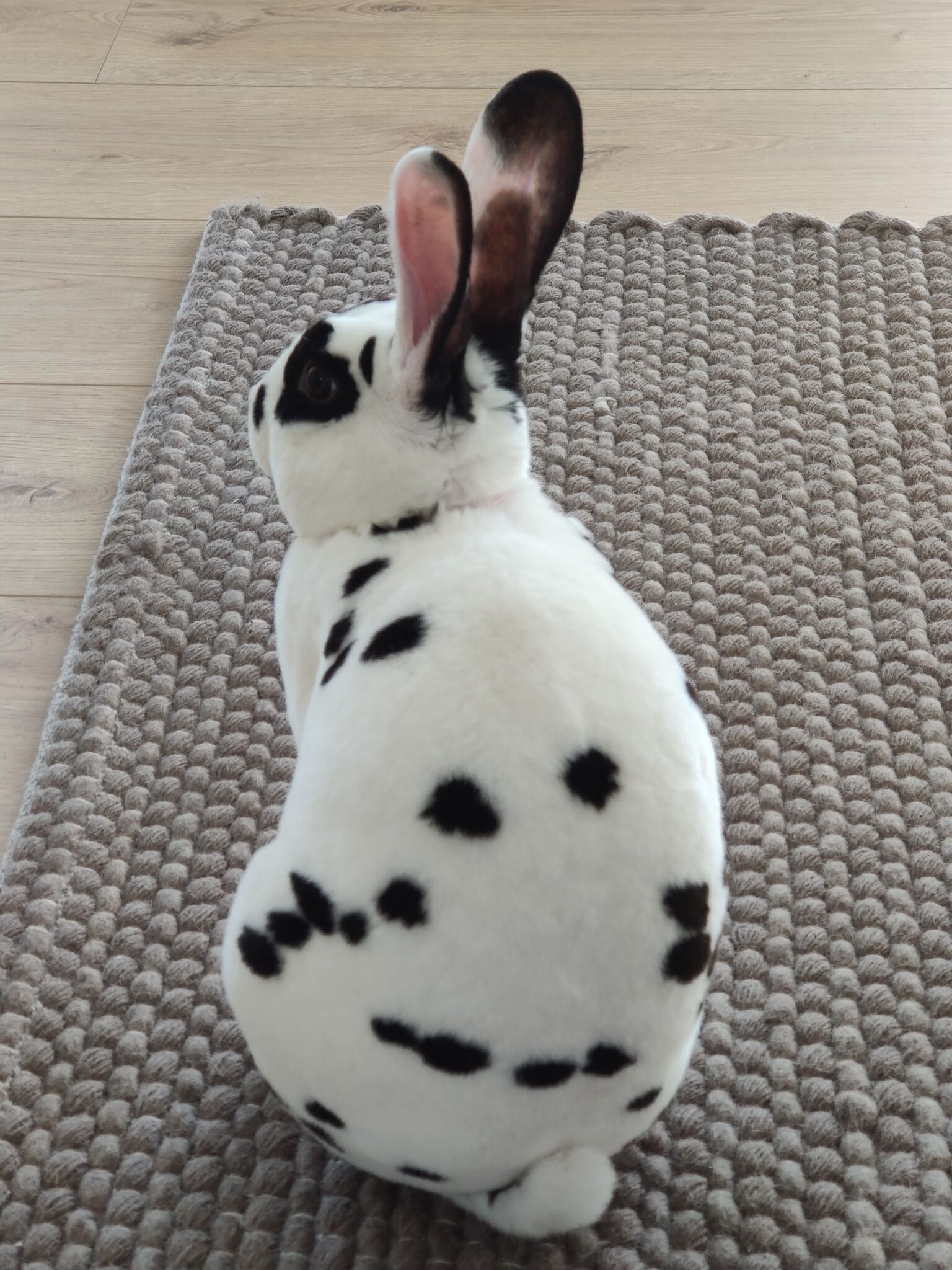
Understanding rabbit flopping meaning starts with reassurance: a flop — your rabbit suddenly throwing itself onto its side — is commonly read as a sign of deep relaxation and contentment. A prey animal only abandons its ready-to-run posture when it feels safe, so a flopped rabbit is usually a comfortable one. This guide explains what a flop looks like, why it can look so alarming, and, most importantly, how to tell a happy flop from a genuine collapse that needs a vet.
What Exactly Is a Rabbit Flop?
A flop is a sudden, deliberate topple. One moment your rabbit is sitting, grooming or just returning from a zoom around the room; the next, it tips sideways and lands on its flank, often with a little kick of the back legs, and simply stays there. It frequently happens straight after exercise — a happy run, a few binkies — or as your rabbit settles down for a proper rest in a favourite spot.
Unlike ordinary lying down, which a rabbit does in stages, the flop is a single whole-body movement. The rabbit commits to it completely, which is exactly why it can look so dramatic. Within seconds of landing, a flopped rabbit usually goes still, breathes steadily, and may close its eyes part-way or fully.
Why Rabbits Flop: Relaxation and Trust
Rabbits are prey animals, and their default posture is one that lets them bolt. Legs tucked under, weight balanced, ears up — that is a rabbit who can be gone in half a second. Lying flat on the side, legs stretched out and belly exposed, is the opposite of that. It takes real effort and a moment of vulnerability to get up from a full flop, so rabbits generally only do it when nothing in their environment worries them.
That is why the flop is commonly read as a compliment to you and to the home you provide. A rabbit who flops in the middle of the room, near you, is telling you — in body language — that it regards this place and these people as safe. Owners often notice flopping increases as a newly adopted rabbit settles in over weeks and months, which fits the trust interpretation well.
The Flop vs the Roll: A Small but Useful Difference
New owners sometimes confuse two similar-looking movements:
- The flop: the rabbit tips onto one side and stays there, still and settled. This is the resting behaviour described above.
- The roll: the rabbit goes over onto its back and keeps moving, ending up on the other side or back on its feet. A quick roll, especially during play or in a favourite dust-free patch of floor, is generally just playful movement or an attempt to scratch an itch.
What you should not see in either case is a rabbit lying on its back, motionless and unresponsive, having been placed there. Rabbits do not naturally rest on their backs, and stillness in that position is a stress response, not relaxation.
Why the Flop Looks So Alarming
If your first flop made your heart skip, you are in large company. A rabbit mid-flop can look, for a second or two, like an animal that has collapsed: the fall is sudden, the landing is ungraceful, legs may stick up at odd angles, and the eyes often half-close or roll slightly as the rabbit drifts off. Lying flat out with eyes half shut is a posture many of us associate with an animal that is unwell or worse.
The difference is in what happens next. A flopped rabbit breathes calmly and evenly, its body is loose rather than tense, and it will rouse normally when life gets interesting again.
Young Rabbits Flop the Hardest
If your rabbit is young, expect the drama to be turned up. Young rabbits commonly flop with real theatrical flair — flinging themselves sideways after a burst of running, landing with all four legs in the air for a moment before settling. It is often paired with binkies, twists and sprints, as part of the general exuberance of a young, energetic rabbit burning off steam in a place it trusts.
As rabbits age, flops often become less frequent and less flamboyant, though plenty of older rabbits still flop daily. A gradual change with age is normal; a sudden behaviour change at any age is worth a closer look, as the next section explains.
Normal Flop or Collapse? The Checks That Matter
This is the one genuinely important judgement in this article, so it is worth learning properly. A normal flop and a collapse can look similar in a photograph; in real life, they behave very differently.
| Check | Normal, happy flop | Possible collapse — act |
|---|---|---|
| Response to you | Rouses when you approach, speak or offer food; lifts head, looks at you | Does not respond to your voice or approach |
| Getting up | Rises smoothly and moves normally when it chooses to | Cannot get up, struggles, or stays limp |
| Body feel and posture | Loose, soft, relaxed body; settles into the position | Limp and unresponsive, or rigid and trembling |
| Breathing | Calm, steady, unhurried | Laboured, rapid, noisy or open-mouthed |
| Before and after | Was running, playing or settling to rest; eats normally afterwards | Has not eaten, seems dull, or was unwell earlier |
The single most useful test is the rousing test, done gently: walk over normally, say your rabbit’s name, perhaps rustle a treat bag or offer a favourite herb. A sleeping or resting rabbit will wake, focus on you, and very often get up to investigate. A rabbit who does not rouse — who is limp, unresponsive, or cannot stand — is not flopping. That is an emergency, and the rabbit needs a vet immediately.
Flopping in Hot Weather: Rule Out Overheating
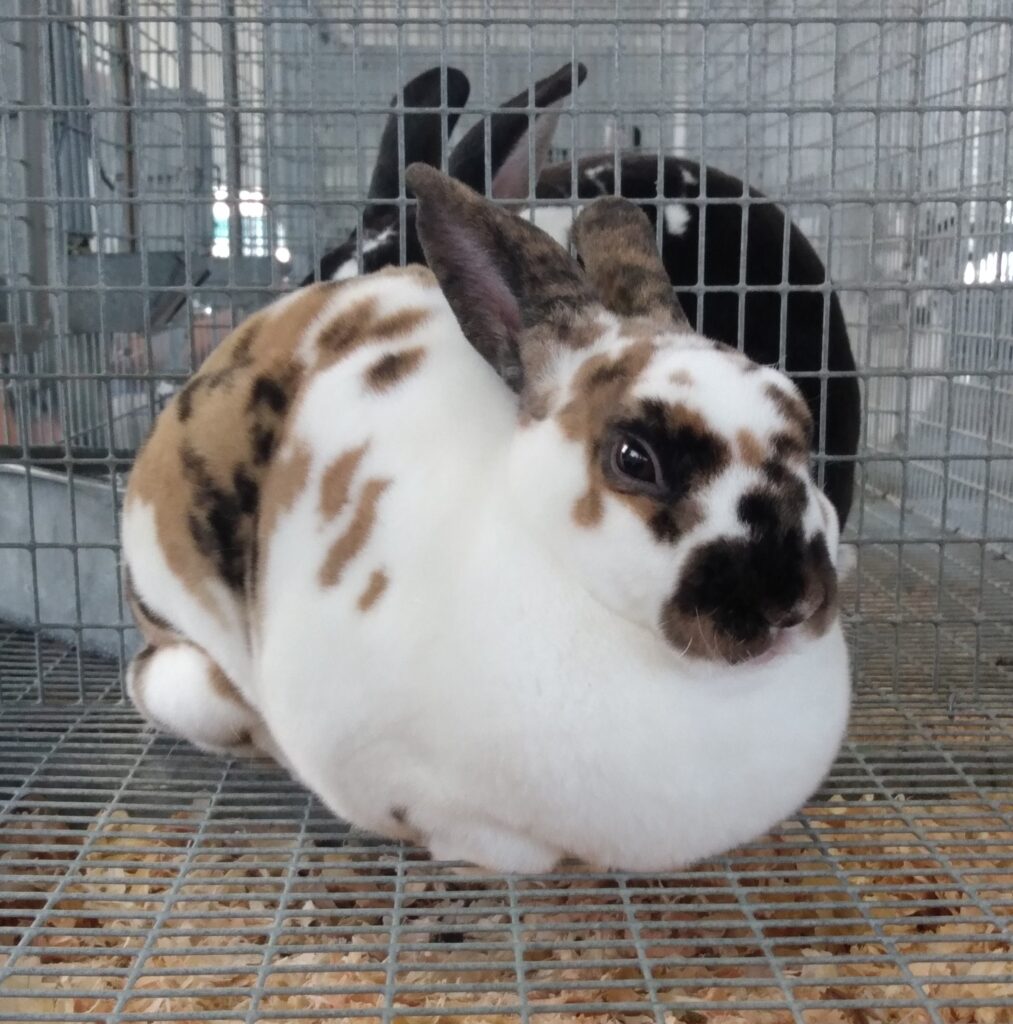
There is one everyday situation where a sprawled rabbit deserves a second look even if it does rouse: hot weather. Rabbits cope poorly with heat, and a rabbit lying stretched out on a cool surface in summer may be trying to lose heat rather than simply relaxing. Stretching out is a sensible cooling posture, but a rabbit that is also panting, restless, off its food or has hot ears may be overheating — a genuine emergency in rabbits.
On warm days, check the environment whenever you see a flop: is there shade, airflow and cool water? Is your rabbit in direct sun or a stuffy room? Our guide on how to keep a rabbit cool in hot weather covers the set-up in full. If a sprawled rabbit seems lethargic, won’t eat, or its breathing looks laboured, do not assume it is a happy flop — contact a vet promptly.
What to Do When Your Rabbit Flops
Mostly: enjoy it, and leave your rabbit in peace. A flop is a rabbit at rest, and the kindest response is not to disturb it. Practical points:
- Do not “test” your rabbit by poking or prodding it hard. If you want reassurance, approach normally and speak — a healthy rabbit rouses to that.
- Let sleeping rabbits lie. Constantly waking a resting rabbit undermines the very sense of safety that makes flopping possible.
- Note the pattern. Most rabbits flop in the same favourite spots at similar times of day. Knowing your rabbit’s normal pattern makes the abnormal — not rousing, not eating, unusual posture — much easier to spot.
- Keep the rousing check gentle and brief. A herb offered, a name called once. That is all the evidence you need.
For the wider picture of what your rabbit’s posture is telling you, our guide to understanding rabbit body language decodes the full range, from loafs and sploots to thumps and chinning.
When a “Flop” Needs a Vet — Urgently
Contact a veterinarian immediately if a rabbit lying on its side:
- will not rouse when you approach, speak or offer food;
- feels limp, floppy in the wrong way, or is completely unresponsive;
- cannot get up, or falls back down when it tries;
- has laboured, rapid or open-mouth breathing;
- has not eaten, is producing few droppings, or seemed unwell before lying down;
- was found that way in hot conditions, or after any accident or fall.
Do not wait to see if it improves, and do not dismiss it as a deep sleep if the rousing test fails. Rabbits deteriorate quickly, and an unresponsive rabbit is an emergency whatever the cause. If your rabbit rouses normally, moves normally and eats normally, you almost certainly watched a happy flop — file it under compliments.
Conclusion
The rabbit flop is one of the clearest compliments a prey animal can pay its home: a complete, vulnerable topple onto the side that rabbits only perform when they feel safe. Young rabbits do it theatrically; older rabbits do it in their favourite spots; all of them do it with a loose body, calm breathing, and the ability to rouse the moment something interesting happens. Learn that one distinction — rouses normally versus limp and unresponsive — keep extra vigilance in hot weather, and you can relax every time your rabbit does.
Frequently Asked Questions
Is my rabbit dead when it flops? It looks terrifying.
Almost certainly not — the flop is famous for looking dramatic. Approach normally and say your rabbit’s name or offer a herb. A resting rabbit rouses, lifts its head and usually comes to investigate. Only if your rabbit does not respond, feels limp or cannot get up should you treat it as an emergency and contact a vet at once.
Why does my rabbit flop right after running around?
Flopping straight after exercise is a classic pattern: a burst of running and binkying, then a sudden collapse into rest. It is commonly read as a contented rabbit that feels safe enough to switch off completely the moment it stops. Provided your rabbit rouses normally and it is not hot, it is a good sign.
My rabbit flops with its legs in the air. Is that normal?
Yes — mid-flop, legs often end up at odd angles, and young rabbits especially can land looking like they have been tipped over. What matters is what follows: a settled, loose body, steady breathing and a normal response when you approach.
How can I be sure a flop is not overheating?
Check the setting and the rabbit. In hot weather, a rabbit that is sprawled and also panting, restless, off its food or unusually lethargic may be overheating rather than relaxing. Move it somewhere cool and contact a vet if you are in any doubt — heatstroke in rabbits is an emergency.
Should I wake my rabbit up to check it is okay?
Not by poking or startling it. Simply approach as you normally would and speak, or offer a favourite food. A healthy sleeping rabbit wakes to that. Constant unnecessary waking is unkind; a gentle rousing check, used only when something looks off, gives you all the reassurance you need.
Related Guides on RabbitCare
- Understanding Rabbit Body Language
- How to Keep a Rabbit Cool in Hot Weather
- Signs of Pain in Rabbits
References
- House Rabbit Society (rabbit.org) — guidance on rabbit behaviour, body language and what relaxed postures mean.
- RSPCA — advice on rabbit behaviour, welfare needs and recognising when a rabbit is unwell.