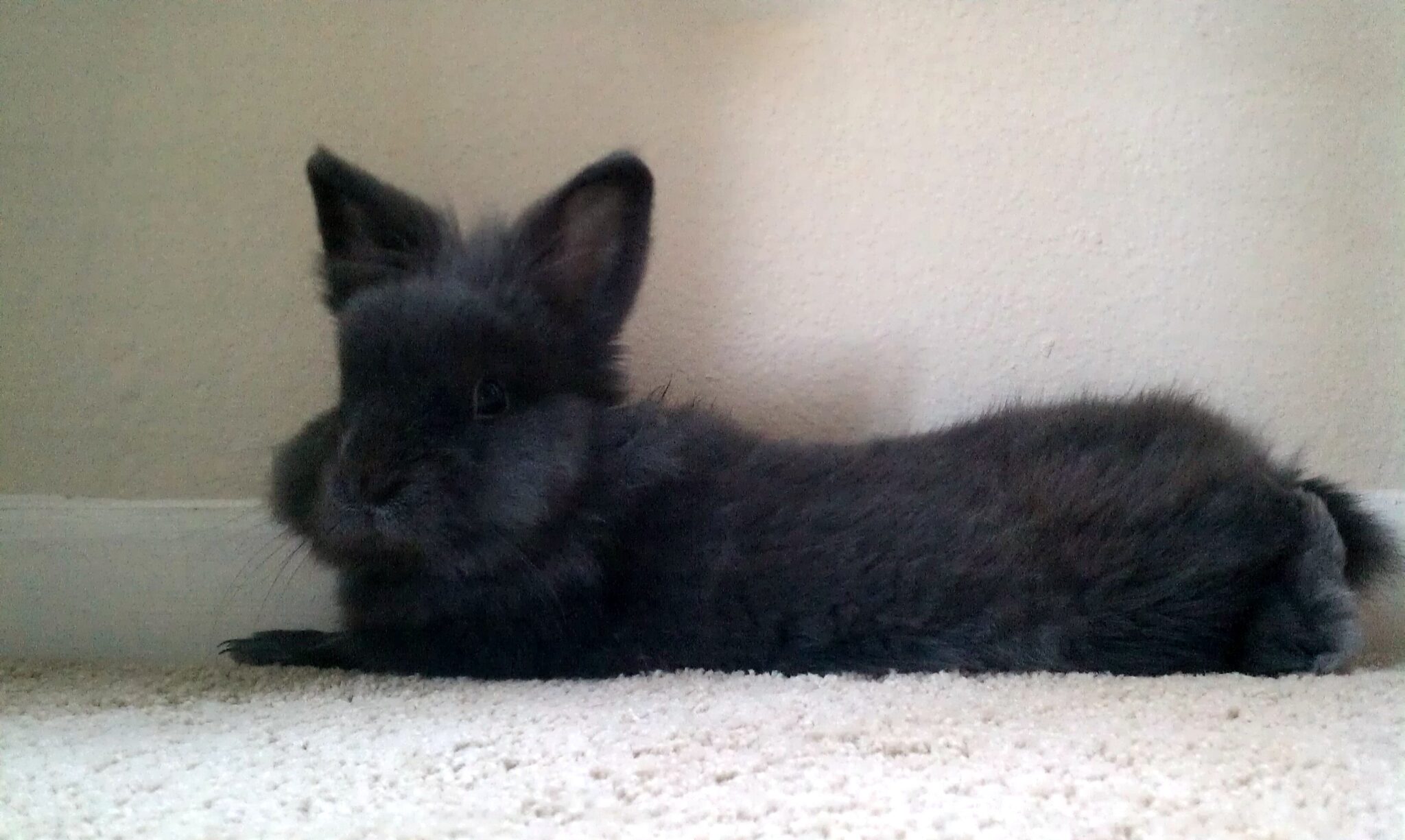
A good rabbit litter box setup is simple: a low-sided box big enough for your rabbit to sit in comfortably, filled with paper-based litter, placed in the corner your rabbit already favours, with a pile of hay at one end. Rabbits like to eat while they toilet, so hay in the box is the single best trick for reliable litter habits. Set it up this way from day one and most rabbits use the box with very little training.
Rabbits are naturally tidy animals. In the wild they tend to use regular latrine spots, and pet rabbits usually choose one or two corners of their space. Your job is not to teach a rabbit the idea of a toilet corner — it is to put a suitable box in the corner they have already chosen.
Choosing the Box: Size and Entry
Size matters more than style. The box must be big enough for your rabbit to sit inside fully, turn around, and settle in the classic loaf position with room to spare. A standard cat litter tray works well for many rabbits; larger breeds may need a bigger tray or a low storage box. Look for:
- A low entry side, so your rabbit can hop in and out easily — especially important for young, elderly or less mobile rabbits. If one side is high, choose a tray with a lowered front, or cut an entry into a storage box and smooth the edges carefully.
- Sides high enough at the back to keep litter in and contain urine, which rabbits can spray slightly backwards.
- A smooth, non-porous surface that is easy to wash and does not hold smells.
- No lid or hood. Covered boxes trap smells, put rabbits off, and make cleaning checks harder.
Safe Litter: What to Use and What to Avoid
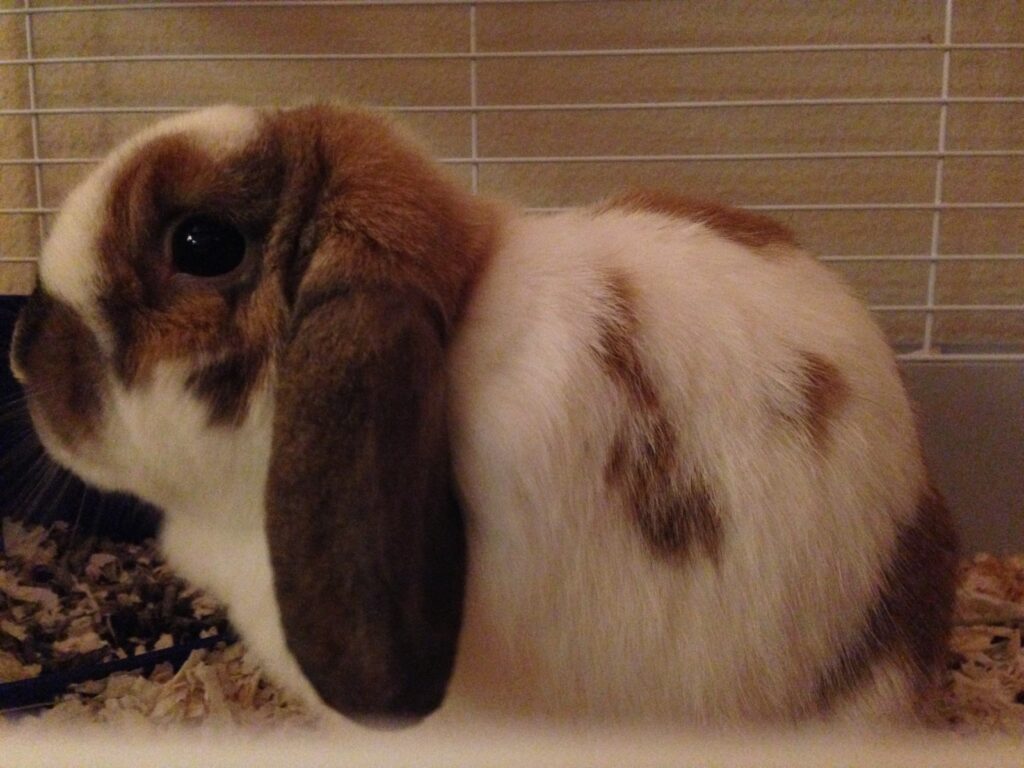
Litter choice is a safety decision, not just a shopping one. Rabbits nibble at their litter, sit in it for long periods and have sensitive respiratory systems.
- Paper-based litter is the usual recommendation: recycled paper pellets or shredded paper products are absorbent, low-dust and safe if nibbled.
- Plain hay or straw over a paper layer also works and encourages the eat-while-you-toilet habit.
- Never use clumping cat litter. It can clump inside a rabbit’s digestive system if eaten and cause a life-threatening blockage. This is a firm rule, not a preference.
- Avoid clay-based and strongly scented litters, dusty litters, and litters with added deodorisers or baking soda — rabbits’ airways are delicate and they groom litter dust off their fur and swallow it.
- Avoid softwood shavings as litter, particularly strongly aromatic ones; paper-based options are a safer, cleaner choice.
If in doubt about a product, choose the plainest paper-based option and check it is marketed as suitable for small animals.
Placement: Their Corner, Not Yours
Watch where your rabbit already toilets, then put the box there. Rabbits usually pick a corner of their enclosure, and fighting that choice rarely works — moving the box to their corner works almost every time. Place the main box inside the enclosure, because that is where your rabbit spends most time, and add extra boxes in free-roam areas for rabbits who roam large spaces.
Keep the box away from the water bowl area if possible, but near the hay: hay racks or piles positioned so your rabbit can sit in the box and eat are ideal. Many owners simply put the hay directly at one end of the box, which rabbits find entirely natural.
Rabbit Litter Box Setup, Step by Step
- Choose the box using the size and entry guidance above, and wash it before first use.
- Line the base with a sheet of newspaper or a liner if you wish, to make emptying easier.
- Add litter — a layer of paper-based litter a few centimetres deep across the base. Deep litter is unnecessary; rabbits do not bury their droppings like cats.
- Add hay at one end — a generous handful of fresh hay piled at one end of the box, topped up daily.
- Place the box in your rabbit’s chosen corner of the enclosure, and add any extra boxes in roam areas.
- Add a few of your rabbit’s droppings and a scrap of urine-soaked litter or paper from their old spot, so the box smells like the right place.
- Leave it alone. Let your rabbit investigate in their own time; do not lift them into the box repeatedly.
How Many Boxes Do You Need?
Start with one box in the enclosure for a single rabbit, and consider a second for a bonded pair so there is never competition for the toilet spot. Rabbits with a large free-roam area benefit from a box in the roaming space too — a rabbit caught short at the far end of a big room may not travel back. Too many boxes is rarely a problem; too few, or boxes in the wrong places, is the usual cause of accidents.
Cleaning Routine
A clean box gets used; a smelly one gets avoided. A workable rhythm is:
- Daily: remove soaked litter and soiled hay, top up the hay end, and quickly check droppings — their size and quantity are a useful daily health signal.
- Every few days: empty the box completely, wash it with hot water and a pet-safe disinfectant or a white-vinegar solution, rinse thoroughly, dry, and refill.
- Never use strong bleach fumes or heavily scented cleaners in the box, and always rinse and dry before refilling — residues and smells deter rabbits and can irritate airways.
Our guide to how to clean a rabbit enclosure covers the wider cleaning routine that sits around the litter box.
Troubleshooting: When the Box Is Ignored
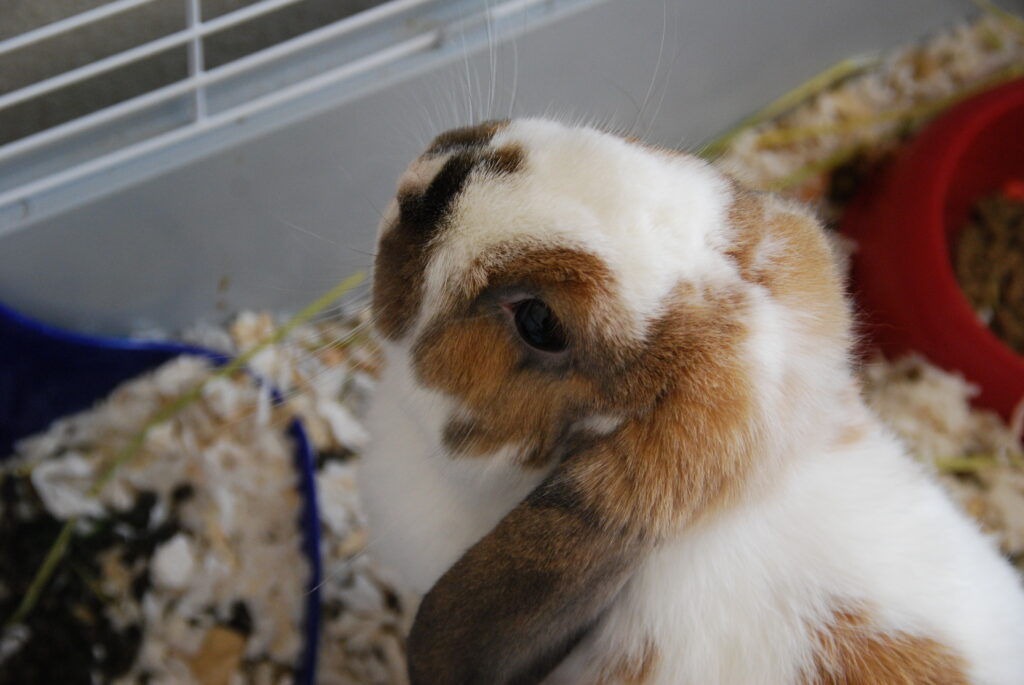
Your rabbit chose a different corner
Move the box. The rabbit is telling you where the toilet is. If they use two corners, add a second box rather than trying to merge the habit into one.
Droppings just outside the box
A few scattered droppings are often territorial marking rather than a toilet failure, especially in a new space, and usually settle. Check the entry is not too high and the box is not too small if your rabbit sits half in and half out.
Accidents after a change
New litter, a moved box, a new enclosure layout or a visit from unfamiliar animals can all cause a temporary relapse. Return to the previous arrangement where you can, clean accident spots thoroughly so they do not smell like a toilet, and give it a few days.
Sitting in the box but toileting elsewhere
Check the litter itself — a change of brand or texture sometimes puts a rabbit off toileting in the box while they still enjoy sitting in the hay end. Return to the previous litter if so.
A Note on Litter Habits and Neutering
Unneutered rabbits, especially males, are more inclined to mark territory with urine and droppings, which can make litter habits messier however good the setup. Neutering often improves litter habits noticeably as hormone-driven marking fades, and it has wider health and behaviour benefits — our guide to rabbit spaying and neutering explains them. Discuss timing with your veterinarian rather than expecting a new box to fix a hormonal habit.
Safety Notes
- Never use clumping cat litter — it is dangerous if eaten and can block the gut.
- Watch droppings daily. Far fewer droppings, or much smaller ones, can be an early sign of gut problems; contact a veterinarian if you notice a change. Our article on rabbit gut stasis explains why this matters.
- A rabbit who strains to urinate, cries out, or stops toileting altogether needs prompt veterinary attention — do not treat it as a litter-training problem.
- Keep cleaning products rinsed away and store them out of reach.
Conclusion
The rabbit litter box setup that works is the one built around the rabbit: a roomy, low-entry box, paper-based litter, hay at one end, and placement in the corner your rabbit already uses. Clean it little and often, watch the droppings as a daily health check, and solve problems by moving the box or adding another — not by moving the rabbit’s habits. Next step: watch which corner your rabbit uses today, and put the box there.
Frequently Asked Questions
What is the best litter for a rabbit’s litter box?
Paper-based litter — recycled paper pellets or similar — is the standard safe choice: absorbent, low in dust and safe if nibbled. Never use clumping cat litter, which can block a rabbit’s gut if eaten, and avoid scented or dusty products.
Why does my rabbit sit in the litter box and eat hay?
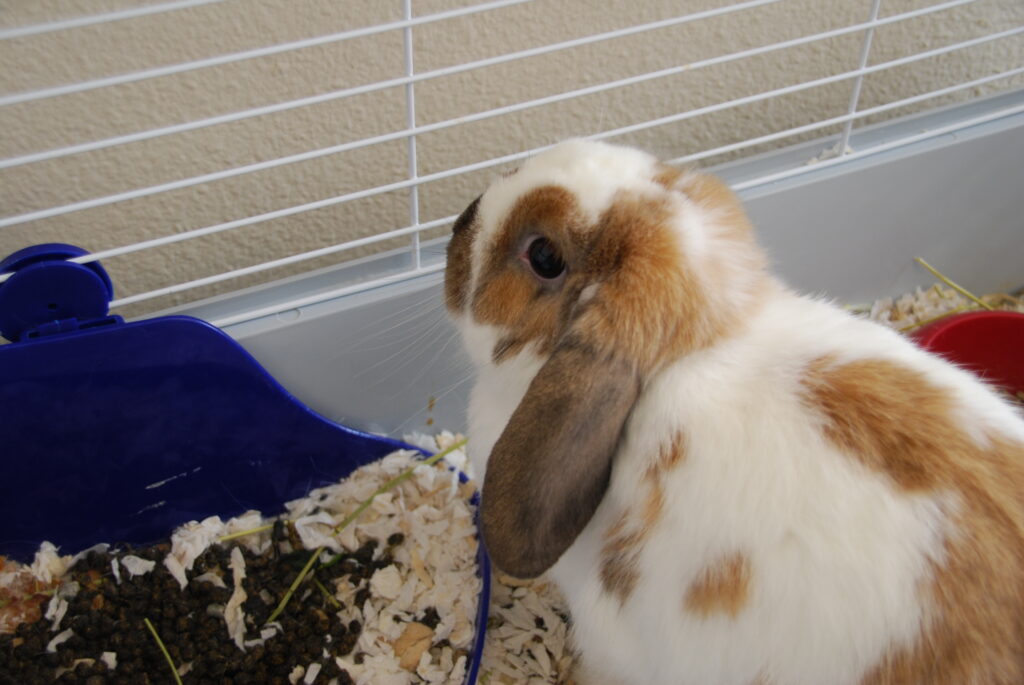
It is completely normal. Rabbits naturally graze and pass droppings at the same time, so placing hay at one end of the box encourages exactly the habit you want and is one of the best litter-training tricks.
How often should I clean a rabbit litter box?
Scoop out soaked litter and refresh the hay daily, and give the box a full empty, wash and refill every few days. A clean box is used more reliably, and daily checks let you monitor your rabbit’s droppings.
My rabbit uses a different corner from the box. What should I do?
Move the box to the corner your rabbit has chosen. Rabbits pick their own latrine spot, and working with that choice succeeds far more often than trying to retrain them to your preferred corner. Add a second box if they use two corners.
How many litter boxes does a rabbit need?
At least one in the enclosure. Add a second for a bonded pair, and another in any large free-roam area, so a box is always within easy reach. Too few boxes is a common cause of accidents.
Related Guides on RabbitCare
References
- House Rabbit Society (rabbit.org) — guidance on litter training, litter safety and indoor rabbit care.
- RSPCA — rabbit welfare guidance, including housing and daily care.