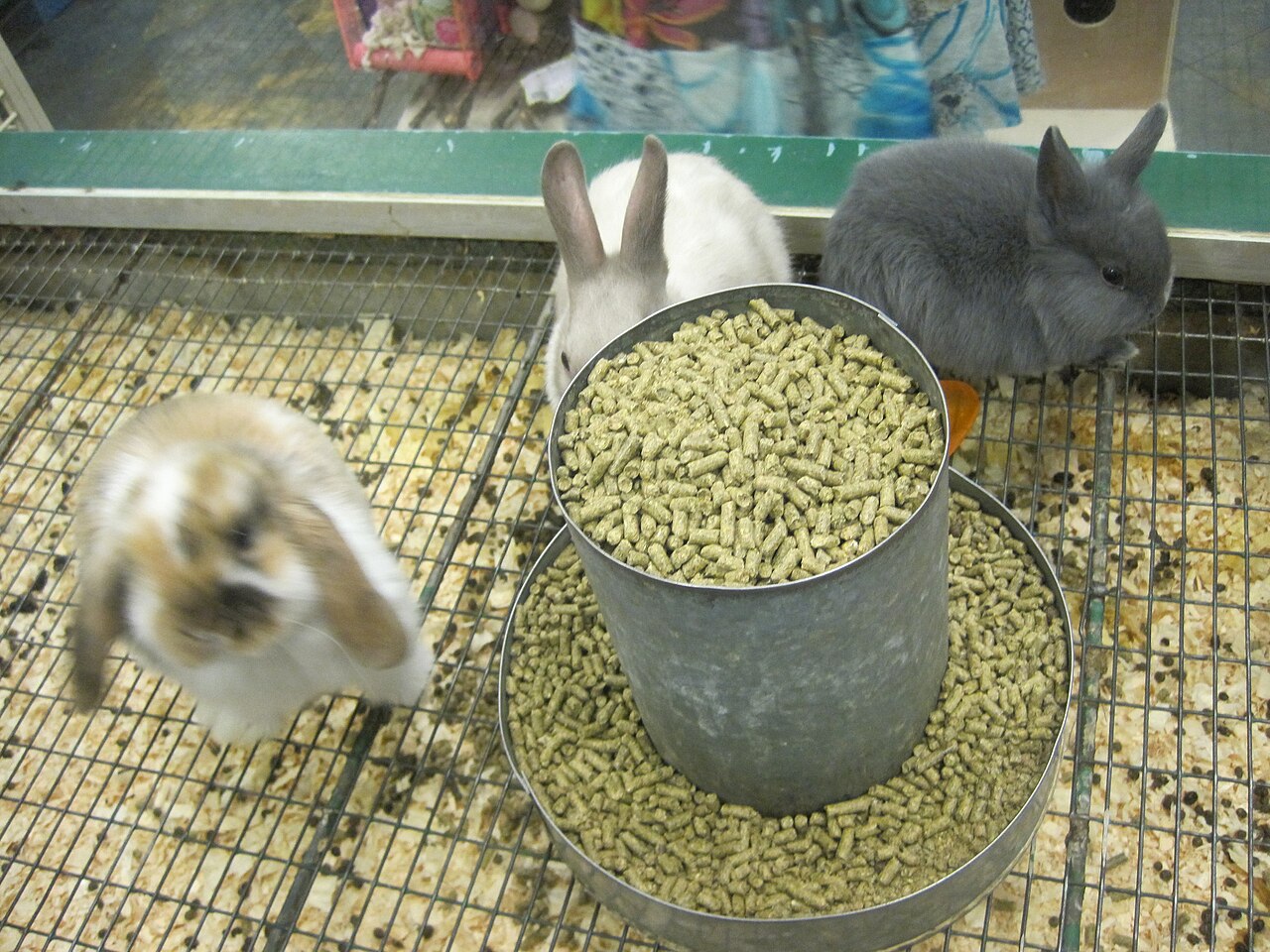
Reading rabbit body language is a skill of looking at the whole animal at once — ears, eyes, nose, tail, posture and movement together, in context. Rabbits rarely make noise, so their bodies do the talking: a flattened crouch with ears pinned back is commonly read as fear, a mid-air twist called a binky as joy, and a raised tail with a lunge as a clear “back off”. No single signal means one fixed thing every time, but once you know the main vocabulary, your rabbit becomes far easier to understand — and far easier to keep comfortable.
This guide walks through the signals by mood and by body part, with a quick-reference table, and clears up the two misreads that worry owners most.
First Principle: Read the Whole Rabbit, in Context
A thump after a sudden bang means something different from a thump during a standoff over territory. Ears back can signal relaxation in one posture and fear in another. So before decoding any signal, take in the full picture: how is the body held — loose or tense, high or low? What are the ears and tail doing? What just happened in the room? Experienced owners read sentences, not single words, and you will too, faster than you expect.
Relaxed and Content Signals
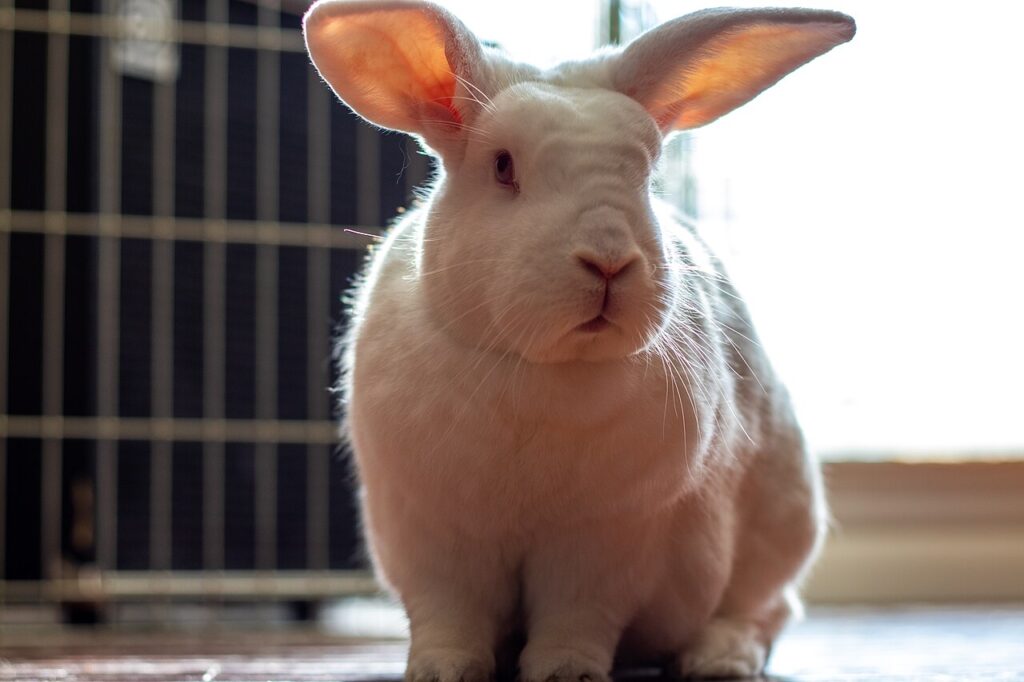
A relaxed rabbit looks soft. The body is loose, the ears rest in a natural position for the breed, breathing is slow, and the rabbit may settle into one of the classic resting shapes:
- The loaf: legs tucked neatly underneath, body a compact rounded shape, eyes often half closed. Commonly read as comfortable — a rabbit at ease.
- The sprawl: stretched out on the side or belly with hind legs extended behind. A rabbit only sprawls where they feel safe, because getting up takes an extra moment.
- The flop: a dramatic sideways roll or collapse onto one side, often after a burst of activity. Despite how it looks, this is commonly read as deep contentment — see what rabbit flopping means for the detail.
- Half-closed eyes and gentle tooth purring: a soft, quiet vibration of the teeth during stroking is often described as contentment. (Loud tooth grinding is different — see the pain section below.)
- Self-grooming and stretching in your presence: a rabbit who washes or stretches near you does not expect to need a quick escape.
Happy and Excited Signals
- The binky: the signature move — a sudden leap into the air with a twist of the head and body, sometimes with a kick of the hind legs. Commonly read as pure exuberance, usually during exercise time or in a favourite space.
- Zoomies: high-speed laps, sudden direction changes and dashes between furniture, often combined with binkies. Energy and excitement, making the most of open space.
- Nudging and nose boops: a push of the nose against your hand, ankle or leg. Commonly read as “notice me”, “stroke me” or occasionally “you are in my way” — the rest of the body tells you which. Our guide to why rabbits nudge you untangles the meanings.
- Circling your feet, sometimes with soft honking: often excitement and, in unneutered rabbits, courtship behaviour.
Curious and Interested Signals
- Periscoping: standing tall on the hind legs, head up, scanning. Something has caught your rabbit’s interest.
- Ears forward and rotating: ears that point towards a sound, or swivel independently like little radar dishes, show a rabbit tracking their environment. One ear forward and one back usually means attention divided between two sounds.
- Nose twitching: a rabbit’s nose is always gathering scent information, and its speed is commonly read as a rough arousal gauge — faster twitching typically accompanies excitement, curiosity or alertness, while a slow, gentle wiggle fits a calm rabbit.
Stressed and Fearful Signals
Fear is the emotion owners most need to recognise, because a frightened rabbit is an unhappy one — and stress makes rabbits unwell. Watch for:
- Crouched and flattened: body pressed low and tight to the ground, muscles tense, head down — the rabbit is trying to be invisible or is ready to bolt.
- Ears pinned flat back against the body, combined with that tense crouch and wide eyes showing more white than usual.
- Thumping: a loud stamp of a hind foot. Commonly read as an alarm signal — “something is wrong” — or a strong expression of displeasure. Our guide explains why rabbits thump their feet.
- Freezing completely still, sometimes for minutes: a prey animal hoping not to be noticed.
- Hiding and refusing to come out, or fleeing and scrambling. Sustained hiding is a stress flag — see why your rabbit might be hiding.
If you see these, reduce the pressure: get lower, move slower, remove the frightening thing if you can identify it, and let your rabbit retreat somewhere safe. Never pull a frightened rabbit out of a hiding place for a cuddle — it confirms the danger as far as they are concerned.
Annoyed, Territorial and “Back Off” Signals
Rabbits set boundaries clearly if you know the signs. Escalation usually follows an order, and respecting the early steps prevents the later ones:
- Tail raised and wagging-like flicks: the tail (properly called the scut), held up and sometimes flicked side to side, is a flag of arousal — commonly read as annoyance, excitement or territorial feeling. Combined with a tense body, it is a caution sign.
- Grunting or growling: short, low sounds expressing displeasure — perhaps you have reached into the enclosure, or moved a prized object.
- Boxing: rearing up and swiping with the front paws. This is a defensive threat display: “keep away”.
- Lunging: a sudden charge towards a hand or another rabbit, sometimes with a growl. A serious warning that often precedes a bite if ignored.
- Biting or nipping: a hard bite usually means the earlier signals were missed or the rabbit feels trapped. Gentle nips are different — they can be attention-seeking or a request to move, and context decides.
Persistent territorial behaviour around the enclosure — lunging at hands, guarding, spraying — is often linked to hormones in unneutered rabbits and is worth discussing with your vet; neutering frequently softens it.

Pain Signals Look Different
The body language of pain is quieter than the language of fear, and owners miss it most often. A rabbit in pain tends to withdraw rather than act out: sitting hunched in a corner with eyes partly closed, pressing the belly to the floor, grinding the teeth audibly, going off food, or becoming uncharacteristically still — or aggressive when touched. Because these signs are easy to overlook, they have their own guide: read signs of pain in rabbits, and treat a rabbit who stops eating as an emergency whatever the body language seems to say.
Quick-Reference Signals Table
| Signal | What you see | Likely meaning | What to do |
|---|---|---|---|
| Binky | Leap with a mid-air twist and kick | Joy, exuberance | Enjoy it; make sure the space is safe |
| Flop | Rolls or collapses onto the side | Contentment, relaxation | Nothing — leave them to rest |
| Loaf | Compact tucked shape, eyes half closed | Comfortable, resting | Nothing needed |
| Periscoping | Stands tall on hind legs, scanning | Curiosity, alertness | Let them look; move calmly |
| Thump | Loud hind-foot stamp | Alarm, fear or displeasure | Check for a trigger; keep things calm |
| Ears pinned, crouched flat | Tense low body, wide eyes | Fear | Back off, lower yourself, remove the trigger |
| Tail up, lunging, grunting | Tense body, charge towards hand | Territorial warning | Withdraw your hand; review triggers and neutering |
| Hunched, tooth grinding | Still, pressed-down posture, eyes half shut | Possible pain | Vet, promptly — same day |
Common Misreads
“My rabbit fell over and didn’t move”
The happy flop alarms almost every new owner once. The difference from a collapse is in the before and after: a flop is a deliberate, often flamboyant roll by a rabbit who then lies comfortably, breathes normally and gets up bright and active. A rabbit who collapses weakly, cannot right themselves, or seems unwell afterwards is not flopping — that rabbit needs a vet.
“My rabbit rolled over showing their belly — they want a tummy rub”
Unlike dogs, rabbits do not present the belly as an invitation. Rolling during a flop is self-directed relaxation, and reaching for the exposed tummy will usually startle or annoy the rabbit. Admire from a distance, and offer a forehead stroke when they are upright again if they approach you.
“My rabbit lies still when I hold them, so they must love cuddles”
Stillness in a held rabbit is commonly a freeze response rather than enjoyment. A rabbit who climbs into your lap on the floor and stays is expressing something quite different from a rabbit held in arms who cannot leave.
“Wagging tail means happy, like a dog”
A raised, flicking tail in a rabbit signals arousal — and in a tense body it means annoyance or territorial feeling, not dog-style friendliness. Read it with the ears and posture around it.
Conclusion
Rabbit body language becomes clear once you read the whole animal in context: loose bodies, sprawls, flops and binkies tell of a rabbit at ease; crouching, pinned ears, freezing and thumping speak of fear; a raised tail, grunts and lunges draw a boundary; and quiet hunching with tooth grinding may speak of pain and needs a vet. Learn the vocabulary here, then fine-tune it against your own rabbit’s habits — the final authority on what your rabbit means is your rabbit.
Frequently Asked Questions
What does it mean when a rabbit thumps?
Thumping is most commonly read as an alarm signal — your rabbit has heard, seen or smelled something worrying and is warning the warren — or as strong displeasure, for example after being picked up. Check for a trigger, keep the environment calm, and see our full guide to rabbit thumping for more detail.
How can I tell if my rabbit is happy?
Look for a loose, relaxed body: sprawling, flopping, loafing with half-closed eyes, eating enthusiastically, and during play, binkies and fast laps. A happy rabbit is also curious — investigating, chinning and periscoping — rather than hidden away.
Why does my rabbit pin its ears back?
Context decides. Ears resting back on a loose, loaf-shaped body are often just a resting position. Ears pinned tightly back on a tense, flattened crouch, with wide eyes, are commonly read as fear. During a confrontation, flattened ears can also accompany aggression — the posture around them tells the story.
Is tooth grinding always a sign of pain?
No — there are two sounds. A soft, gentle purr-like vibration of the teeth during stroking is usually contentment. Audible, louder grinding or crunching, especially with a hunched posture and loss of appetite, is commonly associated with pain and deserves a prompt vet visit.
Why does my rabbit show the white of its eyes?
Wide eyes with visible whites usually mean your rabbit is frightened, stressed or on high alert. Combined with a tense crouch or pinned ears, it is a cue to back off, get lower and remove whatever is worrying them.
Related Guides on RabbitCare
References
- House Rabbit Society (rabbit.org) — guidance on rabbit behaviour, body language and communication.
- RSPCA — advice on understanding rabbit behaviour and recognising stress and welfare needs.