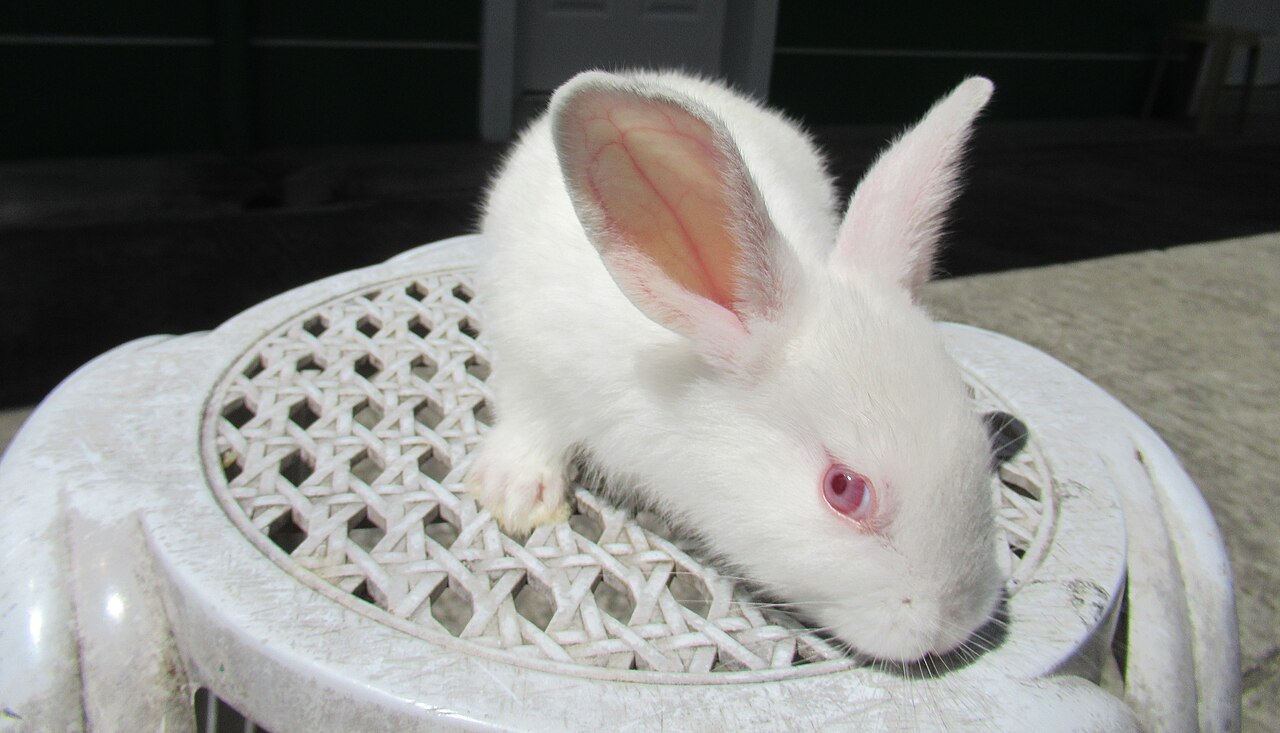
If you share your home with a rabbit, you have probably heard it: a sudden, startlingly loud thump from a back foot in the middle of an otherwise calm moment. So why do rabbits thump? Thumping is a form of communication inherited from wild ancestors. It is most commonly read as a warning — a signal that something has alarmed the rabbit — but it can also express fear, frustration or a wish for attention. The sound itself is only half the message; what your rabbit’s body is doing at the same time tells you far more. This guide works through the main reasons rabbits thump, how to read the context, why it often happens at night, and what to do when it does.
What Thumping Actually Is
Thumping (sometimes called drumming or stamping) is when a rabbit strikes the ground hard with one or both powerful hind feet. The thump carries well through soil and flooring, which is exactly the point: in the wild, it is a signal designed to be felt as much as heard. A single thump can be surprisingly loud in a quiet house, and repeated thumping can continue, on and off, for some minutes. Thumping is normal rabbit behaviour. It does not mean your rabbit is being naughty, and it is not a habit to train away — it is your rabbit talking to you in the only alarm language they have.

Reason One: A Warning of Danger
In wild warrens, a rabbit that spots a predator thumps to alert the whole colony, and the others freeze, run for cover or repeat the warning themselves. Pet rabbits keep this instinct even after generations of domestic life. Common triggers include an unfamiliar sound — a door slamming, something falling — a new object appearing in the room, the sight or smell of a cat or dog, a bird’s shadow passing a window, or an unfamiliar person moving suddenly. Your rabbit may be the only one who noticed anything at all: rabbit hearing and sense of smell are considerably sharper than ours, so a thump at “nothing” often means your rabbit detected something you missed.
Reason Two: Fear or Being Startled
A sudden fright is one of the commonest causes of thumping indoors. Loud noises, quick movements near the enclosure, being approached from above, or an unexpected touch can all startle a prey animal. A fearful thump is often accompanied by a tense, crouched body, wide eyes and ears held flat or swivelling. Some rabbits thump once and then bolt for a hiding place; others stay frozen, thumping repeatedly while they assess the threat. If thumping happens every time a particular event occurs — the hoover starting, a certain visitor arriving — you have likely found a fear trigger you can soften or remove.
Reason Three: Annoyance and Frustration
Not every thump is about danger. Rabbits also thump to express displeasure: being picked up when they did not want to be, a grooming session that has gone on too long, being shut out of a favourite room, or watching you prepare food too slowly for their liking. Owners often describe this as a “telling-off” thump, sometimes followed by the rabbit turning their back and flicking their feet as they hop away. It is commonly read as frustration or protest rather than fear, especially when the rabbit is otherwise relaxed and the trigger is clearly something you did.
Reason Four: Attention and Excitement
Some rabbits learn that thumping gets a response. A thump at feeding time, a thump when you walk past without saying hello, or thumping when a bonded companion is receiving all the fuss may be an attention bid — “I am here, and I have opinions.” A few rabbits also thump during excited or hormonal behaviour, particularly unneutered rabbits in spring. Context is everything: an upright, bright-eyed rabbit thumping at the sight of the treat tin is not sending the same message as a crouched rabbit thumping at a shadow.
Reading the Context: What Else Is Your Rabbit Doing?
The thump alone cannot tell you the reason, so read the whole rabbit. Use this table as a starting guide — these are common readings, not certainties.
| What you see | Often a sign of | Helpful response |
|---|---|---|
| Crouched, tense body, ears flat, eyes wide, then hiding | Fear or a perceived threat | Speak softly, remove the trigger if you can, let them hide |
| One or two thumps after a sudden noise, then normal behaviour resumes | Startle or alert | Wait quietly; check that nothing is actually wrong |
| Thump after handling, then turning away or flicking the feet | Annoyance or frustration | Give them space; end the session |
| Upright and alert, thumping at feeding time or near people | Attention or anticipation | Acknowledge them; keep routines predictable |
| Repeated thumping with hiding and loss of appetite | Possible pain or illness | Book a vet check |
One Thump or a Whole Drum Solo?
A single thump is usually an alert or a startle — the rabbit noticed something, announced it, and was satisfied. Repeated thumping over several minutes suggests the trigger is still present or the rabbit remains unsettled: a noise that keeps recurring, a perceived predator that has not gone away, or rising frustration. If thumping escalates alongside frantic behaviour, scratching at enclosure corners or attempts to flee, treat it seriously and work out what is frightening them. On the other hand, a rabbit who thumps twice and then calmly returns to their hay has usually dealt with the matter themselves.

Why Do Rabbits Thump at Night?
Night thumping is one of the commonest complaints from new owners, and it usually has an ordinary explanation. Rabbits are most active at dawn and dusk and stay alert through much of the night, when the house is quiet and small sounds carry: pipes clicking, a boiler starting, wind moving a gate. Outdoor rabbits may detect foxes, cats or other wildlife moving through the garden — visitors you will never see from your bed. A rabbit’s alarm system does not switch off just because the household is asleep. Practical steps include checking the enclosure is secure, giving your rabbit a hideaway to retreat into, keeping night-time disturbances predictable where you can, and making sure your rabbit is not simply bored in a space that is too small overnight. Persistent night thumping alongside other changes in behaviour deserves a health check, as pain can make rabbits restless and more reactive at night.
Thumping in Bonded Pairs
Thumping is social. When one rabbit in a bonded pair thumps, the companion usually freezes, listens and may thump back — the warren alarm working exactly as it evolved to. You may notice the calmer rabbit settling first and the nervous one taking their cue from them; this is one of the quieter benefits of companionship. If one rabbit consistently alarms at things the other ignores, that rabbit may simply be the more vigilant of the two. But a sudden change in a previously relaxed rabbit is worth noting and, if it continues, discussing with your vet.
What to Do When Your Rabbit Thumps
- Stay calm yourself. Shouting or rushing over adds alarm to alarm.
- Look for the trigger — a noise, a new object, a pet near the enclosure, something outside the window.
- Remove or reduce the trigger if you can, calmly and without fuss.
- Speak quietly and let your rabbit come to you; do not grab or lift a frightened rabbit.
- Offer a favourite hiding place and some time. Most rabbits settle within minutes once the world makes sense again.
- Never punish thumping — not with scolding, spraying or extra handling. It is communication, and punishing it only gives the rabbit more to be anxious about.
When Thumping Is a Health Prompt
Behaviour change is one of the earliest signs that a rabbit is unwell, and thumping is no exception. A rabbit who thumps and then hides for long periods, goes off their food, produces fewer droppings, or becomes unusually reactive or withdrawn may be in pain — dental problems, gut discomfort and other illnesses can all sit behind a sudden increase in alarm behaviour. Rabbits hide illness well, so do not wait for clearer proof: if thumping is new, frequent, or paired with not eating, hiding or a hunched posture, book an appointment with a rabbit-experienced vet promptly.
Conclusion
A thump is your rabbit’s alarm bell, opinion piece and attention bell rolled into one. Most of the time it means “something startled me” or “I am not pleased”, and reading the ears, posture and situation around it will usually tell you which. Respond calmly, fix whatever can be fixed, and let your rabbit settle in their own time. And if thumping arrives together with hiding or appetite loss, treat it as a health prompt and see your vet — your rabbit is telling you something, and it pays to listen.

Frequently Asked Questions
Is thumping a sign my rabbit is angry with me?
Not usually. A thump after being picked up or groomed is commonly read as annoyance or a request to be left alone, which is about the situation rather than a grudge against you. Give your rabbit space, end whatever you were doing, and let them approach you next time. Rabbits who are handled gently and allowed to say no tend to thump their objections less, not more.
Why does my rabbit thump when I stop stroking them?
This is usually frustration or an attention bid: the rabbit was enjoying the fuss and is protesting at it ending, or has learned that a thump brings your hand back. It is generally a sign your rabbit wants interaction. You can answer it with a little more stroking — or not; often, simply being acknowledged settles it.
My rabbit thumps every night. Should I be worried?
Occasional night thumping is common and usually traces back to ordinary sounds or wildlife that your rabbit can detect and you cannot. Make sure the enclosure is secure, provide a hideaway, and check the area for regular visitors such as cats. If the thumping is new, happens nightly and comes with restlessness, hiding or eating less, book a vet check to rule out pain.
Can thumping injure my rabbit?
Thumping itself is natural and rabbits are built for it, but repeated hard thumping on bare, hard flooring can occasionally leave feet sore, especially in rabbits whose hocks are already delicate. Provide mats or soft flooring in favourite spots, and see a vet if you notice limping, redness or bald patches on the heels.
Why does one of my rabbits thump and the other does not?
Individuals differ. One rabbit is often the more vigilant “lookout” of a pair and alarms first, while the other takes reassurance from them. As long as both rabbits are eating, active and otherwise behaving normally, a difference in thumping is usually just personality.
Related Guides on RabbitCare
- Understanding Rabbit Body Language
- Signs of Pain in Rabbits
- How to Reduce Fear in a Newly Adopted Rabbit
References
- House Rabbit Society (rabbit.org) — guidance on rabbit behaviour and communication.
- RSPCA — advice on rabbit behaviour, body language and welfare.