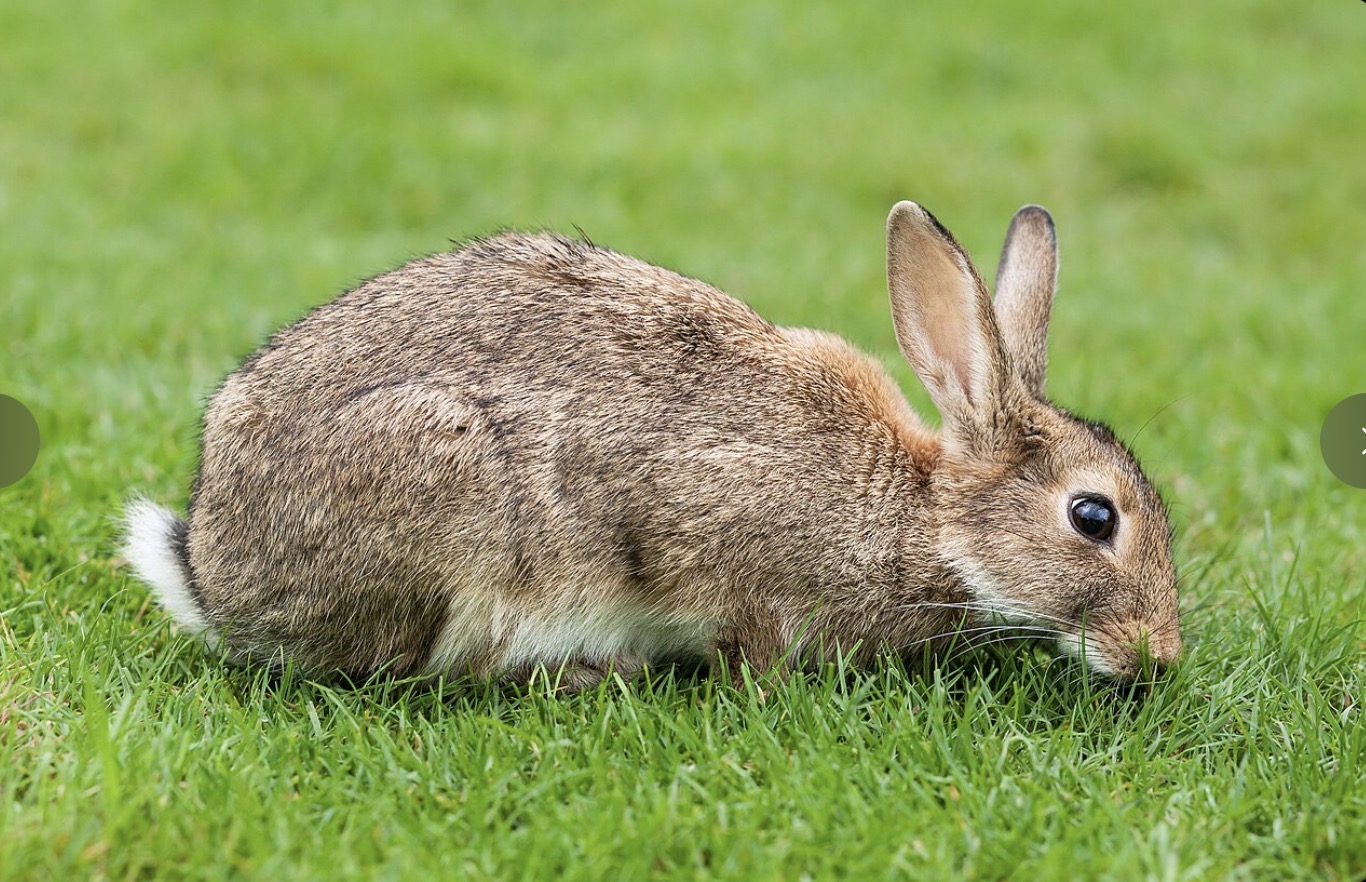
No, rabbits do not hibernate. Wild rabbits and pet rabbits stay awake all winter, and they keep eating, moving and playing through the cold months.
If you have ever watched your rabbit on a cold day, you may have wondered. They curl up small, they sit still for hours, and on some days they barely seem to move. It looks a lot like an animal settling down for a long winter sleep. It is not. A rabbit that sleeps for months would starve. Rabbits need to eat almost constantly to keep their gut moving, so a months-long sleep is simply not possible for them.
So how do they get through winter? The answer is a mix of a thicker coat, a good hiding place, and a lot of eating.
Why People Think Rabbits Hibernate
The idea comes from what we see, or rather what we stop seeing. Wild rabbits spend much of the winter out of sight. They slip into their burrows when the weather turns bad, and they come out to feed at dawn and dusk, when few people are watching. If you only see your garden in the middle of the day, it can look as if the rabbits have vanished.
Pet rabbits add to the confusion. In winter many rabbits sleep more, sit in one spot for longer, and seem less keen on running around. That is normal winter behaviour, not hibernation. A healthy rabbit still wakes up, eats hay, drinks, and moves about every day. The RSPCA puts it plainly: rabbits do not hibernate, so they need their usual routine all year, with daily exercise, regular food times, clean housing and frequent checkups.
There is one thing you should never mix up with hibernation. A rabbit that looks sleepy, limp or unusually still is not settling down for winter. That can be a sign of illness or an emergency. If your rabbit is lethargic, stops eating, or stops passing droppings, contact a rabbit-experienced vet straight away.
How Wild Rabbits Survive Winter
Wild rabbits are built for cold weather in a way that surprises most people. As autumn ends, they shed their thin summer coat and grow a much thicker winter one. You can see the change if you watch wild rabbits through the year. The winter coat is denser and often a little greyer, and it traps warm air close to the body.
The second part of their plan is the burrow. Wild rabbits live in warrens, which are networks of tunnels dug into the ground. Below the surface the temperature stays far steadier than it does outside. On a freezing night, a burrow can be several degrees warmer than the air above it, and it is out of the wind and rain. Rabbits rest there during the worst of the weather and come out to feed when conditions allow.
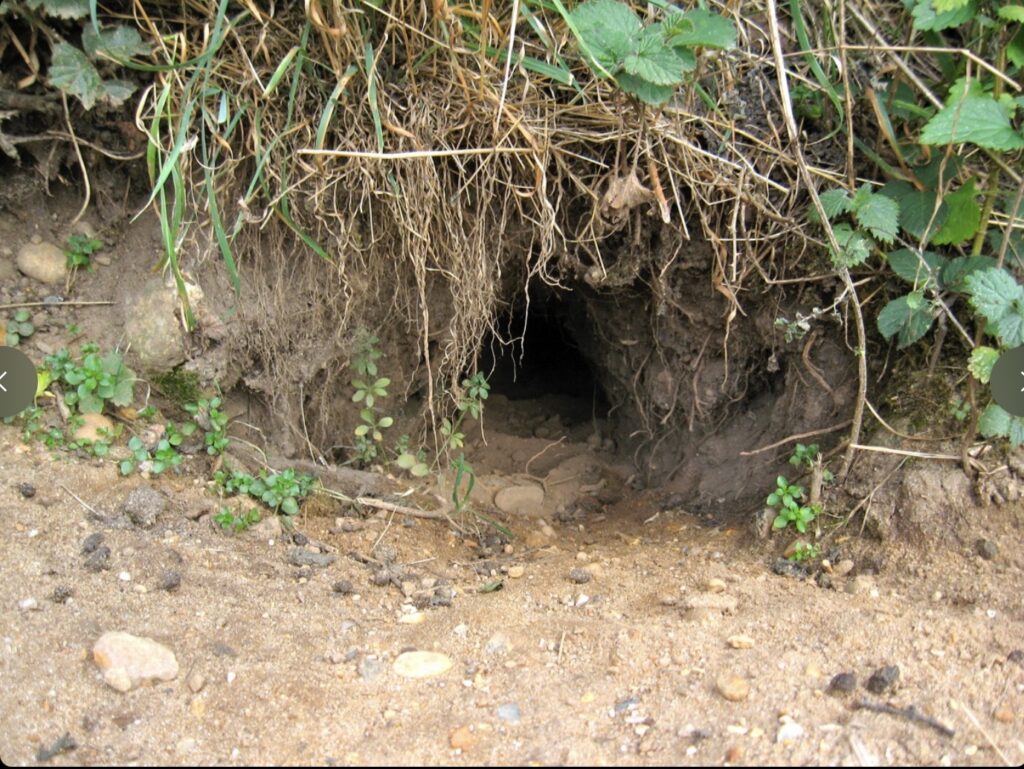
rabbit burrow entrance
Food is the third part, and it is the hardest one. Grass stops growing in winter, so wild rabbits switch to whatever they can find. They eat bark, twigs, buds and the roots of plants. It is rough food with little goodness in it, so they have to eat a lot of it. They also huddle together to share body heat, and they keep moving, grazing and digging. All of that activity burns energy, and that is why winter food matters so much.
None of this is hibernation. It is a rabbit staying awake and working hard to stay warm.
How Pet Rabbits Handle Winter
Pet rabbits do the same things, as far as they can. An outdoor rabbit grows a thicker coat, eats more hay, and curls up in its sleeping area to keep warm. Some rabbits even get more playful when the cold arrives, with sudden runs and jumps that owners often call binkies. Digging and chewing also pick up in winter, which is normal.
But pet rabbits have one big disadvantage. They do not have a deep burrow to hide in. A hutch sits above ground, open to wind, rain and snow. That is why outdoor rabbits need extra help from you in winter, even though wild rabbits manage on their own.
The RSPCA gives an ideal temperature range of 10 to 20 degrees Celsius for domestic rabbits. Healthy outdoor rabbits that are used to the cold can cope with lower temperatures if their housing is right, but when the temperature starts to reach freezing, it is time to think about moving them somewhere more sheltered, like a shed, a garage, or indoors.
Indoor rabbits need a different kind of care. A rabbit that lives indoors does not grow as thick a winter coat as an outdoor rabbit. If your indoor rabbit usually exercises outside, do not put it out when it is very cold. It will feel the cold far more than an outdoor rabbit would.
Your Winter Checklist for Your Rabbit
A little preparation before the cold sets in makes winter much easier for your rabbit. Here is what matters most.
Keep the shelter dry, draught-free and off the ground. Raise the hutch at least 10 centimetres, about four inches, so damp and frost cannot seep up from below. Put it in a sheltered spot, facing away from wind and rain, and check the roof for leaks. A wet rabbit in a wet hutch can get ill fast.
Give deep bedding to sleep in, and plenty of hay to eat. Straw makes warmer bedding than hay, because it is hollow and traps air. Hay is food, so your rabbit needs a constant pile of that too, and will eat more of it in winter to keep its body temperature up. Change wet bedding every day. Wet bedding can freeze overnight.
Check the water at least twice a day. This is the winter job most owners forget, and it matters more than almost anything else. A frozen water bottle leaves your rabbit with nothing to drink, and a rabbit that cannot drink can develop gut stasis, which can be fatal. Offer a bowl as well as a bottle, because a bowl is less likely to freeze, and check that the bottle spout still runs.
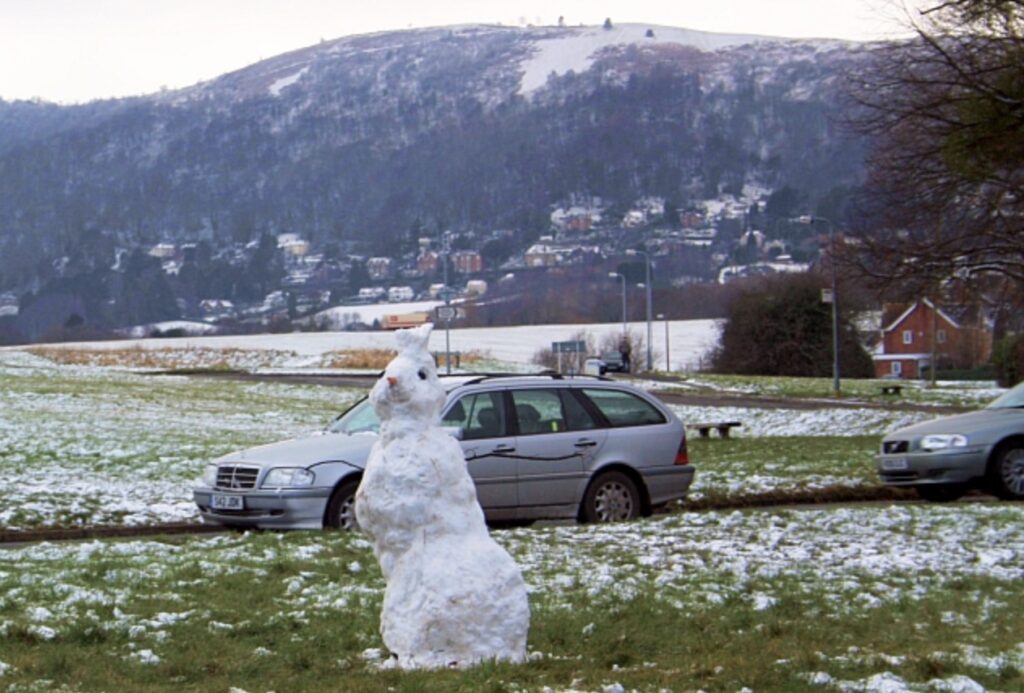
A rabbit sitting in snow in winter. Photo by Bob Embleton, geograph.org.uk, via Wikimedia Commons, CC BY-SA 2.0.
Feed a little more, and keep the routine. In winter your rabbit burns more calories just staying warm. Keep the hay coming, and offer winter vegetables like cabbage, parsnip, celeriac or beetroot alongside the usual leafy greens. Keep feeding times, exercise time and cleaning on the same schedule as always. Rabbits are creatures of habit, and sudden changes add stress.
Keep them moving. Your rabbit still needs space to run, stretch and explore every day. A rabbit shut in a small hutch all winter will get stiff, bored and unhealthy. If the weather is too bad for the run, give them time in a sheltered area instead.
Watch for winter dangers. Antifreeze, salt and grit on paths, and some winter plants are all hazards for a rabbit that roams the garden. Keep them away from treated paths, and check the run for anything new that has blown in.
When to Worry, and When to Call the Vet
Most winter behaviour is normal. A rabbit that curls into a ball, huddles with a companion, or sits quietly in its bed for a while is keeping warm. A rabbit that binkies in the cold air is enjoying itself.
These are the signs that are not normal, and they need a vet, not patience:
Your rabbit is limp, floppy, or hard to wake
It has stopped eating, or is eating much less than usual
It has stopped passing droppings, or the droppings are very small
It sits hunched and does not move for hours
Its ears or feet feel very cold, or it is wet and shivering
Do not wait to see if it gets better on its own. Rabbits hide illness well, and by the time a rabbit looks clearly unwell, it often needs help fast. A rabbit-experienced vet can tell you whether it is a chill, a gut problem, or something else entirely.
Frequently Asked Questions
Do rabbits hibernate in winter?
No. Neither wild rabbits nor pet rabbits hibernate. They stay active all winter, eat every day, and rely on a thick winter coat, shelter and extra food to get through the cold.
Do rabbits sleep more in winter?
They often do. Many rabbits rest for longer stretches and sit curled up more in cold weather. That is normal, as long as they still wake up, eat hay, drink and move around each day. A rabbit that will not wake up or will not eat is not sleeping more. It needs a vet.
Can my rabbit stay outside all winter?
A healthy outdoor rabbit that is used to the cold can stay outside if its housing is dry, draught-free, raised off the ground and full of deep bedding, and if you check its water twice a day. If the temperature drops below freezing, think about moving the hutch into a shed or garage, or bringing your rabbit indoors. Young, old, thin or unwell rabbits should come inside sooner.
Do rabbits need extra food in winter?
Yes, a little. They burn more energy keeping warm, so they eat more hay. Keep the hay pile full at all times, and offer winter vegetables alongside their usual greens. Never change the diet suddenly. New foods should always be added a little at a time.
What temperature is too cold for a rabbit?
The RSPCA suggests 10 to 20 degrees Celsius as ideal for domestic rabbits. Outdoor rabbits that are used to the cold can handle lower temperatures with good shelter and bedding, but near or below freezing you should move them somewhere more sheltered. Indoor rabbits, which grow thinner coats, should not be put outside in very cold weather.
The Short Version
Rabbits do not hibernate. They grow a thicker coat, hide from the worst weather in a burrow or a dry hutch, huddle together, and eat their way through winter. Your job is to make that possible: a dry shelter, deep bedding, unfrozen water, plenty of hay, and the same routine every day. Do that, and your rabbit will come through winter the same way wild rabbits do, awake, fed and ready for spring.